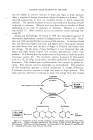
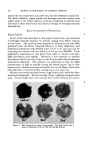
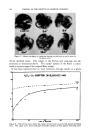
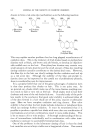
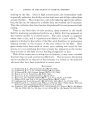
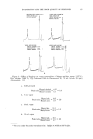
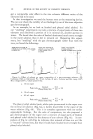
178 JOURNAL OF THE SOCIETY OF COSMETIC CHEMISTS get a comparable odor effect in the two solvents different ratios of the odorants had to be used. In that investigation we used the human nose as the measuring device. We can now check the validity of our findings by use of the more objective gas chromatograph. As an example, let us look at linalool and phenyl ethyl alcohol. In our "smelling" experiments we took a mixture of equal parts of these two odorants and dissolved a portion of it in mineral oil, another portion in water. We found that the odor of linalool dominated much more strongly in the water solution than it did in mineral oil. Repeating this experi- ment, but "smelling" with the gas chromatograph rather than with the nose, we found the following: VAPOR OVEE S'OLUTION OF LINALOOL (o. zz) n,, PHEINTL ETHYL ,qL60HOL ß IN MINERAL OIL. i . {oza) VAPOI? OV[• SOLUTION OF VAF:O• OVF'R I'1 IXTI/R•E ß LINALOOL (oozyO •~D f'HENYL OF EQUAL WEIGHTS , . . ETHYL ALCOHOL (aozsx) LINALOOL • PHENYL ETHYL ALCOHOL .•-. Figure 6.--Effect of solvent on vapor composition of a two-component mixture: 5% Carbowax 1540 on Chromsorb W 50 ml. A/min. (8 psi) Column and Der. temp. 130ø Der. voltage 1250 V. Chart speed 15"/hr. a. 10 ml. vapor Peak ratio b. 10 ml. vapor c. 4.5 ml. vapor Peak ratio -- Linalool 10.2 - - 2.0 Phenyl Ethyl Alc. 5.2 Linalool 6.1 - 5.8 -- Phenyl Ethyl Alc. 10.5 The phenyl ethyl alcohol peak, while quite pronounced in the vapor over the mineral oil solution (Fig. 6a), is hardly discernible in the vapor of the water solution (Fig. 6b). This is in complete agreement with our earlier organoleptic findings. For the sake of comparison, we also prepared a gas chromatogram of the vapor over a mixture of equal parts of linalool and phenyl ethyl alcohol in the absence of any solvent (Fig. 6c). A com- parison of Fig. 6c with Fig. 6a indicates that mineral oil does not act like a "neutral" solvent here, but that it holds back linalool more strongly than phenyl ethyl alcohol.

EVAPORATION AND THE ODOR QUALITY OF PERFUMES 179 CONCLUSION As far as the present paper is concerned, this is the end of the experi- mental section. As far as our research program is concerned, it is only the beginning. Each experiment that we carried out immediately sug- gested a number of others to be tried. We have just scratched the sur- face in this field and a great deal of work remains to be done before we shall have a full and quantitative picture of the forces acting between odorant molecules and the molecules surrounding them and before we shall really know the factors governing the evaporation of a perfume. In this early stage in the investigation, I suggest that we accept the fol- lowing points as a working hypothesis: 1. Under the normal conditions of use of perfumes, attraction forces between odorant molecules and the molecules surrounding them in the liquid state have an order of magnitude such that they can distinctly affect the odor of the perfumes. 2. The magnitude of these forces depends on the extent to which the odorant molecule and the surrounding molecules have structural features in common. In any given situation the forces acting on the different odorants in a perfume blend will not be equally large. This selectivity is suflSciently pronounced so that its effects are readily discernible by the human nose as well as by analytical instruments. By changing the situa- tion, the vapor composition and the odor of the perfume is changed. I believe that some day in the not too distant future perfumers will be as familiar with the laws governing evaporation as were the painters of the 16th through the 19th centuries with the laws of anatomy and per- spective. Let us hope that the perfumer of the future will use his laws as skillfully and creatively as did the painter of the past! .dcknow[edfments: I wish to express my gratitude to the management of Polak's Frutal Works, Inc., for the support given to this work and the per- mission to publish it. I am also indebted to Mrs. Thelma J. Bloomfield for her assistance in the preparation of this paper and to Dr. Donald A.M. Mackay for our stimulating discussions. REFERENCES (1) Wells, F. V., Soap, Perfumery & Cosmetics, 30, 925 (1957). (2) Pickthall, J., J. Soc. CosyrEarm CHEmSrS, 5, 182 (1954) Soap, Pe•umery & Cosmetics, $0, 712 (1957). (3) Poucher, W., ztm. Perfumer Essent. Oil. Re,., 66, 17 (1955). (4) Jellinek, J. S., ztm. Perfumer Atromat., 73, 27 (1959).
Purchased for the exclusive use of nofirst nolast (unknown)
From: SCC Media Library & Resource Center (library.scconline.org)