JOURNAL OF THE SOCIETY OF COSMETIC CHEMISTS CHICAGO CHAPTER 187 SPEAKING at the first 1961 meeting on January 17th was Paul Stout of the Quaker Oats Company. His topic, "Recent Developments in Ex- perimental Design," is one of general importance in the cosmetic field. Mr. Stout received his degree in Chemistry from Miami University (Ohio) and has done graduate work in chemistry at Northwestern University as well as statistical work at the University of Chicago. Mr. Stout is a member of the American Statistical Association, the Oper- ations Research Society and the Society for Quality Control. During his twenty-year association with the Quaker Oats Company, he has been in- volved in organic synthesis and in experimental design and evaluation. At present he is Section Leader of the Statistical Evaluation Section, where his work includes research, development and production. On February 14th Dr. I. Schurman spoke on "The FDA--What It Is and What It Does." Since the Food and Drug Administration will be playing an increasingly important role in the field of cosmetic chemistry, the information presented was of the utmost importance. Dr. Schurman has been with the Chicago District of the FDA for the last twenty-five years. He is now Chief Chemist of the Department of Health, Education, and Welfare. Dr. Schurman received his A. B. in chemistry at Hope College in Holland, Mich. From there he went on to Ohio State University where he received his Ph.D. in Organic Chemistry. He is a member of the American Chemical Society. All meetings are held at Henrici's Restaurant in the Merchandise Mart. NEW ENGLAND CHAPTER THE FIRST MEETING of the year was held on January 26th at Ar- mand's Beacon Terrace, Framingham, Mass. Dr. Richard B. Maffei, Assistant Professor of Industrial Management, Massachusetts Institute of Technology, spoke on "Planning the Introduction of New Products: Perspectives and Implications." Dr. Joseph Harrington, senior research engineer with the engineering division of Arthur D. Little Company discussed "A Proper Perspective of Automation," at the February 23rd meeting of the Chapter.

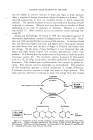
188 JOURNAL OF THE SOCIETY OF COSMETIC CHEMISTS NEW YORK CHAPTER COSMETic CI•EMISTS of this Chapter were treated to an excellent discussion of a new experimental technique for determining the time varia- tion of interfacial tensions. Dr. John M. Cross, Professor of Pharmaceuti- cal Chemistry at the College of Pharmacy, Rutgers University, introduced the subject at the first meeting of the Chapter, January 4th, at the George Washington Hotel. The usual ring method for measuring the spreading coefficient of cos- metic oils has not given reproducible results, apparently due to a time vari- ation in measuring. Anthony N. Paruta described the bi-phase cell which was constructed for the study and illustrated the concurrent measurement of surface and interfacial tensions and discussed the effect of time on the change in tensions. The oil or lotion in question is floated on the surface of the water in one cell, and the surface tension is measured in the second cell which is connected through a water bridge below the oil-water interface. Some possible applications of this technique were discussed although it was agreed that the method was in its development stage. Dr. Leonard V. Kornblee, Assistant Clinical Professor of Dermatology at New York University, presented an up-to-date review of some of the uses and contra indications of estrogenic, androgenic and corticosteroid hor- mones in dermatology, at the February 1st meeting. Estrogens have no beneficial effect on the sebaceous glands in acne, but the corticosteroids, because of their anti-inflammatory action have been found to be helpful. Hair growth, in certain types of alopecia, can be stimulated by injection of steroid hormones, whereas topical application is ineffective in such cases. Dr. Kornblee pointed out that oral administration often leads to side effects, which are reversible, but that injections have a localized action with many less side effects. This localized action is responsible for the dramatic results often obtained with triam cinalone acetonide injections into psoriatic lesions. During their regular monthly meetings at the George Washington Hotel, Lexington Avenue and 23rd Street, New York City, the cosmetic chemists were acquainted with some of the radioactive and sensitization studies which are being conducted clinically to better understand the action and safety of hormones.
Purchased for the exclusive use of nofirst nolast (unknown)
From: SCC Media Library & Resource Center (library.scconline.org)