314 JOURNAL OF THE SOCIETY OF COSMETIC CHEMISTS besides the pentadecanolide content had been adversely affected. If this were not so, then plant selection would have achieved the desired object. MR. J. G. J. KOK: As far as we know geranyl riglate has never been identified as such in geranium oil [Gildemeister, E. and Hoffmann, F. Die iitherischen Ole V 374 (1959).•. In our opinion the oilactive qualities of the ester are not such that its presence in geranium oil would be of decisive influence on the total odour of the oil. THE LECTURER: I listed a number of materials the use of which might be responsible for progress within the industry. Let me say at once that if I had been aware of the work on 11-oxahexadecanolide I would certainly have included it, since it appears to be one of the most interesting develop- ments with musk odours which has yet been produced. I do not think the identification of geranyl figlate in natural geranium oil is fundamental to the point I am making, which is the broad one that success in the use of new chemicals is most easily achieved if these bear a close relation to materials already present in natural oils. I think this entitles me to include ethyl linalol, for example. As to the oilactive qualities of the material, I am much in the hands of the suppliers. Of two samples of geranyl figlate which we examined, one, from an American source, appeared to us to be very much the finer, and we have established, on an experimental basis, a small number of applications for it.

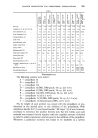
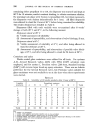
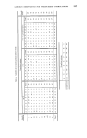
CONTACT SENSITIZATION DUE TO PERFUMERY RAW MATERIALS SOME ASPEGTS OF GONTAGT SENSITIZATION DUE TO PERFUMERY RAW MATERIALS P. H. WITJENS, Dr. ir.* Presented at the Symposium on "Perfumery", organised by the Society at Cheltenham, Glos., on 14th November 1962. Different factors which might influence the occurrence of contact sensitization due to pergumery chemicals are discussed. SENSITIZATION OF MAN by contact of the skin with perfumery chemicals is fortunately a phenomenon of relatively rare occurrence. It is for this reason that older pubhcations only occasionally report cases of dermatitis caused by allergic reactions due to specific odoriferous chemicals or essential oils. The increase in the use of cosmetics, and particularly of synthetic detergents and similar products, is reflected in an increasing number of published case histories, reaching a peak during, and shortly after, the period 1940-1945, when impurities in the raw materials as a result of their prevailing scarcity have been in part responsible for the occurrence of dermatitis •. While these publications on the whole helped to augment the number of recorded cases, there is a distinct tendency in a number of recent studies, in which odoriferous chemicals were also partly considered as eczematogene noxes, to study incidental sensitization reactions against a more general background, both in relation to the medico-biological, and to the chemical, aspects of the sensitization process. It is particularly when studying the theoretical backgrounds that the rarity of the occurrence of contact sensitization in human beings renders the experimental treatment difficult to a degree. Nevertheless, the ever- increasing degree in which man is brought into contact with organic com- pounds possessing, in most cases, completely new structural constellations, makes it imperative to study the possibility of contact sensitization, in addition to other toxicological data, from a point of general hygiene. The field of synthetic perfumery chemicals is no exception, and in fact it may be more desirable for this study since these products are functionally predisposed to an intensive contact with the skin, with a duration of application which can extend over the better part of a man's lifetime. The study of the phenomenon of sensitization from a chemical point of view will in the first instance be centred around the investigation of the molecular structures which are a condition for eliciting contact sensitization. *International Flavors & Fragrances (Nederland) N.V., Zaandam, Netherlands.
Purchased for the exclusive use of nofirst nolast (unknown)
From: SCC Media Library & Resource Center (library.scconline.org)