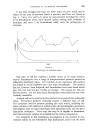
330 JOURNAL OF THE SOCIETY OF COSMETIC CHEMISTS for Hairspray III. However, curve C is typical of the results obtained when testing products, such as shampoos, which are designed for aluminium collapsible tubes, and which gave corrosion of the pitting type. Such systems are, of course, aqueous in comparison with the pressure packs we have been testing which are almost anhydrous. MR. A. H•Rz•A: Have you carried out any tests with this method on hair lacquers in internally plain and lacquered tinplate containers, shaving cream formulations, and antiperspirants ? TH• L•½TUR•R: Although some of the formulations have been tested in tinplate containers, I have not systematically covered the same ground or attempted to relate those results I have in tinplate with the aluminium containers. As I mentioned above I was confining myself to as simple a system as possible. Aluminium containers, whether lacquered or not, pre- sumably exhibit the same sort of corrosion reactions. The tinplate container is a much more complex affair. I have tried to use this method on shaving cream formulations without success and have not pursued it very far. I did get very high readings from the corrosion cells, probably because of the high water content. On the limited numbers tried it was not possible to distinguish between corrosive and non-corrosive formulations. I have not tried antiperspirants. DR. P. H. W•TJ•NS: May I ask if anodised alumininm containers have been included in the experiments ? TH• L•½TUR•R: No. I would like to emphasise that in using these ceils I was trying to find a method which would predict whether the product/ aluminium combination was inherently corrosive. The question of what treatment or lacquer will best protect the aluminium is another matter. •IR. K. D•xoN: Has this method been considered as a screening test to eliminate variables from storage tests ? TH• L•½TUR•R: This method will certainly remove highly corrosive combinations from test. It must be remembered, however, that the diffe- rence between highly corrosive and slightly corrosive can be slightly academic. A formulation which eats through 10% of the containers after one year, is just as commercially a disaster as one which eats through 50% in three months! On the whole I am inclined to think that the best screening test is short term storage in the chosen pack, lacquered and unlacquered, and examina- tion with a microscope after three months. Containers showing the slightest blemish would condemn the formulation. There is then the risk that a usable formulation is in fact being rejected, but this is probably unavoidable.

LANOLIN DERIVATIVES FOR PRESSURIZED FORMULATIONS 331 LANOLIN DERIVATIVES FOR PRESSURIZED FORMULATIONS A. HERZKA, B.Sc., F.R.I.C.* Presented at the Symposium on "Aerosols", organised by the Society, at Southport, Lancs., on 24th April 1965. The solubility of ten lanolin derivatives in nine different propellant and propel/ant/alcohol systems is described. The results indicate that most of the materials exhibit satisfactory solubility at 0 ø (•. INTRODUCTION TI•E SOnUBInIT¾ Of ten lanolin derivatives in propel!ant and propellant/ alcohol systems was investigated in order to establish their likely usefulness in formulations intended for pressurized packing. As the propel/ant may be added to a formulation either at ambient (room) temperature or at a low temperature, i.e. during cold filling, the tests were carried out at 20 ø C and at 0ø C. The tollowing products were tested: i. Anhydrous lanolin, B.P. The physical and chemical properties of anhydrous lanolin (refined wool fat), even amongst samples all complying with the British Pharmacopoeia or the Toilet Preparations Federation specification, can vary to an appreci- able extent according to the source of the raw wool fat and the refining methods employed. Since it is conceivable that solubility in propel/ants could be one of the variables involved, it should be put on record that the lanolin used in the present work was refined from wool fat centrifugal/y- recovered from wool washed with soap, not detergents. Refining processes included chemical as opposed to absorptive deodorisation and bleaching. The lanolin used was a pale, superfine quality, complying with both of the specifications mentioned above. The substance is used in a very wide range of cosmetic products not only because of its outstanding emollience on the skin, but also by virtue of its powerful w/o emulsifying properties, plasticising and hair-conditioning properties, etc. ii. Wool alcohols, B.P. This official pharmaceutical description is essentially a misnomer, the product being more accurately described as wool wax alcohols, lanolin *Independent Consultant, London.
Purchased for the exclusive use of nofirst nolast (unknown)
From: SCC Media Library & Resource Center (library.scconline.org)