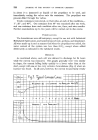
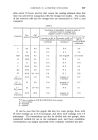
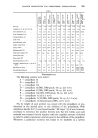
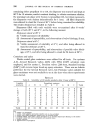
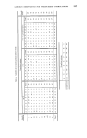
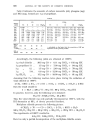
350 JOURNAL OF THE SOCIETY OF COSMETIC CHEMISTS was sucked, and into which a hot plate or a gas flame was placed. The temperatures were measured electrically. Carbon monoxide was deter- mined by means of the Auer apparatus, phosgene by measuring the absorp- tion of 1.3-diphenyl urea in UV, and HC1 by collection in 0.1N NaOH, neutralisation with H2S04, and titration with 0.1N AgNOa solution. The experimental errors were 4- 5%. It was proven that the normal application of pressure packs, even in the event of decomposition of the propellants on hot or red-hot surfaces, cannot be injurious to health. In all instances, the consider- able quantities of halogen acids developed will be a warning and the irritating effects will cause a person to leave or to ventilate the room immediately. •KIN IRRITATION It is necessary to distinguish between super-cooling of the skin by evaporation, which applies to all types of propellants, and definite skin compatibility. Spraying of an aerosol with a high propellant content from too short a distance on to the human skin may cause skin irritation, redden- ing or even blister formation. The possibility is the greater the lower the boiling point, and the more sensitive the skin is. We all know of the occasional consumer complaints that the pressurized product has a caustic effect. In actual fact, the directions for use have not been followed. Such cases are relatively unusual and it has never been reported that normal healing of the skin has not taken place after blister formation. Information concerning the compatibility of fluorinated hydrocarbons with the skin has been published by Quevaville et al n with the following conclusions: The treatment of the skin of rats, three times a day for two months, with pro- pellants 11, 12 and 13 caused neither macroscopic nor microscopic changes. The good compatibility of sesame oil and propellants 11, 12, 113 and 114 with the skin of rabbits, and with the mucous membrane of rabbits' eyes, was established by Scholz 9. A number of cosmetic preparations containing vinyl chloride as well as propellants 11 and 12 have been tested for compatibility with the skin. An oily suntan pack did not cause any skin reaction TM with 600 separate tests on 50 patients including some suffering from eczema. A similar test has been carried out with a hairspray •a. The hair and skin of the head tolerated the product even after over-dosages and no differences could be detected between the various propellants. Only a con- centration in excess of 20% methylene chloride caused structural damages of the hair, especially where subvisible changes of the hair have akeady occurred. Tests with body deodorants •4, footsprays containing vinyl chloride •5, foam products containing propellant 12 •6 proved likewise positive.

PHYSIOLOGICAL PROPERTIES OF PROPELLANTS 351 CONCLUSION This paper does not claim to be a complete summary of all tests with propel/ants, both published and unpublished. Nevertheless, the information presented is sufficient to draw the proper conclusion. All tests yielded identical results and there is thus no necessity to start further tests. Pro- pellants 11, 12, 114, propane/butane and vinyl chloride, used in the aerosol industry, have a varying, but generally low or very low toxicity. The con- centrations by volume formed when using a pressurized dispenser are normally not only completely nontoxic, but are considerably lower than, or near, the MAC-values. It is true that no tests have been carried out with propane/butane, but their chemical structure permits this analogous conclusion. Actual practice confirms the good skin compatibility and the safe inhalation of the named propel/ants. A billion pressurized dispensers each year indicate the accuracy of the described tests. The problem of the thermal decomposition should not be exaggerated. Here, too, actual prac- tice has shown that this danger is very small. From the physiological point of view, therefore, the pressurized pack, i.e. the propellant utilized, may be regarded as safe. (Received: 2nd February 1965) REFERENCES Reed, F.T. Am. Perfumer Aromat. 75 40 (October 1962) Downing, R. C. and Madinabeitia, D. Aerosol Age 5 25 (September 1960) Ullmann, Enc. der technischen Chemie 5 489 (1954) (Urban und Schwarzenberg Verlag, Manchen) Schade, H. Private commu•.ication (1956) Torkelson, T. R., Oyen, F. and Rowe, V.K. Am. Ind. Hyg. Assoc. J. 22 854 (1961) Schade, H. Private communication (1960) Shepherd, H. R. Aersols-Science and Technology 374 (1961) (Interscience Publishers, Inc., New York) Hofmann, B. Deut. Farben-Z. 10 387 (1956) Scholz, J., in Blackel, H. Fortschritte der biologischen Aerosolforschung 1957-1961 Nord. Hyg. Tidskr. 3 ½) 11 (1958) Quevaville, M. A., Garcet, S., and Garcet-Pottier, J. Ann. pharm. fran•. 17 430 (1955) Griebel, Private communication (1956) Griebel, Private communication (1959) Griebel, Private communication (1959) Simon, Private communication (1960) Friedrich, H.C. Private communication (1960)
Purchased for the exclusive use of nofirst nolast (unknown)
From: SCC Media Library & Resource Center (library.scconline.org)