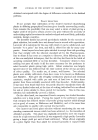
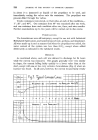
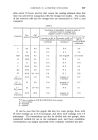
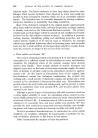
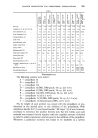
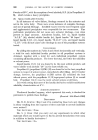
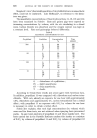
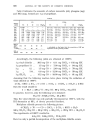
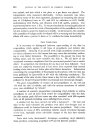
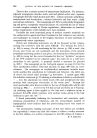
348 JOURNAL OF THE SOCIETY OF COSMETIC CHEMISTS Table 3 indicates the amounts of carbon monoxide (ml), phosgene (mg) and HC1 (mõ), formed per 1 g of propellant. Table 3 Tempe- rature 100 ø 200 ø 300 ø 400 ø 500 ø 600 ø 750 ø 900 ø 1000 ø CO VC 11 12 114 CH2CI • 0.001 0.03 0.45 0.001 0.001 0.001 0.001 0.75 0.007 0.004 0.004 0.10 1.00 0.019 0.007 0.021 0.24 6.25 0.29 0.013 0.11 1.4 20.5 0.69 0.43 0.45 5.0 24.4 1.50 0.9 0.39 12.5 31.6 1.20 1.2 0.63 12.2 COC12 VC 11 12 114 CH•CI• 3.0x10 -4 3.0x10 -4 3.0x10 -4 3.0x10 4 3.0x10 -4 8.1x10 -4 1.9x10 -a 3.0x10 -4 3.0x10 -4 3.0x10 -4 2.2x10 -a 4.2x10 -8 6.5x10 -4 1.5x10 -a 2.5x10 -8 1.7x10 -a 8.8x10 -a 4.5x10 -a 1.5x10 -a 3.5x10 -a 3.4x10 -• 2.6x10 -• 8.0x10 -a 1.3x10 -• 4.4x10 -• 5.0x10 -• 8.6x10 4 3.2x10 -• 5.1x10 4 1.6 6.4x10 -• 3.6 3.7x10 -• 1.6x10 -• 2.2x10 • 9.2x10 -8 6.4 1.8 1.1x10 • 1.8x10 • 1.1x10 4 7.0 2.4 1.2x10 • 1.8x10 x HClat 1000 ø 102 79 51 28 81 HF at +1000øC -- 15 28 31 -- HXat 1000øC 102 94 79 59 81 + calculated on the basis that the quantities of HF are equivalent to the quantity of HCI. Accordingly, the following yields are obtained lgvinylchloride .. 39.5mgC0 q- 0.11 mg 1 gpropellant 11 .. 1.5 mg CO q- 7.00 mg 1 g ,, 12 .. 1.SmgCO q- 2.40mg 1 g ,, 114 .. 0.8 mg CO q- 12.00 mg lgCH2C12 ,, .. 15.2mgC0 + 18.00mg Assuming that the following reaction takes place vinyl chloride at 1000øC at 1000øC. COCI= q- 102 mg HX COClz q- 94 mg HX COCI= q- 79 mg HX COCi= q- 59 mg HX COCi• q- 81 mg HX during the oxidation of 4 CH2: CHC1 q- 80= • 2 CO + 5 COz q- 1 COCI,. q- 5 H,.O q- 2 HC1 then the result should be 4 x 62.5 --250gVC 56gCO 99gCOCl= 72gHC1 In practice, however, only the following were obtained: 10 g CO 0.028 g COCi= 25 g HC1 Thus the vinyl chloride was only partially decomposed at 1000øC, with the HCl-formation at 35% of theory proceeded furthest. Methylene chloride presents the following picture: 4 CH•Ci• q- 70----• CO + COCI., q- 2 CO• q- 6HC1 q- H•O 340 g CHzCI= 28 g CO q- 99 g COCi= q- 88 g CO= q- 219 g HC1 q- 18 g H=O The experiments at 1000øC resulted in 4.6 g CO 3.06 g COCi= 27.6 g HC1 Here too only a partial decomposition of the methylene chloride occurs.

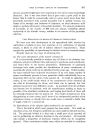
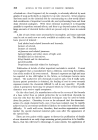
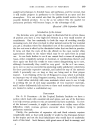
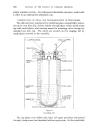
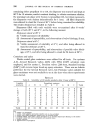
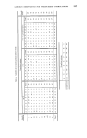
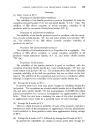
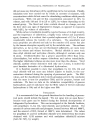
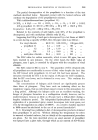
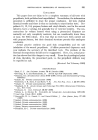
PHYSIOLOGICAL PROPERTIES OF PROPELLANTS 349 The partial decomposition of the propellants is a function of the test inethods described below. Repeated contact with the heated surfaces will continue the degradation of the propellant-air mixture. With trichlorofluoromethane (propellant 11): 3 CFCla -{- 4 H20 • CO -{- COC12 -{- CO,• -{- Ci• -1- 3 HF -1- 5 HC1 412 g propellant 11 28 CO -{- 99 COCla -1- 60 g HF -1- 182.5 g HC1. In practice: 0.43 g CO 2.88 g COCla 39 g HC1. Related to the contents of acid halide, only 25% of the propellant is decomposed, and with methylene chloride only 21.4%. Supposing that 100 g of each gas is decomposed by a hot flame at 1000øC in a room having a capacity of 50m a, then the ppm value is as follows: For vinyl chloride .. 63.2 CO 0.05 COC12 126 ppm HC1 ,, propellant 11 .. 2.4 ,, 3.10 ,, ß 98 .... ß . ß .... 12 .. 2.4 ,, , 1 10 ,, , 62 .... ß .... 114 .. 1.3 ,, , 5.40 ,, , 34 .... thyl ß ß ,, me ene chloride.. 24.4 ,, , 8.10 ,, , 100 .... The 3/IAC value for carbon monoxide, which is near 100 ppm, has not been reached in any instance. On the other hand, the MAC value of phosgene, near 1 ppm, is exceeded by all gases with the exception of vinyl chloride. The MAC value for HC1 is near 5. The quantities of HC1 obtained with all propellants are considerably in excess of that value despite the fact that the HF formed with propellants 11, 12 and 114 had been ignored. The irritation threshold for HC1 is in the region of 35 ppm for brief inhalation, that for HF even lower, and is obtained in every case. This confirms the findings of ReedL The concentrations of halogen acids formed are significantly greater than those of phosgene. They have such an irritating effect on the respiratory organs, that an individual cannot remain in this atmosphere for a long period. Although the halogen acids are an excellent warning, the danger of phosgene formation in a conflagration should, however, not be underestimated, because as little as 35 ppm have a lethal effect during a lengthy inhalation period. The halogenated hydrocarbons liberated after application of a pressurized spray cannot decompose into toxic gases, not even by decomposition in a flame of 1000øC. As a result a fatality reported in 1958 cannot be attributed to the use of an aerosol insecticide •ø. R. C. Downing 2 has published a list of decomposition products obtained from propellants 11 and 12. Without defining the temperature he refers to warmed or heated surfaces, but no details of the experimental procedure are given. For the tests described above an exact amount of propellant was sprayed into a glass tube, through which an air current of 3.5-4 l/rain
Purchased for the exclusive use of nofirst nolast (unknown)
From: SCC Media Library & Resource Center (library.scconline.org)