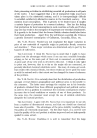
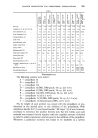
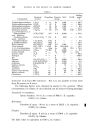
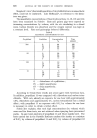
334 JOURNAL OF THE SOCIETY OF COSMETIC CHEMISTS ethylene oxide. The latter condenses to form long chains joined by ether linkages which become hydrated when dissolved in water and enable the product to form transparent solutions which are of an essentially colloidal nature. The hydration may be reversibly disrupted by heating a solution, temporary cloudiness or insolubility then being manifested. Most of the cholesterol contained in the original lanolin (approximately 20%) reacts with the ethylene oxide, and thus the products no longer conform to identity tests such as the Liebermann-Burchard reaction. The product is fairly hard, and is no longer soluble in mineral oil, but emo!lient and readily absorbed by the skin without residual stickiness. In addition it possesses wetting, foaming, emulsifying, gelling and solubilising properties, and this surface activity enables it to be used in soaps or shampoos, for example without any significant deleterious effect on lathering power such as results from any but a small addition of pharmaceutical anhydrous lanolin. Emul- sions are, of course, no longer of the w/o but of the o/w type. x. Water soluble wool alcohols "20" This consists of pharmaceutical wool alcohols B.P. of the highest quality ethoxylated to a sufficient extent for full solubility in water, and therefore comprises the polyglycol ethers of the natural, complex fatty alcohols derived from lanolin. These include alcohols of steroid, triterpene and aliphatic types and, on the basis of their mean molecular weight, the molar ratio of alcohols to ethylene oxide in the ethoxylated product is approxi- mately 1:20. At this degree of ethoxylation most of the original, high free-cholesterol content has undergone condensation, the product now yielding only a small amount of digitonide complex and giving only a weak reaction in the colorimetric Liebermann-Burchard test. Ethoxylation also greatly reduces the acetyl value and melting point, and the product is rather softer in consistency than wool alcohols B.P., and becomes plastic when warmed in the hand. Although a greater degree of ethoxylation will yield a product which has a rather higher solubility in water, the solubilising action exerted on non- water soluble substances is at an optimum when the molar ethoxylation ratio is between 1:15 and 1:20. A minimum ratio of 1:20 is necessary for aqueous solutions to be reasonably dear, and water soluble wool alcohols "20" thus provides the most satisfactory compromise between solubility and solubilis- ing power, and hence represents an extremely versatile and useful product. Its use in pressurized formulations may be summarized as-water soluble emollient, o/w emulsifier, solubiliser for liquid lanolin or perfume oil, etc., hair conditioner, plasticiser or film former in hair sprays. Table 1 summarises the analyses of these ten products.

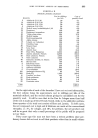
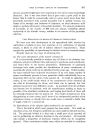
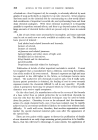
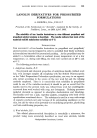
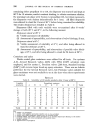
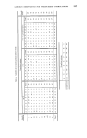
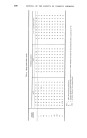
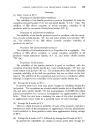
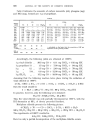
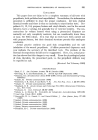
LANOLIN DERIVATIVES FOR PRESSURIZED FORMULATIONS 335 Table i ß • - '3 '• • •'~ • Ash (%) ........ o'oz 0'05 0'04 O'Ol O'Ol O'Ol o'oz o'o4 o'I3 0'2 Volattics (1 hr. at lO5 ø C) (%) O.lO 0.35 0.40 o.17 2.00 1.2o 3.oo 0.20 0.20 0. 3 Free cholesterol (%) .... 1'5 34'0 25'9 3'3 I'2 1.2 o.8 o.8 trace trace Total cholesterol (%) .... 20-0 34'6 27'6 I3'8 5'6 5'6 3'5 25'0 0'3 1.1 Unsaponifiables (%) .... 52'0 96'3 93'0 54'0 31'8 41'3 23'6 84'8 -- -- Acid value ........ 0'4 1. 4 2. 9 i-o 0. 4 0.6 o'7 I'4 0.2 2.0 Saponification value .... 95'0 6.0 14-o lOO.O 14o-o 114'o 146'o 155'o i6.o 9'0 Iodine value (Wij) ...... 27'0 35 '0 35'3 27'5 23'0 77'0 35'1 48'4 23'0 22.0 Acetyl value ........ 29.0 14o'o 16o.o 38'2 46'0 64'9 79-6 8.0 34'4 60.0 Melting point (øC) ...... 40'0 60.0 43'0 18'3 -- -- -- 15'o 49'2 47'5 Flash point (open) (øF) .... 400 34 ø 290 400 305 335 306 425 530 50o Cloud point (øF) ...... -- -- -- 55 48 36 30 56 -- -- Pour point (øF) ...... -- -- -- 55 35 25 25 50 -- -- Specific gravity at 20 ø C .... 0'94 0-96 0'98 0'95 0'89 0'89 0'90 0'98 1.14 x.1 Viscosity (Redwood No. 1) at 6o ø C (sees) ........ 73 ø -- 977 738 5I 57 64 392 3453 60 Solubility in water ...... nil nil nil nil nil nil nil nil corn- com- plete plete Emulsifying tendency .... w/o w/o nil w/o w/o w/o w/o w/o o/w o/w EXPERIMENTAL The following systems were tested: A -- propellant 12 B -- propel]ant 11 C -- propellant 114 D -- propellant 12/IMS, DM7 grade, 74 o.p. (2:1 w/w) E -- propel]ant 11/IMS, DM7 grade, 74 o.p. (2:1 w/w) F -- propellant 114/IMS, DM7 grade, 74 o.p. (2:1 w/•v) G -- propellants 11/12 (1:1 w/w) H -- propellants 11/12/IMS, DM7 grade, 74 o.p. (1:1:1 w/w) I -- propellants 11/12/isopropanol 99% (1:1:1 w/w) 5% by weight of each product was mixed with the propellant, or pre- dissolved in the alcohol prior to the addition of the propellants. With anhydrous lanolin B.P. (i) and liquid lanolin "50 Super" (v) it was, however, necessary to introduce the product directly into the test bottle, and each material was warmed therein together with the requisite amount of alcohol in order to achieve maximum solution prior to the addition of the propellant. Whenever a particular material was found to be insoluble in a system
Purchased for the exclusive use of nofirst nolast (unknown)
From: SCC Media Library & Resource Center (library.scconline.org)