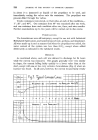
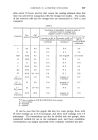
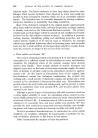
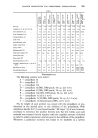
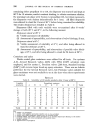
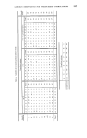
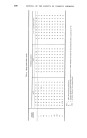
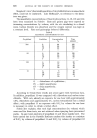
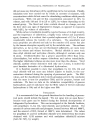
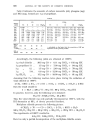
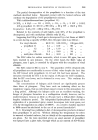
•340 JOURNAL OF THE SOCIETY OF COSMETIC CHEMISTS 6 weeks at 20 ø C, with the exception of wool alcohols, B.P. (ii) in Propellant 11 B), which retains a heavy precipitate. (5) Spray results after 6 weeks In all instances of valve failure, blockage occurred in the actuator and not in the valve body. There were seven instances of complete blockage, and one of partial blockage. Insoluble waxes were the most frequent cause and agglomerated precipitates were responsible for two occurrences. Fine particulate precipitates did not cause any actuator blockage, even when present in large amounts. Anhydrous lanolin, B.P. (i), liquid lanolin "A.C.E." (iii), alcohol soluble lanolin (iv), liquid lanolin "50 Super" (v), liquid lanolin I.S.O. (vi), liquid lanolin "R.I.C.2" (vii), and liquid lanolin "L.I.N." (viii) did not cause valve blockage in any of the propellant systems tested. CONCLUSIONS By adding the numbers in Tables 2 and 3 both horizontally and vertically, a total for each individual lanolin product in all propellant systems is obtained, together with a total for each individual propellant system containing all lanolin products. The lower the total, the better the solubility or solvent power. Liquid lanolin I.S.O. (vi) was found to be the most soluble product, and water soluble wool alcohols "20" (x) the least soluble one. Propellant 11/propellant 12/IMS (H) was found to be the best propellant system in respect of solvent power, immediately after filling. After 6 weeks' storage, however, the propellant 11/IMS system (E) exhibited the best solvent power, with the propellants 11/12fisopropanol system (I) as second best. Propellant 114 (C) was the worst solvent system at all times. It is worth noting that most of the lanolin derivatives exhibit satisfactory solubility characteristics at 0 ø C. ACKNOWLEDGEMENT Westbrook Lanolin Company, which sponsored this work, is thanked for permission to publish these findings. (Received ß $th M'arch 1965) DISCUSSION MR. R. E. F•CKTON: May I ask if in conducting these tests any changes in odour resulting from the exposure of these materials to aerosol conditions were noticed ? THE LECTURER: None. MR. S. J. BusH: Did you carry out any experiments in which other materials which one would expect to find in aerosol formulations were used, in addition to lanolin derivatives ? THE LECTURER: NO.

PHYSIOLOGICAL PROPERTIES OF PROPELLANTS 341 PHYSIOLOGICAL PROPERTIES OF PROPELLANTS H. KfJBLER, Dr. rer. nat.* Presented at the $•ymposium on "Aerosols", organised by the Society, at Southport, Lancs., on 2$th April The properties, MAC an(l LD 50 values of the various propellants, all of which belong to t•e less toxic Groups 5-6, are referred Inhalation tests indicate that up to 5% by volume of propellants 11, 12, 113, 114 and vinyl chloride is tolerate(l. The quantity of halogenate(l acids formed (luring t•e t•ermal (lecomposition of the propellants between 100øC an(l 1000øC is so great, that their irritation prevents the inhalation of carbon monoxi(le an(l phosgene. The results obtaine(l by various workers confirm the absence of skin irrita•on. T•ZRF. ZXIST about forty chemical compounds which are in a gaseous state at room temperature, and which can easily be liquefied. From these, the propellants for aerosol packs are chosen, and the essential features are vapour pressure, boiling point, solubility, chemical resistance, flammability and low toxicity. Only a few of the gases fulfil the greater part of these requirements. The most important property of a propellant is the low order of toxicity, especially bv inhalation. Only a few substances can be tolerated by human individuals in any quantity, whereas other substances which are of decisive importance for metabolism, have a pronounced toxic action in higher concentrations. For instance, carbon dioxide can cause weakness or even suffocation of humans. We must therefore determine the toxic threshold or the concentration at which injuries to health occur. The only gases suitable as propellants are those where this concentration is far below the amount likely to be used in the most extreme circumstances. Complete non-toxicity in any con- centration cannot be demanded for this purpose. The MAC-value characterises the compatibility of a substance, while the LD 50 limit indicates the toxicity. These values differ in so far that by exceeding the MAC-value one does not necessarily cause any harmful effects, but a substance can be lethal even before the LD 50 value is reached. One must differentiate between the toxicity due to the differing intake of a substance, i.e., by mouth, subcutaneous, percutaneous, intravenous, and *Spriihtechnik GmbH, Rheinfelden/Baden, Germany.
Purchased for the exclusive use of nofirst nolast (unknown)
From: SCC Media Library & Resource Center (library.scconline.org)