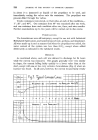
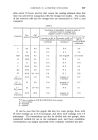
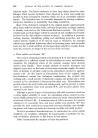
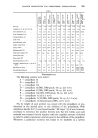
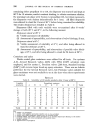
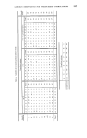
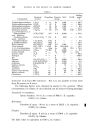
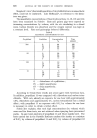
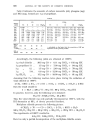
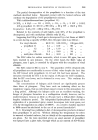
328 JOURNAL OF THE SOCIETY OF COSMETIC CHEMISTS It can be seen that the two groups found by each method do not coincide. Neither do the order, in which the formations could be ranked by either method, correlate with one another. DISCUSSION This method will pick out formulations which contain actively corrosive ingredients, such as Cetrimide. This can be done in about 24 hours, com- pared with about one week, if strips of aluminium were merely immersed in the product in a compatibility tester and then examined visually. Formulations which become corrosive slowly because of a gradual inter- action between ingredients (such as between ethanol and trichlorofluoro- methane) are not actively corrosive when packed and should not be expected to give different graphs to stable formulations at that time. This, it is suggested, is the reason why failures with the method are found, as with the toothpaste mentioned in the introduction. It is considered that if the containers are stored long enough for the contents to become corrosive, and thus yield an appropriate graph on the corrosion cell, the corrosion inside the dispensers would already be visible to the eye. (Received: l•lth February 1963) REFERENCES • Bower, F.A. Soap Chem. Specialties 38 129 (July 1962) 2 Root, M.J. J. Soc. Cosmetic Chemists 15 300 (1962) a Denison, I. A., in Uhlig, H. H. (Ed.) Corrosion Handbook 1039 (1948) (John Wiley & Sons, Ltd., London) • Morris, C.E. J. Soc. Cosmetic Chemists 15 11 (1962) Introduction by the lecturer The reason for the work described in this paper was a desire to find a method of prediction. It was hoped that it would be possible to decide which formulations would or would not corrode the containers for pressure packs, without time and labour-consuming storage trials. The simplest possible practical system was chosen: The all a!uminium container and valve cup without lacquer, and one kind of formula--the alcoholic hair spray. If success was achieved with this the method could be extended to more complex systems. The results show that certain predictions were made after three months. If all the "Not Suitable" and "Doubtful" formulations had been rejected after three months the whole series would have come to an end. However, after nine months storage three of the combinations in unlacquered alumi- nium were found not to have perforated. They are the ones packed in unlacquered containers which have been marked as "Doubtful". If any of these three were in other respects outstanding formulae, they might merit further and larger scale testing to make a conclusion possible.

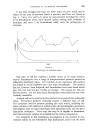
CORROSION IN ALUMINIUM CONTAINERS 329 All the containers from the unlacquered sets which had not perforated had some patches of etching corrosion. Some of the containers holding other formulations which had perforated were completely clean inside except for the perforation! In some instances the same formulation produced some containers with only slight etching, and some with perforations. It therefore seems likely that the three formulations which did not perforate were probably a chance occurrence. A larger number would be needed to settle this point. The safest conclusion is that all the formulae are unsuitable in the un- lacquered aluminium pack. Slow perforation is as serious as fast. In fact the cell reading taken when fresh may hide an accelerating reaction. From this series of experiments, I draw the general conclusions that the corrosion cell is not relevant in trying to predict whether or not a formula will corrode. It will probably pick out the highly corrosive combinations which would show up quickly anyway. Three months' storage at 40øC is an inefficient method of prediction unless one is willing to use it only as a screening test successful formulae remaining on test much longer before being passed. My recommendation would be to test lacquered and unlacquered con- tainers at least at 20øC and at, 40øC. If there are any traces of corrosion after three months I would reject the formula. If after nine months there were no blemishes at all at 20øC, and only very minor ones at 40øC, I would be prepared to pass the formula. If one was very anxious to use a formula which failed this test, the only solution is to pack at least 250, and preferably more than 500 containers and store them for nine months at 20øC. The formula would then be passed if no containers are perforated or badly pitted. DISCUSSION MR. A. I-{ERZKA: Your findings appear to confirm that for pressurized packs there is no real substitute for long term storage tests. How do you account for the difference between curve C, Figure 1 and the curve for Hairspray III, Figure 3 ? THE LECTURER: I tOO believe that there is no more sensible way of testing pressurized packs than long term storage. As I have indicated, short term tests can serve as screening tests to remove extremely corrosive products, although there is a risk that successful formulae will also be rejected occasionally. No product-pack combination should ever be released unless it has successfully passed at least nine months' storage at the normal service temperature. I do not know enough about the basic processes underlying the reactions in the cell to give a reason for the difference between curve C and the curve
Purchased for the exclusive use of nofirst nolast (unknown)
From: SCC Media Library & Resource Center (library.scconline.org)