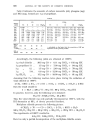
318 JOURNAL OF THE SOCIETY OF COSMETIC CHEMISTS agent, can take place will be determined by its chemical configuration. The great differences between the sensitizing action of related compounds, such as those found by Sulzberger 9 for sulfadiazine and sodium sulfadiazine, could possibly be accounted for in this manner. It is also to be expected that the carrier in which the sensitizing agent has been incorporated, and in which the contact with the skin takes place, will play a part in the speed of transport to the protein components of the allergene. This can be of considerable importance because of the possibility of a sensitizing potential produced by some perfumery chemicals, as the contact of the skin with these chemicals frequently takes place in the presence of products which are highly surface-active. This statement is justified on the grounds that perfumery chemicals largely make contact with the skin in the presence of soaps, detergents and cosmetics which, in general, contain surface-active agents. This influence of the vehicle can be demonstrated by the results of human patch tests with 2-cuminyl-propanal, where on changing the type of emulsion of the carrier from an o/w to a w/o emulsion, an impressive change in dermatological response was observed. The positive reactions obtained with the o/w emulsion base almost completely disappeared when similar tests were made in a w/o base •ø. In the above tests, the problem is clearly one of transportation of the product in question, brought about by differences in contact, so!ubility, etc. The change of the reactivity of the skin under the influence of a previous (or simultaneous) contact with detergents or soap TM becomes, however, a more complicated matter. While certain detergents themselves may cause skin irritation previous treatment of the skin with less aggressive surface-active agents may also lead to a considerable lowering of the threshold value for sensitization with other chemicals. Thus, it might well be possible that unexpected allergic reactions will occur, if, in the dermatological examination, insufficient attention is paid to changes in the properties of the epidermis, which may result from continued contact with highly surface-active material. This may also apply with respect to perfumery raw materials and only a properly conducted test programme with the completed product will give evidence for the safety of use. (Received: 26th September 1962) REFERENCES Klarman, E.G. Ann. Allergy 16 425 (1958) Cainan, C. D. _Proceedings of Second Congress of the International Federation of Societies of Cosmetic Chemists London, July 1962. In press (Pergamon Press Ltd., Oxford) Eisen, H.N.y. Exp. Med. 108 773 (1958) ibid. 110 187 (1959) ibid. 112 1195 (1960) Fregert, S. Acta Dermato-Venereol. 40 206 (1960) Hjorth, N. Eczematous allergy to balsams, Dissertation (1961)

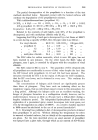
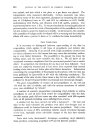
CONTACT SENSITIZATION DUE TO PERFUMERY RAW MATERIALS 319 Baer, R. L. in MaclKenna, R.M.B., Modern Trends in Dermatology 232 (1954) (Butterworths, London) Schulz, IK. H. Arch. klin. u. exp. Dermatol. 211 253 (1960) Voss, J. G. J. invest. Dermatol. 31 373 (1958) Sulzberger, M. B. J. Allergy 18 92 (1947) Friederich, H. C. and Witjens, P.H. løarfiimerie u. Kosmetik 39 893 (1958) Nilzen, A. Acta Dermato-Venereol. 38 104 (1958) x2Skog, E. Acta Dermato-Venereol. 38 1 (1958) Introduction by the lecturer I would like to stress that skin sensitization with man due to perfumery is a phenomenon of rare occurrence. Nevertheless a careful observation of these phenomena is fully warranted. The quantities of perfume being used in some form or other are rising steadily. This is especially applicable to perfume compounds incorporated in end-products based on highly surface active materials, which will naturally promote an intensive contact with the skin. It is a happy coincidence that the study of contact sensitization, especi- ally due to simple organic chemicals, is starting to emerge from a purely empirical one and has recently been treated more and more by a more fundamental approach. In these theoretical considerations, especially with regard to the chemical aspects, the experience in perfumery, with its raw materials, covering nearly the entire field of organic chemistry, will no doubt be of much value. Likewise, knowledge obtained in this way may serve the perfumery chemist as a guiding principle and as an additional source of reference in the study of the dermatological properties of new perfumery chemicals. In particular, the tendency in perfumery chemistry to replace natural products, where the dermatological behaviour is traditionally known, by synthetic chemicals may introduce the necessity of careful evaluation of the possibility of an adverse effect in contact with the skin. The experimental approach to the phenomenon of skin sensitization is rather difficult owing to the fact that contact sensitization is not a general response of the human organism, but a rather exceptional and individually abnormal reaction on a normally harmless contact of foreign materials with the skin. In order to study the physiological and chemical backgrounds of contact sensitization in man, the investigator has, in general, to confine himself to a very limited group of test subjects. On the other hand, there is the possibility of studying sensitization effects on animals (rabbits and guinea pigs) but we have to realize that the effects produced in those animals are probably different from those to be expected with man.
Purchased for the exclusive use of nofirst nolast (unknown)
From: SCC Media Library & Resource Center (library.scconline.org)