322 JOURNAL OF THE SOCIETY OF COSMETIC CHEMISTS CORROSION IN ALUMINIUM CONTAINERS E. K. CLARKE, B.Sc., M.Inst. Pkg.* Presented at the Symposium on "Aerosols", organised by the Society, at Southport, Lancs., on 25th April 1963. An investigation o• a method to l•redict corrosion was made with cells cons•ucted with electrodes o[ nickel, and aluminium taken •om l•ressure containers. The electrolytes were a series o[ different hair Slyrays. The current flowing was lflotted automatically as the cells were discharged over 24 hours. No general correlation was [ound between these results, and the results o[ storage tests excel•t [or formulations containing highly corrosive ingredients. INTRODUCTION THE AEROSOL industry is still technically very much in its infancy. A kind of folklore is often found behind very firmly bound beliefs about the behaviour of aerosol systems. An opinion once stated, and then quoted, becomes "fact". The effect of this is to make predictions about the behaviour of such systems (particularly with regard to stability and corrosiveness) very uncertain. The most experienced workers, like the earlier workers in the aircraft industry, still have to say, "Let's try it and see!". Probably the most worrying problem is the prediction of corrosion. Apart from damage to the product, the container can be attacked, and especially in the case of aluminium, perforated with disastrous effect. Various tests have been suggested which might rapidly show up corrosion. Thus it has been suggested that the increase in dissolved metals, or the increase in aldehydes be measured. Bower • has recently shown that pH measurements whilst related to corrosion do not enable predictions to be made about complete formulations, whilst Root •' has shown the value of pH in assessing batches of propellant. This paper discusses a preliminary examination of a method which has been used, or considered, by many people concerned with aluminium con- tainers, particularly non-pressurized ones. The method is a modification of the Denison Cell described elsewhere a,4. A cell is constructed having one electrode of aluminium and the other of nickel, using the product under test as the electrolyte. The cell is allowed to discharge under its owr• potential force and the current which is of the order of microamps is measured over a period of time. The type of polarisation curve produced is said to be characteristic of the type of corrosion that may be expected. *Beecham Toiletry Division Ltd., Brentford, Middlesex.

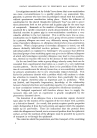
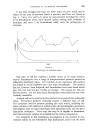
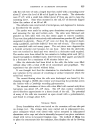
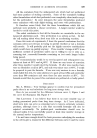
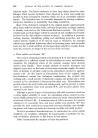
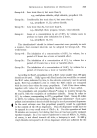
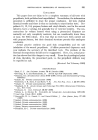
CORROSION IN ALUMINIUM CONTAINERS 323 It has been thought that there are three types of curve which can be related to the kind of corrosion found in practice, and these are shown in Fig. 1. Curve A is said to be given by non-corrosive formulations, curve B by formulations which cause general surface etching with evolution of hydrogen, and curve C by formulations which cause the pitting-type of corrosion. Figure 1 Three types of corrosion curve This type of cell has enabled a sensible choice to be made between various formulations over a range of non-pressurized products packed in collapsible aluminium tubes. For example, in my experience this method has helped to choose inhibitors for a new type of toothpaste. The method has not, however, been foolproof, and formulations have been found which pass this test and yet give trouble on storage. The reasons for this are discussed later. On the other hand, formulations which failed the test were certainly unsuitable. A simple cell can be constructed for products to be packed into collapsible tubes. Pressurized products obviously require a different type of cell. The containers used for pressure packing also vary widely, including tin- plate containers with soldered or welded seams, drawn blackplate, alumininm with tinplate ends, two-piece aluminium with aluminium ends, and one-piece aluminium containers. Valve cups also may be in tinplate or aluminium, and various lacquer systems are available for the various components. For simplicity in this preliminary investigation it was decided to con- centrate mainly on one formulation type {hairsprays), and to use the most
Purchased for the exclusive use of nofirst nolast (unknown)
From: SCC Media Library & Resource Center (library.scconline.org)