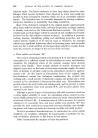
304 JOURNAL OF THE SOCIETY OF COSMETIC CHEMISTS to wealthy people. Moreover, even allowing for the diminishing purchasing power of modern currency, natural floral products were cheaper in the past than they are nowadays. Now, however, there is a need to put classical products of high quality before a wide public at a price they can afford to pay. How can this be done? ALTERNATIVES If economies are to be made in formulae of this type it is obviously necessary to find substitutes for the constituents which make up the bulk of the cost. This can be done either by finding alternative natural products of approximately the same odour but substantially reduced cost, or by completely abandoning the expensive naturals in fayour of compounded bases composed principally of cheaper materials. But this proves difficult to achieve. After intensive study one gains great respect and admiration for perfumers of the past who, in the first place, selected the qualities of raw material on which finished perfumes were based. It seemed to me, when I began to study perfumery fifteen years ago, that the obvious practical answer to high cost raw materials would lie in the cultivation of the plants concerned in territories where labour was plentiful and cheap--for it goes without saying that the cost of a natural raw material is made up very largely of the cost of the labour which goes into its cultivation and harvesting. Taking the case of Neroli, for example, it seemed reasonable that if its cost of cultivation in France became prohibitively high owing to the rising standards of living of the local peasantry, one needed only to look to the southern shore of the Mediterranean, taking care to graft onto local stock the desired variety of Bitter Orange tree and one would obtain an oil which, if it differed slightly in tonality, would be comparable in value with that obtained in France. I had heard, of course, that experiments of this nature had been tried akeady with Orange Flower, Rose, Jasmin, Bergamot, Orris, Tuberose, Cassie and, returning to the present day, Clary Sage, Tarragon, even Lavender. Surely amongst so many experiments a certain proportion of successes would be inevitable, that is to say, while no oil would remain exactly as it had been, a few at least would be improved. For how could the perfumers of old have established in every case, optimum growing areas for their natural products? Looking back on this problem in the light of recent experience, I wonder whether nineteenth century producers did not do exactly that. We have perhaps underrated the small scale experiments repeatedly carried out at a time when formal publication was less fashionable, but the results of which became, by word of mouth, quite widely known. May it not have been that at that time, when synthetic chemicals were either not available or available only in crude quality, that a thorough investigation was made of the potentialities for essential oil production of most, if not of

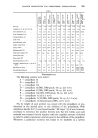
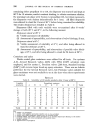
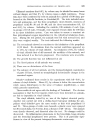
SOME ECONOMIC ASPECTS OF PERFUMERY 305 all, countries of the world? The nineteenth century had its successes. Have there been any in the twentieth? Success is, of course, a relative term, and if oils produced in non-tradi- tional areas are seldom as good as those from normal sources, they never- theless have a substantial value. Moreover, in some cases transplantation not only coarsens but also strengthens an oil, thereby conferring on it potentialities which the parent oil did not possess. Geranium Bourbon, for example, has so much more power than Geranium de Grasse that, even without the large cost differential, it would inevitably be preferred for many uses. The present position regarding the quality of some of the oils obtainable from alternative sources is, in my opinion, as follows: Jasmin French Pre-eminent. Italian Best qualities floral, but lacking in odour strength. Algerian Having good strength, but heavy and indoloid in character. Egyptian Best qualities good, but of somewhat indi- vidual odour. Moroccan Of improving quality but seemingly lacking in richness. Other sources of Jasmin yield products markedly different from those listed above. Rose by extraction French Moroccan Bulgarian Turkish Russian Rose by distillation Bulgarian Turkish Moroccan Geranium (by distillation) Pre-eminent. Good but lacking in richness. Good but lacking in top note character. Good but lacking in top note character. Hors de concours. Pre-eminent. Excellent, but of differing tonality. Excellent, but of lesser strength. Other sources give oils of variable quality. French Of exceptional fragrance and lift. Bourbon Of outstanding character and strength. Algerian Toward French in character but less fragrant. Moroccan Good, but without the special characteristics of Bourbon and Algerian. Other important sources exist concerning which I do not feel qualified to express an opinion. These lists may be continued and, in each case, the old established source shows up as pre-eminent. These opinions are based on experiments in which finished products of classical types have been made up employing each of the oils in turn. It turns out that the costs of the oils offered on the open market often approximate closely to the values which may be set upon them in actual use. In other words, returning to the problem of making available to a wider public the classical creations of perfumery it will be seen that while one can reduce the cost by substituting dear natural constituents with similar products obtained by cultivation in lower cost areas, the degree of economy
Purchased for the exclusive use of nofirst nolast (unknown)
From: SCC Media Library & Resource Center (library.scconline.org)