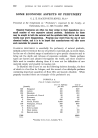
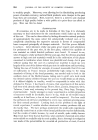
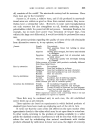
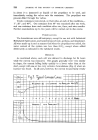
342 JOURNAL OF THE SOCIETY OF COSMETIC CHEMISTS by inhalation. In practice only inhalation tests can be performed with gaseous substances. The concentration, by volume, of the gas in the atmosphere which after a definite inhalation period has a lethal effect or causes injuries to health, takes the place of the LD 50 value. A very high propellant concentration could be harmful, because it results in a reduction of the oxygen content of the atmosphere. The so-called "interference level" is of the order of about 12.5 volume % oxygen. We do not know such a case it cannot occur during shipment or during the storage of pressurized dispensers, but it could happen due to a sudden leakage from large propellant cylinders, or during cleaning of the latter. Undoubtedly, the MAC-value does not give a definite indication for the physiological suitability of a gas, but the propellants commonly used have an identical value of at least 500 ppm. While the MAC-value indicates the concentration by volume (cc), which is tolerated in 1 m 3 of air daily for inhalation in 8 hours, e.g., in a filling plant, an individual is exposed only temporarily to a certain concentration of vapour while a pressure pack is used. As a result, the use of a solvent with a MAC-value below 500 pprn may be permissible, particularly as there are often very good technical reasons for doing so. In the event that one is faced with two equivalent substances having different MAC-values, one or both of which are below 500 ppm, then one would select the substance with the higher value. Toxicity Groups Group 1: Group 2: Group 3: Group 4: Gases at a concentration in air from 0.5-1.0% by volume have a lethal effect by inhalation after 5 minutes, or cause serious, irreversible damage, e.g., phosgene, sulphur dioxide. Gases at a concentration in air from 0.5-1.0% by volume have a lethal effect by inhalation after 30 minutes or cause serious, irreversible damage, e.g., ammonia, methyl bromide. Gases at a concentration in air of 2-2.5% by volume have a lethal effect by inhalation after 1 hour, or cause serious, irreversible damage, e.g., carbon tetrachloride, chloroform, methyl formate. Gases at a concentration in air of 2-2.5% by volume have a lethal effect by inhalation after 2 hours, or cause serious, irreversible damage, e.g., dichloroethylene, methyl chloride, ethyl bromide.

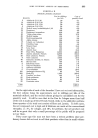
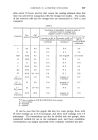
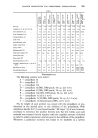
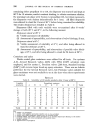
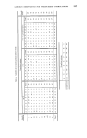
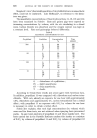
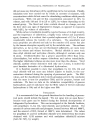
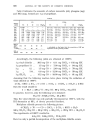
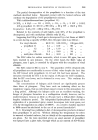
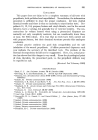
PHYSIOLOGICAL PROPERTIES OF PROPELLANTS 343 Group 4-5: Less toxic than 4, but more than 5, e.g., methylene chloride, ethyl chloride, propellant 113. Group 5a: Considerably less toxic than 4, but more than 6, e.g., propellants 11, 22, carbon dioxide. Group 5b: Less toxic than 5a, but more than 6, e.g., dimethyl ether, propane, butane, vinyl chloride. Group 6: Gases at a concentration in air of 20% by volume seem to produce no harm after inhalation for 2 hours, e.g., propellants 12, 114. This classification •'• should be defined somewhat more precisely in such a manner, that constant intervals can be adopted for Groups 4-6. This would mean: Group 4-5: The inhalation of a concentration of 6.5% by volume, for a period of 2 hours has a toxic or harmful effect. Group 5a: The inhalation of a concentration of 11ø/0 by volume for a period of 2 hours has a toxic or harmful effect. Group 5b: The inhalation of a concentration of 16.5% by volume for a period of 2 hours has a toxic or harmful effect. According to Reed •, propellants with a MAC value smaller than 100 ppm should not be used. I fully agree with Reed insofar but would like to extend the MAC value, indicated by him, to the solvents commonly used in aerosol packs. Reed has published a list in which the MAC values are compared with the toxic class values for many propellants. Table I lists those values, together with values for other propellant blends, which I have added. The propellants and propellant diluents * belong to toxicity Groups 5a, 5b and 6, with the exception of methylene chloride. Group 5a refers to 110/0 by volume, corresponding to 677 g propel!ant 11/m a. Group 5b refers to 16.5% by volume, corresponding to 460 g vinyl chloride/m a. Such a pro- pellant concentration is inconceivable during the use of pressurized dispensers. In the most extreme case this propellant quantity would be equivalent to the content of 1« x 18 oz dispensers. Thus 7« dispensers would have to be sprayed in a very small room of 176.5 c. ft. For this operation at least 75 minutes are necessary, but during that time air has been partly replaced. Another example: In a very narrow hairdresser's room of 105.9 c. ft., which, of course, is not closed towards all sides, a hairspray is used. 3 x460 g vinyl chloride correspond to 6 x 18 oz dispensers which are sufficient for the
Purchased for the exclusive use of nofirst nolast (unknown)
From: SCC Media Library & Resource Center (library.scconline.org)