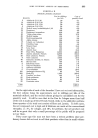
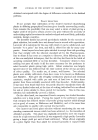
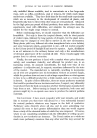
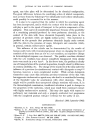
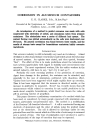
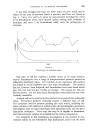
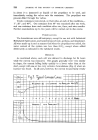
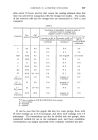
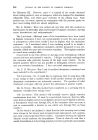
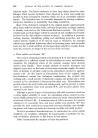
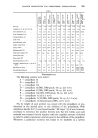
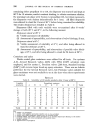
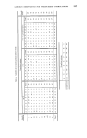
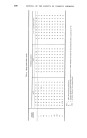
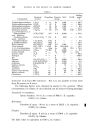
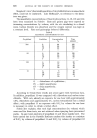
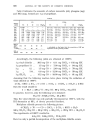
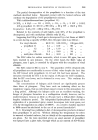
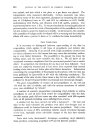
344 JOURNAL OF THE SOCIETY OF COSMETIC CHEMISTS Table 1 Boiling Chemical Propellant Toxicity MAC LD 50 point Designation: symbol group øC Trichlorofiuoromethane C C1 a F * 11 5a 1000 -- q- 23.7 Dichlorodifluoromethane CC12F2 * 12 6 1000 -- -- 29.8 Dichlorofluoromethane CHC12 F 21 5a 1000 -- q- 8.9 Chlorodifluoromethane CHC1Fz 22 5a 1000 -- -- 41.0 Methylene chloride C HzClz * 30 4-5 500 0.27 q- 40.8 1, 2, 2-Trichloro-1, 1, 2- trifluoroethane CC1F•.CC12F 113 4-5 (1000) ---' q- 47.6 sym. Dichloro- tetrafiuoroethane CC1F•.CC1 F• * 114 6 1000 -- q- 3-5 asym. Dichloro- tetrafiuoroethane CCI• F. CF a 114a 6 -- -- q- 3.2 2, 2-Difluoroethane CHa. CH F. z 152a 6 -- -- -- 24.0 Ethyl chloride CH a CH2 C1 160 4-5 1000 --~ q- 12.2 Vinyl chloride CHz: CHC1 * 1140 5b 500-1000 -- -- 13.9 1, 1, 1-Trichloroethane CCIa. CH a 140a 5a 500 12.9 q- 74.4 Octafluorocyclobutane (CF•) 4 * C 318 6 (1000) -- + 6.0 Carbon dioxide COz * -- 5a 5000 -- subl. Nitrous oxide N• O * ..... 89.5 Nitrogen N2 * -- 6 -- -- --195.8 Air -- 6 -- -- -- Propane CHa.CH•.CH a * -- 5b (1000) -- -- 42.2 nButane CHaCH•CH•CHa* -- 5b (1000) -- -- 0.5 isoButane (CHa)•CHCH a * -- 5b (1000) -- -- 11.7 Sulphur dioxide SO2 -- 1 10 -- -- 10.0 Phosgene CO CI• -- 1 1 -- q- 7.6 Ammonia NH a -- 2 100 -- -- 33.5 Carbon tetrachloride CC14 l0 3 25 7.0 q- 76.7 Methyl chloride C Ha C1 40 4 50 -- -- 23.7 Chloroform C H C1 a 20 3 -- -- q- 66.2 treatment of at least 300 customers. But it is not possible to treat more than 20 persons in 8 hours. The following figures were obtained in answer to the question: What concentration, by volume, of vinyl chloride can be achieved during spraying? Insecticide or roomspray : Spray duration: 10 sec in a room of 706.3 c. ft. capacity: 0.001% by volume. Hairspray : Duration of spray: 30 sec in a room of 282.5 c. ft. capacity: 0.025% by volume. Fixative: Duration of spray: 3 min in a room of 706.3 c. ft. capacity: 0.140% by volume. The MAC value is equivalent to 0.05 øfo by volume.

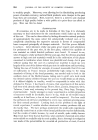
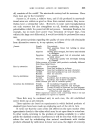
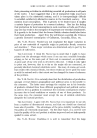
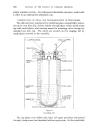
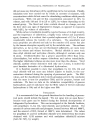
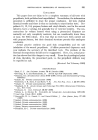
PHYSIOLOGICAL PROPERTIES OF PROPELLANTS 345 Ullmann a mentions that 0.5% by volume may be inhaled for many hours without danger, and that 5ø,/0 by volume causes a slight numbness. These data have been confirmed by tests on animals for a period of 100 days, per- formed at the Battelle Institute, in Frankfurt/M. The tests included mice, rats and guineapigs, and the three propellants vinyl chloride, mixtures of propellant 11/12 50:50 and 10:90, and the three concentrations 0.5, 1.5 and 5.0% by volume. Including the controls, 120 animals of each type, in groups of 10 (5 male, 5 female), were exposed 2 hours daily for 100 days to an open inhalation system. Care was taken to ensure a constant air flow (physiological oxygen importation) in the cylindrical inhalation cham- bers. During the test period, the animals were fed with normal food, and they were weighed weekly. The tests indicated the following results: (a) The test animals showed no reactions to the inhalation of the propellant 11/12 blend. No deviations from the normal conditions appeared up to 1.5% by volume of vinyl chloride. An inhalation of 5% by volume of vinyl chloride first of all increased the mobility of the animals, and then reduced it as the tests progressed. The reactions were reversible. (b) The growth function was not influenced at all. (c) The blood pattern of all animals was normal. (d) There was no disturbance of the liver. (e) The autopsy of all test animals, and the histopathological examination of parts of the•n, showed no morphological determinable changes in the examined organs. Schade 4 confirmed these results in his experiments with 0.5--5.0% by volume of vinyl chloride. Hence 5% by volume is below the concentration which causes disturbances to the sense of balance (equilibrium), a state which precedes anaesthesia. These results do not agree with the findings of Torkelson 5. The obvious assumption is that the liver injuries which have been detected on anirnals, are due to impurities in vinyl chloride. The vinyl chloride, tested by us, was of the highest chemical purity. Another test carried out with a shellac-based hairspray utilising the pro- pellant vinyl chloride 6 gave the same results as that with propellants 11 and 12. Three groups of white mice beneath a plastic cover were sprayed for 30 seconds daily, for 5 weeks, from a distance of 20--25 cm. The animals were closely observed, and dissected after the test. No changes could be discovered. No inflammation phenomena in the bronchials, lungs alveoles and the bronchial lymphknots were present. This is of particular signi- ficance in view of the present hairspray-thesaurosis controversy.
Purchased for the exclusive use of nofirst nolast (unknown)
From: SCC Media Library & Resource Center (library.scconline.org)