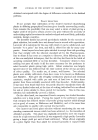
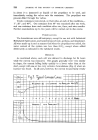
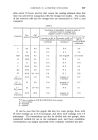
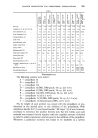
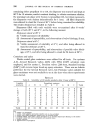
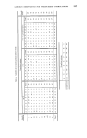
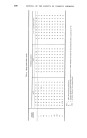
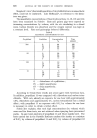
LANOLIN DERIVATIVES FOR PRESSURIZED FORMULATIONS 330 (1) After 1 hour at 20 ø C Propellant 12 (dichlorodifiuoromethane) The solubility of the lanolin products is poor in Propellant 12, with the exception of liquid lanolin I.S.O. (vi) and liquid lanolin "L.I.N." (viii). The addition of D/IS effects complete, or nearly complete, solubility of all products, with the exception of anhydrous lanolin, B.P. (i). Propellant 11 (trichlorofiuoromethane) The solubility of the lanolin products is good or excellent, with the excep- tion of water soluble lanolin "75" (ix) and water soluble wool alcohols "20" (x). The addition of the IMS effects virtually complete solubility of products (ix) and (x). Propellant 114 (dichlorotetrafiuoroethane) The solubility of the !anolin products in Propellant 114 is negligible. The addition of D/IS effects complete, or nearly complete, solubility of all products except anhydrous lanolin, B.P. (i), and water soluble lanolin "75" (ix). Propdlants 11/12 mixture The solubility of the lano!in products is good or excellent, with the exception of alcohol soluble lanolin (iv), water soluble !artolin "75" (ix), and water soluble wool alcohols "20" (x). The addition of the D/IS effects virtually complete solubility of the first two products, but has no effect on the last named. The addition of the isopropanol does not have so marked an effect, although it improves the solubility of the alcohol soluble lanolin (iv). (2) Storage for 6 weeks at 20 ø C In general there have been only minor changes in solubility during the test period. The exceptions are alcohol soluble lano!in (iv) in Propellant 11 (B), and water soluble lanolin "75" (ix) in propellants 11/12/IMS (H) where partial precipitation has occurred, accompanied by agglomeration in the latter. There has also been a tendency for some of the other precipitates to agglomerate which could be a potential cause of valve blockage. (3) Storage for 6 weeks at 0 ø C There is a slight decrease in solubility of some of the products, and also a tendency for some of the precipitates to agglomerate, but this phenomenon is not restricted to those products which form agglomerates during storage at 20 ø C. (4) Storage for 8 weeks at 0 ø C, followed by storage for 24 hours at 20 ø C In general the solubilities are similar to those noted after storage for

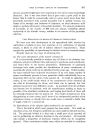
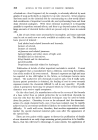
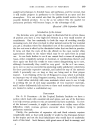
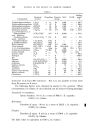
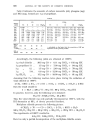
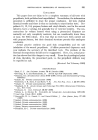
•340 JOURNAL OF THE SOCIETY OF COSMETIC CHEMISTS 6 weeks at 20 ø C, with the exception of wool alcohols, B.P. (ii) in Propellant 11 B), which retains a heavy precipitate. (5) Spray results after 6 weeks In all instances of valve failure, blockage occurred in the actuator and not in the valve body. There were seven instances of complete blockage, and one of partial blockage. Insoluble waxes were the most frequent cause and agglomerated precipitates were responsible for two occurrences. Fine particulate precipitates did not cause any actuator blockage, even when present in large amounts. Anhydrous lanolin, B.P. (i), liquid lanolin "A.C.E." (iii), alcohol soluble lanolin (iv), liquid lanolin "50 Super" (v), liquid lanolin I.S.O. (vi), liquid lanolin "R.I.C.2" (vii), and liquid lanolin "L.I.N." (viii) did not cause valve blockage in any of the propellant systems tested. CONCLUSIONS By adding the numbers in Tables 2 and 3 both horizontally and vertically, a total for each individual lanolin product in all propellant systems is obtained, together with a total for each individual propellant system containing all lanolin products. The lower the total, the better the solubility or solvent power. Liquid lanolin I.S.O. (vi) was found to be the most soluble product, and water soluble wool alcohols "20" (x) the least soluble one. Propellant 11/propellant 12/IMS (H) was found to be the best propellant system in respect of solvent power, immediately after filling. After 6 weeks' storage, however, the propellant 11/IMS system (E) exhibited the best solvent power, with the propellants 11/12fisopropanol system (I) as second best. Propellant 114 (C) was the worst solvent system at all times. It is worth noting that most of the lanolin derivatives exhibit satisfactory solubility characteristics at 0 ø C. ACKNOWLEDGEMENT Westbrook Lanolin Company, which sponsored this work, is thanked for permission to publish these findings. (Received ß $th M'arch 1965) DISCUSSION MR. R. E. F•CKTON: May I ask if in conducting these tests any changes in odour resulting from the exposure of these materials to aerosol conditions were noticed ? THE LECTURER: None. MR. S. J. BusH: Did you carry out any experiments in which other materials which one would expect to find in aerosol formulations were used, in addition to lanolin derivatives ? THE LECTURER: NO.
Purchased for the exclusive use of nofirst nolast (unknown)
From: SCC Media Library & Resource Center (library.scconline.org)