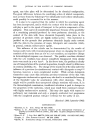
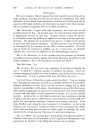
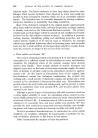
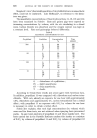
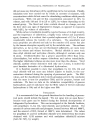
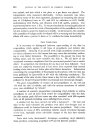
PHYSIOLOGICAL PROPERTIES OF PROPELLANTS 343 Group 4-5: Less toxic than 4, but more than 5, e.g., methylene chloride, ethyl chloride, propellant 113. Group 5a: Considerably less toxic than 4, but more than 6, e.g., propellants 11, 22, carbon dioxide. Group 5b: Less toxic than 5a, but more than 6, e.g., dimethyl ether, propane, butane, vinyl chloride. Group 6: Gases at a concentration in air of 20% by volume seem to produce no harm after inhalation for 2 hours, e.g., propellants 12, 114. This classification •'• should be defined somewhat more precisely in such a manner, that constant intervals can be adopted for Groups 4-6. This would mean: Group 4-5: The inhalation of a concentration of 6.5% by volume, for a period of 2 hours has a toxic or harmful effect. Group 5a: The inhalation of a concentration of 11ø/0 by volume for a period of 2 hours has a toxic or harmful effect. Group 5b: The inhalation of a concentration of 16.5% by volume for a period of 2 hours has a toxic or harmful effect. According to Reed •, propellants with a MAC value smaller than 100 ppm should not be used. I fully agree with Reed insofar but would like to extend the MAC value, indicated by him, to the solvents commonly used in aerosol packs. Reed has published a list in which the MAC values are compared with the toxic class values for many propellants. Table I lists those values, together with values for other propellant blends, which I have added. The propellants and propellant diluents * belong to toxicity Groups 5a, 5b and 6, with the exception of methylene chloride. Group 5a refers to 110/0 by volume, corresponding to 677 g propel!ant 11/m a. Group 5b refers to 16.5% by volume, corresponding to 460 g vinyl chloride/m a. Such a pro- pellant concentration is inconceivable during the use of pressurized dispensers. In the most extreme case this propellant quantity would be equivalent to the content of 1« x 18 oz dispensers. Thus 7« dispensers would have to be sprayed in a very small room of 176.5 c. ft. For this operation at least 75 minutes are necessary, but during that time air has been partly replaced. Another example: In a very narrow hairdresser's room of 105.9 c. ft., which, of course, is not closed towards all sides, a hairspray is used. 3 x460 g vinyl chloride correspond to 6 x 18 oz dispensers which are sufficient for the

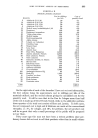
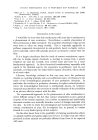
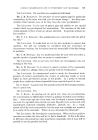
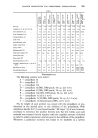
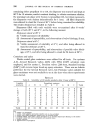
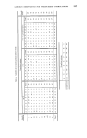
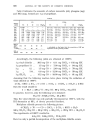
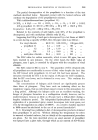
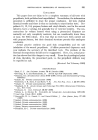
344 JOURNAL OF THE SOCIETY OF COSMETIC CHEMISTS Table 1 Boiling Chemical Propellant Toxicity MAC LD 50 point Designation: symbol group øC Trichlorofiuoromethane C C1 a F * 11 5a 1000 -- q- 23.7 Dichlorodifluoromethane CC12F2 * 12 6 1000 -- -- 29.8 Dichlorofluoromethane CHC12 F 21 5a 1000 -- q- 8.9 Chlorodifluoromethane CHC1Fz 22 5a 1000 -- -- 41.0 Methylene chloride C HzClz * 30 4-5 500 0.27 q- 40.8 1, 2, 2-Trichloro-1, 1, 2- trifluoroethane CC1F•.CC12F 113 4-5 (1000) ---' q- 47.6 sym. Dichloro- tetrafiuoroethane CC1F•.CC1 F• * 114 6 1000 -- q- 3-5 asym. Dichloro- tetrafiuoroethane CCI• F. CF a 114a 6 -- -- q- 3.2 2, 2-Difluoroethane CHa. CH F. z 152a 6 -- -- -- 24.0 Ethyl chloride CH a CH2 C1 160 4-5 1000 --~ q- 12.2 Vinyl chloride CHz: CHC1 * 1140 5b 500-1000 -- -- 13.9 1, 1, 1-Trichloroethane CCIa. CH a 140a 5a 500 12.9 q- 74.4 Octafluorocyclobutane (CF•) 4 * C 318 6 (1000) -- + 6.0 Carbon dioxide COz * -- 5a 5000 -- subl. Nitrous oxide N• O * ..... 89.5 Nitrogen N2 * -- 6 -- -- --195.8 Air -- 6 -- -- -- Propane CHa.CH•.CH a * -- 5b (1000) -- -- 42.2 nButane CHaCH•CH•CHa* -- 5b (1000) -- -- 0.5 isoButane (CHa)•CHCH a * -- 5b (1000) -- -- 11.7 Sulphur dioxide SO2 -- 1 10 -- -- 10.0 Phosgene CO CI• -- 1 1 -- q- 7.6 Ammonia NH a -- 2 100 -- -- 33.5 Carbon tetrachloride CC14 l0 3 25 7.0 q- 76.7 Methyl chloride C Ha C1 40 4 50 -- -- 23.7 Chloroform C H C1 a 20 3 -- -- q- 66.2 treatment of at least 300 customers. But it is not possible to treat more than 20 persons in 8 hours. The following figures were obtained in answer to the question: What concentration, by volume, of vinyl chloride can be achieved during spraying? Insecticide or roomspray : Spray duration: 10 sec in a room of 706.3 c. ft. capacity: 0.001% by volume. Hairspray : Duration of spray: 30 sec in a room of 282.5 c. ft. capacity: 0.025% by volume. Fixative: Duration of spray: 3 min in a room of 706.3 c. ft. capacity: 0.140% by volume. The MAC value is equivalent to 0.05 øfo by volume.
Purchased for the exclusive use of nofirst nolast (unknown)
From: SCC Media Library & Resource Center (library.scconline.org)