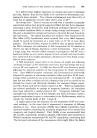
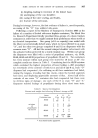
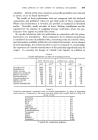
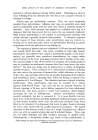
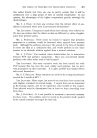
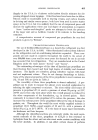
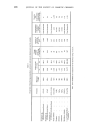
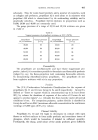
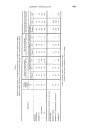
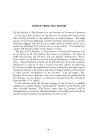
SOME ASPECTS OF THE SAFETY OF AEROSOL CONTAINERS 369 volatility. Details of the three American aerosol flammability tests referred to above, are to be found elsewhere 4's. The results of these performance tests are compared with the declared composition and published values for any flash point of these compounds. Where any inconsistency is revealed, the product is examined as described earlier. Normally, small amounts of lower flashing constituents are dis- regarded for the purpose of assigning stowage restrictions where the per- formance tests appear to justify this course. No specific laboratory tests are undertaken in connection with the poten- tial toxicity of a formulation. Each component, in its declared proportions is considered in terms of published data, concerning acute and chronic doses, and information available within this and related laboratories in the absence of such knowledge, the industrial safety record is examined or, occasionally, the experience of a known manufacturer of the particular ingredients may be sought. In assessing the danger of volatile toxic liquids, in addition to Table 4 Volatile haloallcanes in order of increasing toxicity. MAC (8 hour day) Lethal Conc. (mice) ppm g/m a % g/m a b.p. -- Propellant 12 .... 1000 5-0 -- -- -30 Propellant 11 .... 1000 5.6 10 560 24 Ethyl chloride .... 1000 2.6 -- -- 12 Methylene dichloride .. 500 1-8 1.4 50 40 Methyl chloroform .. 500 2-7 1-1 65 74 Trichlorethylene .... 100 0.52 0.8 42 87 Tetrachlorethylene .. 100 0.67 0.6 40 121 Methyl chloride .... 100 0-21 -- -- -24 Chloroform .... 50 0.24 0.6 28 61 Carbon tetrachlori•t& .. 25 0.16 0.9 60 77 Table 5 Pesticide components commonly used in aerosol formulations, in order of increasing acute toxicity. Expressed as the mean oral dose (g/kg body weight) lethal to 50% of a group of rats. Pyrethrins Malathion 2,4-D .. DDT .. Letfane Chlordane BHC (lindane) Pentachlorphenol Toxaphene .. DDVP .. Aldrin .... Dieldrin .. Parathion* .. * quoted for comparison purposes. 1.0 0.9 0.6 0.6 0-5 0.4 0.2 0.2 0.1 0.06 0.05 0.05 0.004

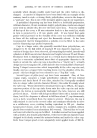
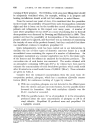
370 JOURNAL OF THE SOCIETY OF COSMETIC CHEMISTS values for lethal concentrations and vapour pressure data, internationally accepted "Maximum Allowable Concentrations" may be considered. The relevant stowage precautions are discussed in a later section, and some toxicity data are quoted in Tables 4 and 5. There are two aspects of the corrosion hazard. The product may be incompatible with its dispenser, causing leakage in transit, and there is also a risk from the occasional potentially corrosive formulation in a suitable container if leakage occurred for any other reason. The former point should have been thoroughly covered by the product research prior to manufacture and subsequent long-term storage tests such tests cannot be reproduced in a short term enquiry. Further, it has been stated 4 (p. 171) that corrosion may even be inhibited during elevated temperature storage tests, yet be apparent after briefer priods at ambient temperatures. Thus, for the purposes of carriage by sea applications, it must be accepted de facto that the manufacturer has developed a suitable container for his product unless there is apparent evidence to the contrary. However, on the second aspect, wherever the declared composition indi- cates the presence of significant amounts of an ingredient known to be appreciably corrosive, the rate of attack of the residual liquid of the formula- tion on standard pieces of burnished mild steel plate exposed at 20 ø and 55 ø is determined. If subsequent examination reveals no signs of pitting or other non-uniform attack, the average penetration is calculated from the weight loss and expressed either as "ipy" (inches penetration per year) or, where attack only on one unprotected surface or a special substrate is concerned, as "todd" (mg/dm•/day). If from the declared, or subsequently derived, composition, chemical intuition or precedent suggests that there may be chemical or physical interaction between one or more of the constituents and adjacently stowed cargo, then appropriate stowage restrictions are recommended. One normally required restriction deals with the juxtaposition of strong acids (for tinplate containers), and both strong acids and alkalies (for aluminium containers) which might, if spilt, attack the dispensers and release their potentially hazardous pressurized contents. It should be noted that, in general, both solvent and active principles in the aerosol formulations may contribute to any or all of the four hazards that have been described in this section. PROPELLANTS There is a reference in an 1889 patent to methyl and ethyl chloride as liquefied gaseous propellants in a spray, and prior to 1933, carbon dioxide, dim ethyl ether, isobutane and vinyl chloride had all been suggested for similar purposes. Chlorinated fluorinated hydrocarbons, having been
Purchased for the exclusive use of nofirst nolast (unknown)
From: SCC Media Library & Resource Center (library.scconline.org)