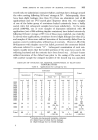
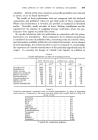
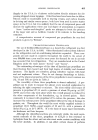
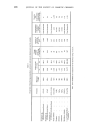
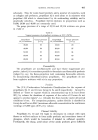
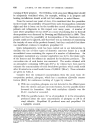
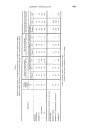
AEROSOL PROPELLANTS 405 (largely in the U.S.A.) is of nitrous oxide/carbon dioxide mixtures for dis- pensing whipped cream toppings. Other food uses have been slow to follow. Nitrous oxide is occasionally used in shaving creams, and carbon dioxide in de-icing and similar coarse sprays both have been used in motor starter sprays in the U.S.A. but it is unlikely that the use of compressed gases will increase for applications where any real degree of atomization is required. Some "mother-and-daughter" packs use nitrogen to boost the pressure of the larger unit and so facilitate transfer of its contents to the handbag container. A comprehensive account of compressed gas propellants for non-food products is given by Webster 1. CItLOROFLUOROCARBON PROPELLANTS The use of dichlorodifluoromethane as a hazard-free refrigerant was first developed in the U.S.A. in 1931. Other fiuorinated hydrocarbons followed as the refrigeration and air-conditioning industries expanded. These com- pounds are now made in countries throughout the world to the extent of over 300,000 tons a year and for some years the demand for use in aerosols has exceeded that for refrigeration. They are manufactured in the United Kingdom under the trade names "Arcton" and "Isceon". The outstanding advantages of this class of liquefied gas propel!ant are their freedom from hazard and their high degree of stability and chemical inertness. The liquids are colourless, giving colourless yapours with faint and not unpleasant odours. They do not damage furnishings or fabrics. Some of the physical properties of the three propellants in most common use (12, 11 and 114) are given in Table 1. The versatility of these three propellants is almost unlimited. A pro- pellant can be made to measure for almost every non-food application by selecting the right compound or mixture. The most widely used source of pressure is propeRant 18 it exerts a pressure of about 70 p.s.i.g. at 21øC (70øF) and is thus only used alone where the overall pressure is reduced by the other components of the formulation, e.g. in aerosol paints. More commonly it is mixed with propeRant 11 to reduce the pressure this also increases the solvent power of the propel!ant without the risk of damage to gaskets, etc. Throughout the world the most widely supplied mixture is propellant 12/11 50/50--equal weights of 12 and 11--with a pressure of about 37 p.s.i.g. at 21øC (70øF). It is the basis of many space insecticides, air freshcriers and hair lacquers. Although the chlorofiuorocarbons are extremely stable, the most asym- metric molecule of the three, propellant 11 (CClaF) is less resistant to hydrolysis than the others and can also react under certain conditions with the lower alcohols. In addition, it can affect certain classes of perfume

406 JOURNAL OF THE SOCIETY OF COSMETIC CHEMISTS
Purchased for the exclusive use of nofirst nolast (unknown)
From: SCC Media Library & Resource Center (library.scconline.org)