AEROSOL PROPELLANTS 413 REFERENCES Webster, R.C. Aerosol Age 6 20 (June 1961) Nord. Hyg. ridskr. 39 11 (1958) Downing, R. C. and Madinabeitia, D. Aerosol Age $ 25 (September 1960) Toxic Substances in Factory Atmospheres Ministry of Labour, Safety, Health and Welfare New Series, No. 8 (March 1960) (H.M. Stationery Office, London) Brown, J. A. Proc. Chem. Specialties 3lifTs. Assoc. 46th Annual Meeting 80 (1959) Scott, R. J. and Terrill, R. R. Aerosol Age 7 18 (January 1962) Jones, G. W. and Scott, F.E. Report RI $908 (1946) (U.S. Bureau of Mines) I)ISCUSSION MR. C. BLOOM: Propellants 142b and 152a have been claimed to be good solvents for certain drugs and they might, therefore, serve a quite useful role in the cosmetic and pharmaceutical fields. I)o they have any serious disadvantages and what progress, if any, has been made towards their commercial exploitation? THE LECTURER: Propellants 152a (CH3.CHF2) and 142b (CH3.CC1F2) boil at -24øC. and -9.4øC. respectively and have the relatively low densities of 0.91 and 1.12 g/cc at 21øC. I believe that 152a was first manufactured in the U.S.A. for use as a refrigerant in an azeotropic mixture with 12, design- ated refrigerant 500. To the best of my knowledge propellants 152a and 142b are only offered in commercial quantities by one American supplier who claims that 152a has unique solvent characteristics and recommends 142b for cosmetics such as perfumes, either alone or in mixtures with 114. It is noteworthy that both propellants can form flammable mixtures ill air (152a: 5.1-17.1%, 142b: 9.0-14.8% v/v). There has been no demand for these propellants in the United Kingdom and the high cost associated with small scale production would only warrant their adoption where they had outstanding advantages. MR. A. I-IERZKA: IS it likely that your company will supply, in the near future, propellant blends similar to the two listed at the end of your paper? THE LECTURER: NO. MR. A. HERZKA: You refer to odour problems when using hydrocarbon propel!ants. Is it not possible for such materials to be supplied free from obnoxious odours, as is the case in the U.S.A.? THE LECTURER: My company does not supply, or use, unstenched hydrocarbons for aerosols, but it is my understanding from fillers that such hydrocarbons supplied on the United Kingdom market still have some residual odour. Perhaps another participant would care to comment further. MR. I). S. RANDALL: In destenched butane there is a residual odour, but we consider our products to be almost comparable with American and European

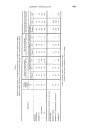
414 JOURNAL OF THE SOCIETY OF COSMETIC CHEMISTS hydrocarbons, which we have tested. Work continues on this problem, and we hope to have thoroughly acceptable products in the near future. MR. H. F. FROST: I assume, from the nature of the results in Table $, that the gas convector heater used in the experiment was not the modern type in which the combustion products go up the flue and hot air only is circulated, but the older free-standing type where all the combustion pro- ducts were released into the room. is this so? THE LECTURER: This is true. The convector heaters used in these experiments were standard domestic appliances which rely on convection of air and which were not fitted with flues or chimneys. DR. P. H. WITJENS: Are any quantitative data known on the formation of COC12 from CH2Ci• vapour in the presence of a radiant bathroom heater (e.g. metal coated ceramic heating bar)? This problem is of significance in Holland as some new buildings have small bathroom cubicles so heated, with poor ventilation, where hair sprays containing methylene chloride may be used. THE LECTURER: i know of no data referring to these specific conditions. I would think, however, that since the quantity of propel/ant, or methylene chloride, involved in one application to a woman's hair would be small, the concentration of phosgene produced would be correspondingly minute. DR. H. K/JBLER: The toxicity values for vinyl chloride and 1,1,1-tri- chloroethane in Table 1 do not agree with those I have quoted. i must admit that I did not determine the value for the latter, but I know that the vinyl chloride value is proven. THE LECTURER: I presume you are referring to the U.S. Underwriters Laboratory's classification groups for vinyl chloride and 1,1,1-trichloro- ethane. To the best of my knoMedge neither compound has been classified by the Underwriters Laboratories and the figures I quoted were estimated from a review of available data. The data on vinyl chloride is somewhat conflicting, e.g. the findings of Torkelson, which do not agree with those of the Battelle Institute, quoted by you. Toxicity data on the 1,1,1-trichloroethane is limited. However, because of the anaesthetic properties of vinyl chloride and bearing in mind the fact that the current MAC figure for each compound is 500 ppm, as for methylene chloride, it seemed reasonable to me to suggest that both would fall within the same Underwriters Laboratories Group as methylene chloride, i.e. Group 4-5. DR. H. K/JBLER: You are quoting estimated concentrations of decom- position products of halocarbons, in Table 3, whereas the figures quoted by
Purchased for the exclusive use of nofirst nolast (unknown)
From: SCC Media Library & Resource Center (library.scconline.org)