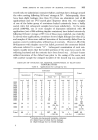
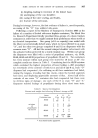
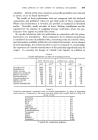
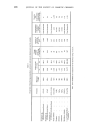
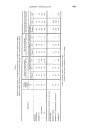
SOME ASPECTS OF THE SAFETY OF AEROSOL CONTAINERS •36•5 (i) dimpling, leading to inversion of the dished base (ii) uncrimping of the can shoulder (iii) easing of the valve seating, and finally, (iv) fracture of the side-seam. During hot storage, however, the first evidence of failure is, most frequently, an easing of the "0" type soldered side-seam. Following a report to the Ministry of Transport in October 1960 on the failure of a number of locked side-seam tinplate containers, The Metal Box Co. Research Department kindly provided three groups of a dozen tinplate containers in order that we might contrast their performance when stored at an elevated temperature. One group (of 6 oz capacity) was sealed with the (then) novel internally-locked seam, which we have referred to as seam "A", and the other two groups comprised 6 and 12 oz dispensers with the common seam "0". All had the normal crimped shoulder valve insert with the actuator button protected by a sturdy tinplate cap. Within each group the dispensers were filled with a series of propellant mixtures, viz. 50:50, 55:45, 60:40 and 65:35 proportions of propellants 12 and 11. Two containers for every mixture within each group were stored for 18 hours at 55ø: the complete results are shown in Table 3. Considering first the 65/35 mixture which contained the highest proportion of lower boiling (--29 ø) propellant 12: two-thirds of the contents of both 12 oz and all of one 6 oz, seam "0" dispenser had evaporated the soldering on all three containers had failed, raising the tongues, revealing hair line cracks, where the hooked segments had eased, and displacing appreciable amounts of flux. About half of the contents of one seam "A" container also had evaporated but there were no obvious signs of damage one each of the 6 oz seam "0" and "A" dispensers resisted leakage of propellants during these short term tests. Table 3. Special Investigation Percent nett weight lost following 18 hours' storage at 55 ø mixture of propellants 12 and 11 Seam A O O Container size 6 oz 6 oz 12 oz 50:50 { 0 0 0 45 0 0 0 5 0 55:45 ( 0 0 65* 0 0 0 60:40 { 0 0 0 0 100' 69* 65:35 { 46 0 68* * structural faults apparent.

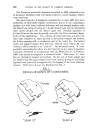
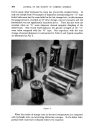
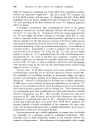
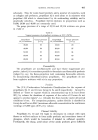
366 JOURNAL OF THE SOCIETY OF COSMETIC CHEMISTS Only two dispensers containing one of the other three propellant mixtures showed any significant weight loss. One 12 oz seam "0" container lost • of its 55/45 mixture and one seam "A" dispenser lost 45% of the 50/50 propellant ratio, the former exhibited the same forcing of the tongued seam "0" and spreading of the flux, whereas the seam "A" dispenser appeared still to be intact. A workshop examination, after urnsoldering the seams of the opened containers, showed the essential difference between the common "0" and the novel "A" type (Fig. 1). Comparison of the two seams suggested that the "0" type might offer better resistance to crushing, whilst the "A" seam could be expected better to resist internal pressure, although it was con- sidered arguable that the discontinuous hooking of the latter might prevent much lateral transmission of thrust between the tongues. In the absence of specialized knowledge of the can manufacturing industry, it was difficult to comment further presumably it is easier to prepare and solder the con- tinuous curl of the common "0" seam, but the "A" seam has now begun largely to replace it. It is understood that the U.K. manufacturers have incorporated the "A" seam in all their new containers. Experts in the industry might care to comment on a possible compromise seam, that is the reverse of the "0" type, i.e. with a continuous curl on the outer lip engaging with alternate hooks on the inner lip, the outstanding (inner) tongues being lapped as in the "A" seam. Pressure tests. If all filled containers have been submitted to a brief production-line immersion test in which the (gaseous) contents reached 55 ø, the possibility of over-filling (resulting in inadequate ullage and higher pressure) and incomplete purging of air (higher pressure) should have been eliminated. However, having regard to the high rate of failure experienced in 1961 (one or more container in about one application in six xvith the "0" seam), it was considered useful to check the gauge pressure of each formula- tion before and after exposure to the hot storage test. These measurexnents are conveniently made after equilibriatior• in a bath maintained at a suitable reference temperature (e.g. 21ø). More recently, pressures have also been measured at 55 ø after 18 hours, one of the three dispensers under test is transferred to (another) water-bath at 55 ø . Standard bronze tube gauges (0-100 and 0-250 psi) have been fitted with PTFE sleeve adapters, the internal diameter of which corresponds to the commoner (4.1 mm) valve stems for the finer (3.25 mm) stems, a suitable intermediate sleeve may be formed from a short piece of standard dip tube. Such measurements are a useful supplement to storage tests, but ideally the suitability of a container should be established beforehand. Thus, hydraulic tests on daily production samples at the cor•tainer factory car• confirm a ceiling pressure. After allowance of an appropriate safety margin
Purchased for the exclusive use of nofirst nolast (unknown)
From: SCC Media Library & Resource Center (library.scconline.org)