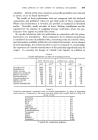
SOME ASPECTS OF THE SAFETY OF AEROSOL CONTAINERS 359 given to boosting the exports of this country, advice suggesting any relaxa- tion of stringent safety recommendations for the carriage of Dangerous Goods can only be offered after a very careful scrutiny of the potential hazards offered in transit. This advice in special circumstances may depend upon prevailing climatic conditions appropriate to a given journey or occasionally to a feature of a particular ship but, in general, one considers the construction of the container, any hazardous properties of concentrate and propellants and then the packing proposed. A series of ad hoc laboratory tests have been evolved to support such an investigation, and these are discussed below. ASSESSMENT OF THE CONTAINER Dispensers submitted to this laboratory have been constructed of aluminium, metal- or plastics-coated glass, tinplate or blackplate. Prior to 1956, with one exception, all samples examined comprised an extruded aluminium, seamless ("monobloc") container with one flat, pressed end, and a standard valve insert crimped in the other capacities varied between 1 and 6 fl. oz. This type appears to be the container of choice for the smaller sizes. An alternative series of larger (4, 6, 12 and 20 oz) dis- pensers have an aluminium case, double-locked to a non-integral dished tinplate base the 12 and 20 oz varieties seem still to be popular. Corrosion from products containing the lower alcohols can be avoided by one- or two-coat internal lacquering, although this is appreciably more difficult to apply for the extruded cases isopropyl alcohol is said a not to be corrosive in the absence of water. Glass containers have been used for cosmetic or pharmaceutical prepara- tions where contact with metal has to be avoided. They are considered to be very hazardous unless the glass is protected by a metal case (generally extruded aluminium externally lacquered if a luxury product) or a thick, coloured, plastic skin that retains the fragments if the glass were to shatter. Such a skin is usually formed from a polyvinyl chloride resin. One of this type was first submitted in 1957 since then, 12 more have been examined for carriage by sea purposes. A much larger variety of glass dispensers covered and uncovered, have been imported from Europe and North America these include pressurized glass containers that are intended as "refills" for relatively costly outer metal cases. A recent innovation, already popular in the U.S.A., is the so-called "purse-spray"--a thick-wall glass container of about 6 ml capacity, fitted with a lacquered valve seating and a polyethylene actuator. This miniature dispenser is protected by an outer cellulose-ester case and polystyrene cap. The spray is rapidly dis- charged, and may subsequently be refilled from a larger dispenser, with which it is sold in so-called "mother and daughter packs".

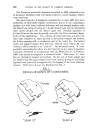
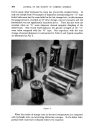
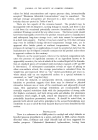
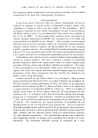
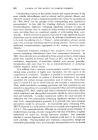
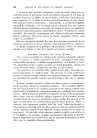
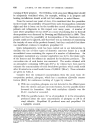
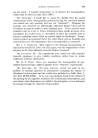
360 JOURNAL OF THE SOCIETY OF COSMETIC CHEMISTS One European insecticide dispenser examined in 1955 comprised a case of lacquered blackplate (0-24 mm thick), locked to coated tinplate, dished, crown and base. The great majority of dispensers examined by us since 1957 have been exclusively of e!ectrolytic tinplate construction, that is to say comprising a tinplate case with locked soldered side-seam and non-integral tinplate ends, the dished base being attached by a double-locked seam and the (standard) valve insert crimped into the domed upper end. Nominal capacities of 6, 8 and 12 oz are the most frequently met with, but 16 oz containers figure in 8% of the applications. Two varieties of locked side-seam are seen the older type comprises an upper lip that is alternately tongued and hooked, the hooks engaging with a continuous cud on the under lip. The locked hooks and lapped tongues then form the soldered seam, which, for con- venience, will be referred to as "seam 0". An alternative seam, "A", now gradually superseding the other, was first noted by us in a series of specimen containers submitted by arrangement with the Metal Box Co. in October, 1960 this special investigation is discussed below. With seam "A", both lips are alternately tongued and hooked the two sets of hooks engage and are soldered but the upper tongues have been excised, leaving an externally apparent butt joint that is supported by the lapping of the lower alternate tongues. Both types of seam are illustrated in Fig. 1. FIG. I DETAILS OF JOINTS OF CONTAINERS tside ß Inside "SEAM 0" "SEAM A"
Purchased for the exclusive use of nofirst nolast (unknown)
From: SCC Media Library & Resource Center (library.scconline.org)