JEROME GROSS, M.D. A Eulogy by THOMAS B. FITZPATRICK, M.D.* DR. JEROME GRoss might be said to have a one-track scientific mind. Only two of his fourscore publications have not been concerned with some aspect of the biology of connective tissue. He has adopted one of what I like to think are two types of approaches to scientific investiga- tion: (1) to develop or become highly skilled in a technique and then use it to solve many and diverse problems (2) another approach and the one that Dr. Gross has used is to concentrate on a subject and to apply all existing techniques, or develop new ones, but stubbornly to pursue the one subject. The electron microscopists are examples of the first type of approach, and Dr. Gross is a superb example of the second type. He has employed many and diverse techniques including electron microscopy, biochemical and physical chemistry and developmental biology to un- ravel the complexities of the biosynthesis of collagen. Early in his career, Dr. Gross was fortunate to be guided by one of the pioneer molecular biologists, Professor Francis O. Schmitt of the Depart- ment of Biology, Massachusetts Institute of Technology. Together with Professor Schmitt, J. H. Highberger and others he carried out a compre- hensive series of studies on the biophysical and biochemical properties of collagen. These investigators described the structure and composition of three forms of collagen and, after characterizing a kinetic unit designated "tropocollagen," subsequently defined the patterns of aggregation of tropocollagen in these three forms and the various factors which deter- mine the interconvertibility of these forms. These studies are generally regarded as a significant contribution in the field of molecular biology. His major objective has been to relate his research on the biosynthesis of collagen to growth, development, regeneration, aging, and to certain disease processes in man. Although Dr. Gross is a physician, he does not directly care for the sick yet the results of his research may profoundly affect patient care. As a physician-scientist, he serves as a link between the patient and the molecule. As a scientist, he focuses on developing concepts of collagen biosynthesis and its control as a physician he is polarized to the patient with disease because his laboratory is integrated in a large general hospital. He cannot forget the maimed or dying patients * Harvard Medical School, Cambridge, Mass. 419

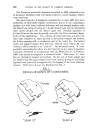
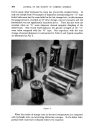
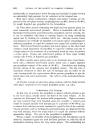
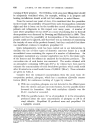
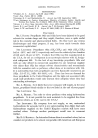
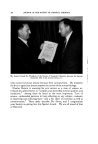
420 JOURNAL OF THE SOCIETY OF COSMETIC CHEMISTS with connective-tissue disease because they surround him. He would be the first to agree that disease exposes the secrets of the normal biology. Charles Darwin in assessing his own success as a man of science at- tributed his achievements to "complex and diversified mental qualities and conditions." Among these he listed as the most important: "love of science--unbounded patience in long reflecting on any subject--industry in observing and collecting facts--and a fair share of invention as well as common-sense." These aptly describe Dr. Gross, and I congratulate your Society on giving him this Special Award. We are all proud of him at Harvard. Mr. Lester Conrad (1.), President of the Society of Cosmetic Chemists, presents the Special Award for 1962 to Dr. Jerome Gross (r.).
Purchased for the exclusive use of nofirst nolast (unknown)
From: SCC Media Library & Resource Center (library.scconline.org)