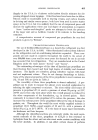
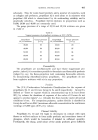
AEROSOL PROPELLANTS 407 adversely. Thus for water-based products and a number of cosmetics, such as colognes and perfumes, propellant 12 is used alone or in mixtures with propellant 114 which is characterized by its outstanding stability and is practically odourless. Propellant 12/114 mixtures in proportions such as 10/90, 20/80 and 40/60 are commonly used. The gauge pressures of a range of 12/11 and 12/114 mixtures are given in Table 2. Table 2 Vapour pressures of propellant mixtures at 21øC (70øF.) Propellant Gauge pressure Propellant Gauge pressure 12/11 mixtures p.s.i.g. 12/114 mixtures p.s.i.g. 35/65 27 10/90 20 40/60 30 20/80 27 50/50 37 30/70 34 60/40 44 40/60 40 65/35 47 50/50 46 Flammability The propellants are non-flammable and have flame suppressant pro- perties indeed, it is sometimes possible to formulate non-flammable products (judged by, say, the flame-projection test) containing flammable solvents, by incorporating chlorofluorocarbon propel/ants. The propel/ants do not form explosive mixtures with air in any proportion. Toxicity The (U.S.) Underwriters Laboratories Classifications for the vapours of propellants 12, 11 and 114 are Group 6, 5a and 6 respectively. Group 6 is defined as "Gases or vapours which in concentrations up to at least about 20% by volume for durations of exposure of the order of 2 hours do not appear to produce injury", i.e. virtually free from toxicity under all normal conditions of use. For comparison purposes, carbon dioxide is classified in Group 5a and has an MAC (maximum allowable concentration for continuous working) of 5,000 ppm (0'55o) by volume. Thermal Stability Propel/ants 11, 12 and 114 begin to decompose in contact with open flames or red-hot surfaces to form acidic products and sometimes traces of phosgene, which would be hazardous if inhaled in sufficient quantity. Fortunately, the sharp, acrid odour of the acidic products gives sufficient

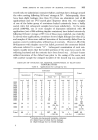
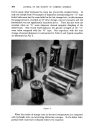
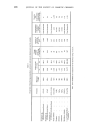
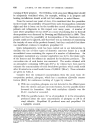
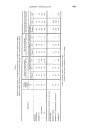
408 JOURNAL OF THE SOCIETY OF COSMETIC CHEMISTS warning of their presence. Nevertheless, work areas near filling plant should be adequately ventilated when, for example, welding is in progress and heating installations should avoid red hot surfaces or naked flames. From the aerosol user point of view, it is considered that the quantities involved make the possibility of hazard from such decomposition extremely slight and this is borne out by the trouble-free record of fluorocarbon pro- pellants and refrigerants in this respect over many years. A number of cases where propellant 12 was cited s as a cause of poisoning due to thermal decomposition were discussed by Downing and Madinabeitia a in 1960. They pointed out that the possibility of decomposition of the fluorinated com- pounds could not be ignored, and that there was no intention of minimizing the toxicity of some of the products formed but they concluded that there was insufficient evidence to implicate propellant 12. Quite independently, work has been carried out in our laboratories to simulate the use of three types of domestic convector heater in a small unventilated room containing the vapour of a number of halocarbons. An atmosphere maintained at a constant composition was fed to the intake ports of the heaters and the effluent air analysed for breakdown products. The convection rate of each heater was measured. The results obtained with an atmosphere containing 1,000 ppm (0.1%) by volume have been used to estimate the concentrations of toxic breakdown products which could result after 10 minutes in a small sealed room of 1,000 ft. a (28 ma). These estimates are given in Table 3. Consider first the estimated concentrations from the most toxic de- composition product, phosgene, which has a maximum allowable concen- tration (MAC) for continuous working of 1 ppm by volume.* (i) With one exception, phosgene was not detected in the effluent gases from the electric and gas convector heaters, but the paraffin heater favoured its formation. Only with methylene chloride was the M.A.C. reached or exceeded. (ii) With the paraffin heater, 5.7 oz of propellant 11 in the atmosphere produced about the same concentration of phosgene as 2.6 oz of vinyl chloride. Propellant 12 produced none and propellant 114 a negligible amount. *The M.A.C. is the maximum average atmospheric concentration of contaminants to which persons may be exposed for an 8-hour working day without injury to health. These values are based on the best available infor- mation from industrial experience, from experimental studies and when possible, from a combination of the two. They should be used as guides in the control of health hazards and should not be regarded as fine lines between safe and dangerous concentrations. They represent only conditions under which it is felt that workers may be repeatedly exposed, day after day, without adverse effect on their health. The figures listed refer to weighted average concentrations of an 8-hour working period rather than a maximum which is not to be exceeded even momentarily. M.A.C. figures are published by the American Conference of Governmental Industrial Hygienists and are reviewed annually. They are used by the International Labour Office, and have also been used since 1960 as a basis for the "maximum permissible concentrations" published in the United Kingdom by the Ministry of Labour. •
Purchased for the exclusive use of nofirst nolast (unknown)
From: SCC Media Library & Resource Center (library.scconline.org)