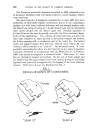
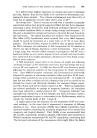
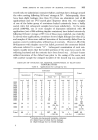
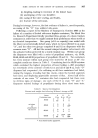
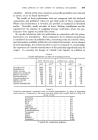
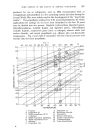
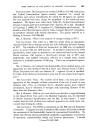
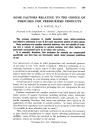
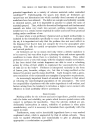
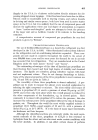
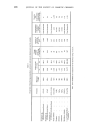
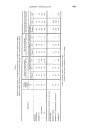
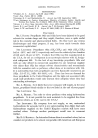
SOME ASPECTS OF THE SAFETY OF AEROSOL CONTAINERS 371 produced for use as refrigerants, were in 1934 recommended both as extinguishant and propellant in a fire quenching system and then during the Second World War were widely used in the development of the "insecticide bombs". Th• propellan•s employe• in O.K. a•erosoi formulati ns fo'r whi•ch applications for carriage by sea have been submitted in the last 12 years may be divided into five groups' Aliphatic hydrocarbons (liquefied gases), chlorofluoroalkanes (volatile liquids and liquefied gases), chloroalkanes (volatile liquids), compressed gases (such as nitrogen, nitrous oxide and carbon dioxide), and mixed propellants (e.g. alkanes plus non-flammable components). Fig. $ and Table 4 summarize relevant vapour pressure and toxicity data for these prope!lants. FIG. 3 40 50 60 70 80 90 I00 120 140 160 180 OF 4OO I I I [ I / I / _•..• 300 / 2o0 40 m 2 - - • ' • • 0 o., " I0 20 30 40 50 60 70 80 90 -øC TENPERATURE 1 Propane 9 Propellant 11 2 Propellant 12 10 Methylene chloride 3 65/35 propellants 12/11 11 Chloroform 4 isoButane 12 Methyl chloroform $ 50/50 Propellant 12/CH2C12 13 Carbon tetrachloride 6 50/50 Propellants 12/11 14 Trichlorethylene 7 nButane 15 Tetrachlorethylene 8 Propellant 114

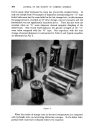
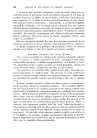
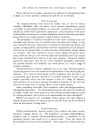
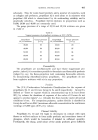
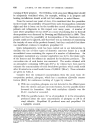
372 JOURNAL OF THE SOCIETY OF COSMETIC CHEMISTS Aliphatic hydrocarbons Liquefied butane and propane have been used because they are con- siderably cheaper than other propellants, being directly derived from crude oil distillation, but they are objectionable in that they are extremely flam- mable. Four insecticides, containing 25 to 27% butane were submitted in 1954-7 and were recommended for carriage under the conditions appertaining to flammable compressed gases. A!kane propel!ants were not then generally favoured but have since found a special use in a variety of three-phase systems, e.g. starch, polish and window cleaning sprays, wherein liquefied butane (between 2 and 10% of the total formulation) floats on a denser immiscible aqueous solution of the concentrate. Such a system will not release neat butane providing the container remains upright but if discharged in the inverted position, an extremely flammable spray is emitted. In the past three years, 24 products of this type have been examined for which the special closed beaker test described in the previous section was evolved. The testing of such formulations may be complicated by the presence of flammable solvents, which despite any water present, may render the spray significantly more hazardous. A more recent development has been the introduction of dispensers fitted with a vapour phase valve, or tap, for multiphase systems. By courtesy of the Metal Box Co., a number of these dispensers containing trial formulations were provided for our examination. A small aperture (0.5 ram) in the valve housing is designed to admit some of the top (gaseous), as well as the lowest, phase, which then mix in the valve head. Such dispensers, fitted with a break-up actuator where necessary, may be used inverted, or indeed in any other position. Larger quantities of butane (say, 30 or 40%) can be included in formrdations for these dispensers, thereby much reducing the risk of exhausting the propellant, leaving residual concentrate that would be wasteful and, if flammable, potentially dangerous. Despite the higher butane content, the spray emitted contains finely atomized water droplets that effectively suppress ignition, whether the dispenser is vertical or not. In the closed beaker test, a horizontal condensation front is formed between saturated butane and air which, when ignited, slowly sinks and the butane burns quietly (i.e. not explosively) at the interface. Thus, it would appear that the vapour phase valve offers significantly less danger were this type of formulation discharged in a poorly ventilated, confined space. However, it should be emphasized that such protection is not a relevant consideration for large-scale storage: a slow, vapour leakage would be rich in the most volatile component, in this case--butane. C hloro fi uoroalk anes The development of these compounds in the 1930's for a number of
Purchased for the exclusive use of nofirst nolast (unknown)
From: SCC Media Library & Resource Center (library.scconline.org)