SOME ASPECTS OF THE SAFETY OF AEROSOL CONTAINERS 385 THE LECTURER: The data given are neither LD 50 nor LD 100 they are in fact 'Lethal Concentration' figures--mainly 'minimum LC,' except for chloroform and carbon tetrachloride for which LC 50 figures are quoted. The test animals were mice except for prope!lant 11, for which rats were employed. The figures were taken from Table II--'Lethal Concentrations of Gases, Vapours and Fumes in Respired Air' [Spector, W. S., Ed. Handbook of Toxicology, I (1956) (W. B. Saunders Co., Philadelphia and London)_]. It should be noted that the figures cited in Table •l support Dyson's* comparison of methylene chloride with methyl chloroform. The patent referred to is Helbing & Pertsch, USP 628,463. MR. A. HERZKA: What is the purpose of storage testing at 70øC ? T•E LECTURER: This refers to a 1954 test result when an aluminium container failed due to leakage around the valve following 18 hours' storage at 70øC. The adoption of that test temperature in 1954 was, as explained above, in accord with the CPO practice. It should be noted that the CPO specification, which refers to dispensers to be stored and used by the Armed Forces overseas, still requires a (short-term) storage test at 70øC and, additionally, that untilled containers, selected on a sample basis, should withstand a hydraulic pressure of 250 psig. This is an exceptional require- ment. MR. A. HERZKA: In testing for the flammability of the emitted spray, you apparently use four distances (50, 25, 5 and 1 cm), whereas in the C.S.M.A. Flame Projection test only one distance (6" • approx. 15 cm) is specified. To which of the distances mentioned in your test do you attach most import- ance ? TH• LECTURER: None. We consider all of them one may get a false impression of the strength of flame projection if the test is made at one distance only thus, as remarked above, ethano!ic sprays show marked attenuation, that is reduction in strength with increasing distance of the flame from the dispenser valve. MR. A. HERZ}ZA: Will the two tests which you describe as approximating to the Closed Drum Test, and to the Modified Tagliabue test, be embodied in British Standard Specifications and the like, in due course ? I must confess that the first of these two methods appears to be much more con- venient than testing in a drum. TUE LgCTURER: The DSIR is represented on the BSI Aerosol Dispenser Committee. I imagine that this Committee will consider all suitable methods for assessment of the flammability hazard of a pressurized formulation. No doubt, the relevant criteria will include simplicity, unambiguity, convenience of operation, reproducibility within and between laboratories. I should *Journal 14 402 (1963)

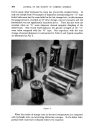
386 JOURNAL OF THE SOCIETY OF COSMETIC CHEMISTS emphasise that the tests I have described have evolved over a number of years from simple ad hoc procedures used for Dangerous Goods classification purposes. I claim no special merit for them beyond that they are simple, convenient and reproducible. MR. A. HERZIrA: Can you describe a method, equally simple, to supersede the Open Drum Test ? THE LECTURER: We have no corresponding test for propagation of flame in an enclosed space. However, as you have already remarked, we use four distances in our flame extension tests the 50 cm (roughly 20") test does give us some idea of propagation and also of variation in the flammability of the components if there should be any tendency for separation in the attenuated spray. 3!R. P. MOXE¾: Would you comment on any difference between the ambient temperature and the temperature of the contents of a dispenser? THE LECTURER: I agree that the temperature of the exterior of metal containers exposed to the sun may be above the shaded air temperature however, only the contents in the gaseous phase will rapidly assume the exposed temperature and hence exert the corresponding vapour pressure but, fortunately for ullage calculations, the liquid contents will take an appreciable time to heat up and may never reach the skin temperature. Similar considerations apply to drums but there the question of elasticity and expansion of the drum alleviates to some extent the reduction in ullage as the external temperature rises. MR. I(. DIXON: The hot water testbath in production does not raise the temperature of the liquid contents to that of the bath. However, the pressure is very close to that when temperature equilibrium is reached. With regard to liquid volume this is dealt with by allowing sufficient ullage in the can at the formulation stage. THE LECTURER: I agree. Nevertheless, maximum vapour pressure and maximum liquid volume are two separate aspects. When related to likely maximum temperatures during storage, transportation and use, both aspects should be built into appropriate specifications. MR. J.P. HALL: Could you enlarge on the internal protection found effective for the ovens ? THE LECTtYRER: The precise procedure adopted will depend on the dimensions and design of oven employed. We fabricated a light alloy box of approximately 1 ft cube the lid is detachable and is restrained by four wing bolts. The walls do not exactly meet so that (hot) air may circulate through the box the base is raised above the oven floor by four small rubber feet.
Purchased for the exclusive use of nofirst nolast (unknown)
From: SCC Media Library & Resource Center (library.scconline.org)