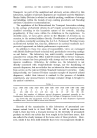
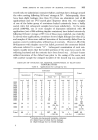
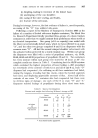
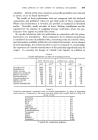
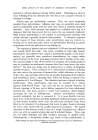
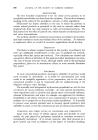
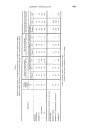
SOME ASPECTS OF THE SAFETY OF AEROSOL CONTAINERS 363 record only one (aluminium) container failure, and that due to leakage around the valve seating following 18 hours' storage at 70 ø . Subsequently, there have been slight leakages (less than 2%) from one aluminium (out of 66 applications) and one PVC-coated glass dispenser (frmn 13) two samples of one of the latter group of containers leaked extensively from a badly seated valve but subsequent samples have been satisfactory. In the same period (1957-62), one or more samples of dispensers submitted with 30 applications (out of 300 utilizing tinplate containers) have leaked extensively following 18 hours' storage at 55ø two of these cases exploded, one violently. In eleven other applications, containers showed slight leakage (less than 2%) and samples of three more suffered inversion of the inwardly dished base to assume a convex conformation, without loss of contents. However, 29 of the 30 dispensers with tinplate cases that failed, possessed the commoner locked side-seam referred to a seam "0". Subsequent examination of such con- tainers usually shows that the hooked portions of the seam have eased, the soldering fractured and the contents have been forced out. At least 4 cases suffered inversion of the dished base prior to the easing of the seam, and with another sample the crimped shoulder of the domed top was uncurled, RESULTS OF STORAGE OF AEROSOL DISPENSERS AT ELEVATED TEMPERATURES Table 2. Applications for carriage by sea Container Tinplate Total Aluminium PVC/glass Seam "0" Seam "A" -- test fail test fail test fail test fail test fail 1950 3 0 0 0 0 0 0 0 3 0 1951 0 0 0 0 0 0 0 0 0 0 1952 2 (d) 0 0 0 0 0 0 2 (d) 1953 I 0 0 0 0 0 0 0 1 0 1954 7 1 0 0 0 0 0 0 7 1 1955 1 0 0 0 0 0 0 0 2* 0 1956 8 0 0 0 1 0 0 0 9 0 1957 3 0 1 0 3 0 0 0 7 0 1958 2 0 3 (s) 3 0 0 0 8 (s) 1959 2 (s) 2 0 10 0 0 0 14 (s) 1960 9 0 3 (s) 33 3 0 0 45 3 (s) (2s) 1961 14 0 0 0 121 22 7 0 142 22 (2d, 3s) (2d,3s) 1962 36 0 4 1 56 4 67 1 163 6 (4s) (d, 3s) (d, 3s) total 88 1 13 1 227 29 74 1 403* 32 + (d, s) + (2s) + (2d, 8s) -q- (d, 3s) + (4d,14s) * includes one lacquered ironplate container. (d) dished base inverted but no leakage. (s) slight leakage but no visible damage.

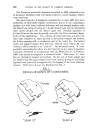
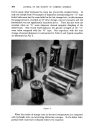
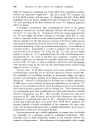
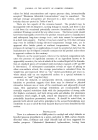
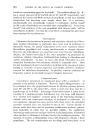
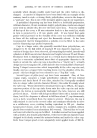
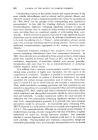
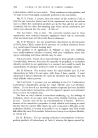
364 JOURNAL OF THE SOCIETY OF COSMETIC CHEMISTS but in many other instances the seam has proved the weakest factor. In only one sample from 74 examples of dispensers incorporating the "A" type locked side-seam has the seam failed in the hot storage test in this instance the gauge pressure, recorded at 21 ø after storage, was not excessive and the formulation was not significantly hazardous per se. There has also been one occasion when an "A" seam dispenser showed incipient dimpling of the dished base. This record itself indicates the greater strength of the "A" seam when compared with the "O" type. Our experience with the heat storage of aerosol dispensers is summarized in Table 2, and typical casualties are illustrated in Fig. 2. :..z ß }kl .. ,5 •- .. •,• "• - .. •{g•::, ", .• .• .... • • •. • •. .:• • . . .. --.. .• . •.. . •'.'•.• • '.• ".. ß ::..:- •::. :'..• .:: -.•'•-- • •..:.•. ß .:... .. ,....:• . .• ... . .. ?• t:..' ".'*•z•'• .'•.•t•-." 't:" • •L .... • ::. • "..• •:::.• •,. •:.: •'•,.• "'•'•.•': ',:7' • ... -• .• •'.. • -.'• • : •:• ...... .• :...•.: •, ..• •.• ß •.. .:.• Figure When the results of storage tests at elevated temperatures are compared with hydraulic tests, an interesting distinction emerges. In the latter tests, partial relief of pressure ordinarily follows the sequence:
Purchased for the exclusive use of nofirst nolast (unknown)
From: SCC Media Library & Resource Center (library.scconline.org)