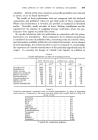
SOME ASPECTS OF THE SAFETY OF AEROSOL CONTAINERS 361 It is believed that tinplate dispensers are cheaper and easier to fabricate and that, further, they are less likely to be corroded by formulations con- taining the lower alcohols. Thus ethanol containing not more than 1.5ø//0 of water has no significant corrosive effect after a year at 25 ø * Hot storage tests. There is concern not only that a container is properly constructed and has been properly purged and filled, but also that a dispenser containing a given formulation shall withstand prolonged exposure to the most critical conditions likely to obtain during storage and transport. To this end, a standard hot storage test has been evolved in the past decade by this Laboratory. The earliest procedure was similar to that required by the War Office (CPO) Specification which required that every filled dispenser should be tested by immersion in a water bath at 71 ø for at least three minutes. The 8th revision 5, requires in addition that an agreed number of the filled containers are maintained at this temperature for 20 minutes to observe any sign of leakage, distortion or other deterioration. There is also a rough usage test, wherein a filled container is permitted to fall 30" onto a hardwood surface so as to receive impact, in turn, on both ends and its side. It is understood that usually aluminium containers have been found accept- able for these contracts. A 1952 Laboratory report refers to the absence of weight loss following "prolonged storage" at 70 ø, whilst the next year a four-day storage test in an oven at 35 ø was employed. In 1955, two days at 55 ø were favoured, partly following the American adoption of this temperature for (brief) immersion tests. Since 1956 for transport evaluation, this Laboratory has consistently adopted the practice of examining containers before and after 18-24 hours' storage within a protective case in an oven maintained at 55 ø. It is believed that this test offers a realistic trial of a dispenser that is to be carried by sea through the tropics and effectively simulates the container fatigue experi- enced in a 6 day cycle of 3 to 4 hours exposure at 55 ø. Where an application has referred specifically to carriage in temperate latitudes, the containers have been stored for a similar period at 45 ø. "Temperate latitudes" has normally been interpreted as North Atlantic and North European waters special consideration is given to conveyance in the Mediterranean, which is outside the tropical limits of Ref. 1 (page 5). It might appear that the adoption of a test temperature of 55 ø was some- what arbitrary in the sense that it represented a consensus of differing opinions, it was. Thus, successive (DSIR) Gas Cylinder Committees have expressed opinions concerning the maximum temperature to be assumed for temperate and tropical climates 6. First (1918), it was recommended that 45 ø and 65 ø , respectively, should be adopted, whilst their sub-Committee on Welded Containers recommended 50 ø and 70 ø respectively, considering that "the increased seriousness of the consequence which might follow the failure

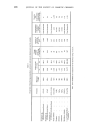
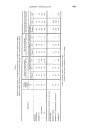
362 JOURNAL OF THE SOCIETY OF COSMETIC CHEMISTS of a large container compared with a solid-drawn cylinder justified the adoption of a greater margin of safety". The 1935 Committee assumed a general working pressure in tropical climates calculated for 65 ø except for "some countries where higher temperatures were known to be attained by containers on occasion" The Home Office Committee (appointed in 1946 Draft Report6), considered the excellent safety record over a considerable period consequent upon adoption of these previous temperature recom- mendations, and also the complexity of precise calculations of maximum temperature attainable by a container based on meteorological data. They therefore recommended the retention of the 45 ø and 65 ø assumptions, in general, with two reservations: (i) in countries where "the contents of a cylinder or container will reach a temperature in excess of 65 ø" local require- ments should be observed (ii) based on U.K. experience with large road tankers on short haul (36 hour) journeys, it is recommended that for "large welded containers, exceeding 3 feet in diameter and intended for the convey- ance of non-toxic gases, the assumed maximum temperature in temperate climates should be (reduced to) 38 ø". These values of 45 ø and 65 ø have generally been followed by the Ministry of Transport, in the absence of sufficient meteorological data, but specific concessions have occasionally been made. Thus, experience of tropical storage of welded drums suggested that 45 ø gives an adequate margin for calculation of ullage, when allowance is made for thermal expansion and elasticity of the drum itself. (These considerations are not applicable to filled built-up containers, such as the side-seam aerosol dispensers, where the onset of solder creep lessens the effective elasticity above about 50ø). Inert, low pressure, liquefied gases may be accepted in drums tested only up to 45 ø, provided these are stowed under deck. In the U.S.A., a maximum temperature of 54.4 ø (i.e. 130øF) is employed in the regulations of the Interstate Commerce Commission and this value has been adopted in the shipping section of the Code of Federal Regulations. It was the I.C.C. regulations that first required the water-bath immersion test (at 130øF) for all filled containers (or a representative selection if this test would damage the contents). The I.A.T.A. regulations • (p. 58) refer to a range "in the order of --40 ø to +54.4 ø" as the "extremes of temperature which might be encountered in international transportation", both in flight and ground storage. Some meteorological data for seaborne freight have been quoted 7 by Holier, of the German Maritime Weather Bureau. Thus, in the Red Sea, cargo space maxima of 35 ø (lower hold), 44 ø ('"tween deck"), 51 ø (outside) and 65 ø, or even 70 ø (unshaded deck cargo) a maximum diurnal variation of 12 ø was recorded off the Gold Coast. Results of hot storage tests for the years 1950-56, in which one lacquered ironplate and 22 seamless aluminium aerosol dispensers were examined,
Purchased for the exclusive use of nofirst nolast (unknown)
From: SCC Media Library & Resource Center (library.scconline.org)