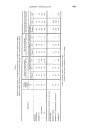
SOME ASPECTS OF THE SAFETY OF AEROSOL CONTAINERS 381 Products pressurized by propane or butane are liable to release flammable gases if the dispensers are crushed or fail, or if the valves (excluding the vapour phase taps) are discharged with the dispenser in an inverted position. When large amounts of these hydrocarbons are present, or a mixture of moderate amounts of butane and readily flammable liquid(s), an A3 ("Inflammable Gas") label and stowage "on deck", using wooden outer cases, are usually recommended. When the amount of butane and the performance tests justify it, carriage "under deck, in a well-ventilated compartment" (usually '"tween deck") may be suggested. It sufficient water and/or {quenching) chloroalkanes are present, strong fibreboard outer cases ("under deck" only) may be allowed, whilst with suitable, strong, wooden outers, the A3 label may be waived and the dispensers simply declared under Section 10. In a number of household preparations, which comprise essentially an aqueous emulsion or suspension with small amounts of butane and no other flammable component, explosion of the vapour may not occur, although, at about the 5% level, the butane will burn non- violently notwithstanding the presence of 90% of water. For this reason, declaration under Section 10 will still be necessary but such dispensers may be packed in strong fibreboard or wooden cases, carried on or under deck and need not necessarily bear the A3 label. Recommendations for other flammable constituents depend mainly on the results of performance tests but the composition of a product is taken into account. If there is a relatively large amount of class A or B flammable substances (i.e. normally possessing an Abel, closed cup, flash point (A) under 73 ø F or (B) from 73 ø to 150 ø F inclusive), and especially if little or no higher-boiling inert propellant (e.g. propellant 11) is included, then a declara- tion under Section 5 is considered. Certain paint and medicinal preparations may be allocated to their appropriate less restrictive entries in that Section. Formulations containing smaller quantities of flammable components, particularly where--as in space sprays--a large excess of chlorofluoroalkane is present, may, depending upon performance, be suggested for carriage under Section 10 or declared as "non-hazardous in the proposed packing". The Standing Advisory Committee has from time to time reiterated its view that a strong wooden outer case should be employed where a significant amount of class A flammable substance is present but that strong fibreboard outers, capable of withstanding likely overstowage, would suffice for com- ponents flashing only in the class B range. In this context, the steel, demountable railway containers carried on a train ferry are considered a satisfactory outer packing per se, provided that such "containers" only contain aerosol dispensers. Very small quantities of flammable components are ignored for the purpose of classification, although precise limits have not been defined.

382 JOURNAL OF THE SOCIETY OF COSMETIC CHEMISTS Consideration is given to the relative toxicity and vapour pressure of the more volatile chloroalkanes, used as solvent and/or pressure diluent, and where the amount of such a component justifies this course, the provisions of the "Blue Book" for the carriage of the corresponding pure chemical is recommended. In line with the Standing Advisory Committee's recent recommendations, dispensers containing significant amounts of many of these toxic solvents may be carried in either wooden or strong fibreboard cases, providing these are considered capable of withstanding likely over- stowage. If these solvents in quantity represent the only significant hazard, declaration may be made under Section 10, although if fibreboard cases are to be used, the affixing of a C--"Poison"--label normally is advised, and in any event, a stowage restriction relative to living quarters. There are certain additional recommendations appropriate to the carriage of carbon tetra- chloride. Continental restrictions relating to the transport of low pressure dis- pensers containing chloroalkanes have been summarized elsewhere 4. In 1961, these solvents were not allowed in Swiss aerosol products, whilst poison labels were required in Norway and France if 25% and 30% (up to 8 oz containers), respectively, of methylene chloride were present generally, formulations with more than 5% tri- or tetrachlorethylene or methylene chloride required "poison" labels. It is unlikely that a domestic aerosol product would be marketed con- taining large quantities of highly toxic ingredients, but this aspect of the composition is considered. Usually it is possible to recommend relaxation of the special provisions of Section 4 (Poisonous Substances) for small quantities but certain stowage precautions may be relevant. Even these may be waived if it can be shown that the risk is purely a commercial one. Thus, whilst insecticides containing pyrethrins and their synergists are not regarded as hazardous, it is normally recommended that aerosol formulations containing DDT, BHC, dieldrin and related chlorinated tetracyclics, chlori- hated camphenes and alkoxyethyl isocyanates should be stowed away from food and foodstuffs. A similar requirement suffices for small amounts of malathion but were preparations containing significant amounts of other, more toxic, organophosphates proposed, it is probable that more stringent precautions would be advocated. An insecticidal spray containing 0.5ø//0 DDVP dispersed in a hydrocarbon solvent has recently been registered in the U.S.A. 16 this organophosphate, although an extremely potent inhibitor of cholinesterases, having a toxicity comparable with that of dieldrin, is rapidly hydrolyzed by moist air, leaving innocuous artefacts. Any proposals relating to aerosol dispensers for this material would have to be evaluated most carefully. Pharmaceutical and veterinary preparations, though not necessarily particularly toxic, are frequently recommended not to be stowed
Purchased for the exclusive use of nofirst nolast (unknown)
From: SCC Media Library & Resource Center (library.scconline.org)