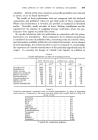
AEROSOL PROPELLANTS 403 However, in such a progressive and competitive industry, attention will always be directed to the use of alternative propellants and diluents, either for technical reasons or to reduce the cost of the propellant element in aerosols. LIQUEFIED GAS SYSTEMS A liquefied (or liquefiable) gas is defined officially in the United Kingdom as one which has a boiling point below 30øC but a more liberal description is "a gas which is gaseous at ordinary temperature but can readily be liquefied by the application of pressure". Thus a single liquefied gas in a closed container exerts a pressure which depends only on temperature and is independent of the quantity of liquid present. A mixture of two liquefied gases exerts a pressure intermediate between the pressures of the two components at any temperature. For "ideal" systems, Raoult's Law defines the total pressure of such mixtures as: P=m• p• d- m2 P2 where m• and m2 are the mole fractions of the two components p• and p2 are the vapour pressures of the two components at the temperature considered. Mixtures of the liquefied gases used as propellants follow Raoult's Law quite closely over the temperature range involved in filling and in use. If then a liquefied gas, or a mixture of two or more such gases, is dis- charged as liquid from a container, the pressure in the container (and the composition of the mixture) will remain virtually constant until all the liquid has been discharged. (a) In two phase aerosols the liquefied gas propellant is completely miscible with the rest of the formulation, e.g. a space insecticide consisting of propellant 12/11 mixture and a concentrate based on odourless distillate. The liquid contents are driven out by the pressure in the gas phase. The composition of the propellant/concentrate mixture and the internal pressure of the aerosol remain virtually the same until all the contents have been discharged, ensuring a uniform spray performance throughout the life of the container. When the valve is opened the liquefied gas, as it leaves the spray head, expands rapidly to produce 200 or 300 times its volume of gas. This effect, coupled with the action of the valve orifices, etc., atomises the product being dispensed. The degree of atomization and hence the coarseness or particle size of the spray is determined both by the composition of the propellant and by its proportion in the formulation, as well as by the structure of the valve used. Temperature is, of course, an important consideration a product formulated to give a suitable spray at 50-70øF would not dispense

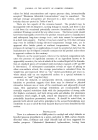
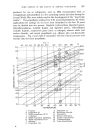
404 JOURNAL OF THE SOCIETY OF COSMETIC CHEMISTS satisfactorily at temperatures below freezing and similarly it might develop an undesirably high pressure for its container in the tropical sun. Most space sprays, hairlacquers, colognes and surface coatings are dis- pensed by the two-phase system, employing from say 85% down to 30-40% by weight liquefied gas prope!lant in the formulation. (b) Three phase aerosols containing two liquid and one gaseous phase are most commonly water-based products. Water is immiscible with all the fluorinated hydrocarbon and hydrocarbon propellants used in aerosols, but it can be emulsified with them to varying degrees by using emulsifying agents and by shaking the container before use. Shaving creams, foams and shampoos can virtually be regarded as two phase sprays containing just sufficient propellant to expel the contents and expand the emulsion into a foam. Water-based furniture polishes and starch sprays on the other hand contain a small proportion of prope!lant to expel the contents and rely to a large extent on the assistance of a mechanica! break-up valve to produce a coarse spray. Foams and water-based polishes of these types usually contain only 5-15% of liquefied gas propellant. (c) More recently space sprays such as air fresheners have been formu- lated with a different water-based system which uses a higher liquefied gas propellant content of the order of 30-40%. Emulsifiers and shaking provide mixing of the aqueous and propellant phases. The dip tube is sometimes restricted to limit the rate of discharge and an orifice in the valve housing inside the vapour phase allows gaseous propellant to join the liquid phase and assist atomization. The valve is of the mechanical break- up type. (d) Powder aerosols are a!so three phase systems, with the finely divided solid phase suspended in the liquid propellant phase, e.g. talcs. COMPRESSED GAS SYSTEMS In this type of aerosol, the propellant is almost entirely present as gas in the head space, usual!y about one-third of the tota! volume. As the contents are discharged the pressure fal!s progressively. Higher pressures are thus required than with liquefied gases-for example a typical pack wou!d be charged initially with nitrogen gas to a pressure of 90-100 p.s.i.g. to ensure that sufficient pressure remained to expel the last of the contents. Viscous products, such as toothpastes and handcreams, are dispensed in this way with nitrogen, where the main object is to expel the contents without appreciable change. The cost of the propellant is negligible. Where a degree of solubility of the propel/ant in the formulation can be achieved, compressed gases are used for foam products or, with the aid of mechanical break-up valves, for very coarse sprays. The outstanding use
Purchased for the exclusive use of nofirst nolast (unknown)
From: SCC Media Library & Resource Center (library.scconline.org)