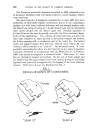
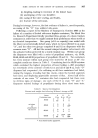
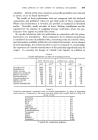
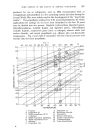
SOME ASPECTS OF THE SAFETY OF AEROSOL CONTAINERS 373 purposes by various manufacturers resulted in a chaotic nomenclature which has only recently been standardized. It may now be accepted that the designation of a specifically numbered propel!ant as Freon (duPont), Arcton (ICI), Isceon (Imperial Smelting), Genetron (Allied Chemicals) or Algofrene (Montecatini) will connote the same halogenated hydrocarbon. These gases and volatile liquids are regarded as chemically inert, non-flammable (flame quenching, in fact) and only slightly toxic they are, however, suffocating in heavy concentrations, as might arise, since they are considerably denser than air, in the well of a badly ventilated hold were the contents of a suffi- cient number of dispensers to be released. It has been shown 9 that a 10% concentration in air of propellant 11 is lethal to rats in 20-30 minutes. For proximity to living quarters, however, it is appropriate to consider the internationally recommended Maximum Allowance Concentration in air to be experienced during an 8-hour warking day, which for propellants 11 and 12 is given as 1,000 ppm, i.e. 0.1% by volume or 5 mg/1. Considering a formulation containing 80% of mixed propel!ants 11 and 12, the MAC would be exceeded locally if the propellants of only one 12 fl. oz dispenser were completely to evaporate into an unventilated space of 48 cubic yards (e.g. a hold floor area of 18 • x 12 •, to a depth of 6•). If 100 containers failed in the same space, a potentially lethal concentration would result. The most widely used system supplying a pressure of about 3.1 atm at 21 ø comprises an equal mixture by weight of propellant 12 (dichlorodifluoro- methane, a gas, bp. --29 ø) and propellant 11 (trichlorofluoromethane, a liquid, bp. 24ø) cylinders with this mixture under pressure are readily available. It has been our experience that not only is the potential flam- mability of a spray reduced, or entirely quenched, by high proportions of this mixture but that also the presence of the higher boiling propellant 11 helps to suppress ignition of the residual liquid, when exposed in an open dish, until the latter has been warmed. Thus, it has been noted that certain hair lacquer formulations, containing substantial quantities of ethanol and relatively small amounts of propellant 12 (only), are significantly hazardous as judged by our performance tests. In other hair lacquers more recently examined, half of the ethanol has been replaced by propellant 11, whereby the pressure is maintained but the flammability is much reduced. Other proportions of propellants 11 and 12 are less frequently employed but, recently, to meet the demand for higher pressure blends, some formula- tions have been submitted in which various amounts of another liquefiable gas, propellant 114, are mixed with propellant 12. Propellant 114, sym- metrical dichlorotetrafluoroethane, bp. 3.5% is intermediate in volatility between propellant 12 and 11. The pressures (in atmospheres) of the three propellants at 55 ø are 13.3, 5-0 and 2.7 (Fig. 8). Octafluorocyclobutane, propellant C.318, has been approved by the U.S. Food and Drugs Adminis-

374 JOURNAL OF THE SOCIETY OF COSMETIC CHEMISTS tration as a pressurizing agent for foodstuffs. This perfluoroalkane, bp. -6 ø, has a vapour pressure (of 2.7 and 8.5 atm at 21 ø and 55 ø respectively), very similar to the commercial 50:50 mixture of propellants 11 and 12 at ambient temperature but increasing more steeply above this. It is non-toxic, non-flammable and exceptionally resistant to hydrolysis dupont found 4 (p. 50) a rate of hydrolysis one twentieth that of propellant 12. It has been stated •ø that mixtures of the new propel!ant with nitrous oxide "will be immediately available", but thus far, no products containing this agent have been examined in our laboratory. Chloroalkanes Chlorinated hydrocarbons in general, and methylene chloride and Chloro- thene (methyl chloroform) in particular, have been used in preference to flammable butane, for partial replacement of the more expensive chloro- fluoroalkane propellants and serving simultaneously as cheaper solvents. However, the chloroalkanes are somewhat more toxic than the chlorofluoro- alkanes, the hazard increasing in the order propellant 12, propellant 11, methylene chloride, Chlorothene, trichlorethylene, leading to chloroform and carbon tetrachloride. To date, we have only found Chlorothene in a few shoepolish formulations but methylene chloride is commonly used. Both the last mentioned solvents tend slowly to hydrolize in the presence of water, leading to corrosion of metal dispensers and ideally, therefore, should be reserved for anhydrous formulations. In practice, aqueous emulsions are frequently packed in intcrnally lacquered tinplate dispensers. Compressed gases Concentrates pressurized by compressed gases suffer a constant 1• of pressure as the product is dispensed. However, higher filling pressures ,, ay be permitted since the proportional increase in absolute pressure between (say) 20 ø and 55 ø is only about 20•o, which is much less than that for a liquefied gas (2- to 3-fold). Advantage of this latter factor is taken in the boosting of a medium-pressure formulation (e.g., the large refill dispenser of a "mother and daughter" cosmetic pack) or the dispensing (through a suitable valve and cream-spout actuator) of toothpaste or haircream. In our experience, nitrogen has been used in both these ways the (absolute) pressures recorded have not exceeded 8 atm at 21 ø. Carbon dioxide or nitrous oxide have been used to pressurize certain other products, particu- larly foodstuffs, in which they are partially soluble. The equilibrium, between gas under pressure and gas dissolved in the liquid phase, is disturbed when product is discharged, reducing thereby the headspace pressure. No question of toxicity or flammability arises with dispensers containi: • these propellants. The sole considerations are the ullage (and hence press, "e) at
Purchased for the exclusive use of nofirst nolast (unknown)
From: SCC Media Library & Resource Center (library.scconline.org)