J. soc. cos. CHEM. 15 485-508 (1964) OUANTITATIVE MICROSCOPY IN THE COSMETIC INDUSTRY By P•'r•v, H. B^•,'rv:•s, P•4.D.* Presented October 2, 1963, New York Chaplet ABSTRACT A number of modern microscopical techniques and their possible adaptation to the specific problems encountered in cosmetic research are described. The question of quantification of the effects of a cos- metic treatment is discussed, and the principal approach is demon- strated with practical examples. Finally, the sensitiv!•i•es•'of micro- spectrophotometry, interference microscopical methods, polarized light analysis and fluorescence microscopy are outlined to indicate their range of applicability to specific cosmetic problems. INTRODUCTION The cosmetic industry serves a highly competitive market. One answer to the demands of such a market is an intensely active research and development program. It may sound trivial to say that in research it is essential to express results in the form of quantitative data. But exactly this necessity constitutes one of the difficulties encountered in the field of cosmetics. It is often rather difficult to express the effects of a cosmetic treatment in terms of numerical values. In some cases, quantitative microscopy can give such answers. It is the purpose of this article to dis- cuss a number of modern microscopic techniques, to point out their possible application in the field of cosmetic research and to describe their capabil- ities. Some of these techniques have originally been developed in totally unrelated fields of research. But it is typical for microscopic techniques that they can readily be adapted for other applications. The objects which are of interest here are of a widely differing nature. There are those portions of the human body which are to be subjected to a cosmetic treatment, such as hair, fingernails, skin and teeth. Then there are the * E. I,eitz, Inc., New York, N.Y. 485

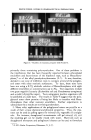
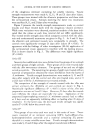
486 JOURNAL OF THE SOCIETY OF COSMETIC CHEMISTS 1A 1E lB IF IC 1G IH Figure 1.--Stabilized (1A, lB, 1C, 1D) and unstabilized (1E, IF, 1G, 1H) lather (bright field 125X). 1A and 1E represent fresh foam lB and 1F show foam after 4 min. 1C and 1G show foam after 15 min. 1D and 1H show foam after 25 min.
Purchased for the exclusive use of nofirst nolast (unknown)
From: SCC Media Library & Resource Center (library.scconline.org)