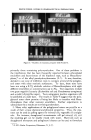
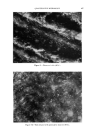
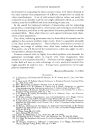
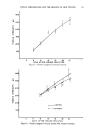
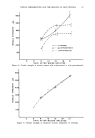
QUANTITATIVE MICROSCOPY 497 :E--.. •' '"' .- ".:' - . ......... 'L • '•'' ':.-Y ..... .' '., "• .._: z.... •'""'.. :.. -'"* ,., •. ,: ' ¾ •'"'-*. :: ..• ' %,,•.." :.::: ..i½:.:Lt' '" . ..i:• . • ' '•:' "•': "•'3 ' '. '• '.-' '. ß '."....: .... N,,, •'• •. . • • . -•... ., 3--' . .. '•..,.•,, .:... ,,,,,,•,,,. ....... % .•- ::r .. ::.2:.... . . ....., &'.' .. •,:•'.. •...•: .. , ."4 .', ': •. •." ':.½.,•:'2.-.%'" :"'7.. • ..%'• .. :•,- .• ' '.. ... ,:t/.•"' '.:.½'?:•: •, ' "L '•' "' - •'• ..." .. :?.•-- ' '•::..? ..... "C¾¾' ½ ' w.q":.' ":" .,• % ....'.. • - ..... •I• •' •.:. ." .: •.. . ..: .. -).. :' ::. .•:• .... :.'?. ,.".i• ' ' 7"'!:":'7 ': •,•' :•..'. :.,(•. .: ... . .•x... •. 7' 7" ß '• ' - " ,,•.... :_..:• -...:. ,$. •,•" 2.-":. :.•.•. ..... ' :i:' ": '":' '"*' ' '"•' ,• - •,, -• ... ß Figure 9.--Untreated skin (45X). .. .... Figure 10.--Skin treated with proteolytic enzyme (45 X).

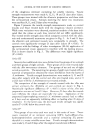
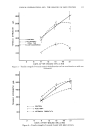
498 JOURNAL OF THE SOCIETY OF COSMETIC CHEMISTS and one treated with a proteolytic enzyme preparation. Whereas the untreated skin very clearly shows high ridges (Fig. 9), these are missing in the treated skin, as can be seen in Fig. 10. However, the change in skin profile can be seen more clearly in the interferograms (Figs. 11 and 12) than in the photomicrographs in reflected light. Whereas the high profile in untreated skin leads to considerable fringe displacements in the interfero- gram (Fig. 11), the interferogram of treated skin shows fringe displacements to a much smaller extent (Fig. 12). The lateral fringe displacement is a direct measure for the surface profile, and Fig. 13 shows the tracing of one such fringe. Such a trace is obtained simply by following the course of one certain fringe across the field. One may then compare the fringe displacements, which are indicative of and proportional to the profile depth, to a straight base line, for instance a line connecting the beginning of the fringe on the left and its end on the right. As a measure of the smoothness of skin the same parameters can be used, which have long been employed in the machine and tooling industry. Here, the so-called hrr, s-values are used to describe surface roughness, and these values are the averaged quadratic roughness (18). Again, once a measurable parameter has been established, the effect of cosmetic treat- ments can be expressed in numerical values. The most effective concen- tration of certain additives, application time, frequency of application, the effects of pH, temperature and the effect of storage upon the effectivity, all these free parameters become accessible to quantitative determination. For applications of this sort not the lower but the upper limit of the measuring range is of interest. This upper limit has been widely extended recently by the invention of the Zehender cell (19) and of interference microscopes, which have an extremely wide measuring range. Macro- interferometers use almost parallel light and are, therefore, not so limited with respect to the largest measurable path difference as interference micro- scopes. Horn (20) describes an instrument which gives high contrast in monochromatic light for well over 1000 orders of monochromatic light. One order represents a path difference of 550 mu. In a replica made of material with a refractive index of 1.5, this would represent a profile depth of 1100u, or 1.1 mm. when measured against air.* Two experimental difficulties may occur: First, the replica back surface may not be smooth this can be overcome by mounting the replica on a slide and filling the space between the replica and the slide with an em- bedding liquid of the same refractive index as the replica material. Sec- ond, the replica may contain profiles, which are so steep and so narrow that a positive fringe identification, even in polychromatic light, becomes * In the formula (24) [' = t(n2 - nO, r represents the path difference (here: 1000 X 550 mt• = 550t•) n2 is the refractive index of the replica material (ns= 1.5), and n• that of the embedding material (here air, n -- 1.00), so n2 - ni = 0.5. This leads to 550/0.5 -- 1100t• profile depth t.
Purchased for the exclusive use of nofirst nolast (unknown)
From: SCC Media Library & Resource Center (library.scconline.org)