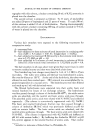
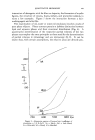
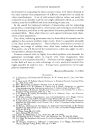
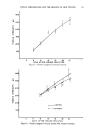
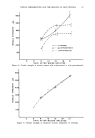
TOPICAL PREPARATIONS AND THE HEAIJNG OF SKIN WOUNDS 515 6O0 500 z 400 ,., 300 -- z •- •00 I00 : _- CONTROL x-------x ALLANTOIN- COAL TAR z•- -- --• C 0 R TICOSTEROI D .L I / .I. 3 6 cj 12 15 18 21 DAYS AFTER WOUND INFLICTED Figure 3.--Tensile strength of wounds treated with allantoin-coal tar combination or with cor- ticosteroid. 6OO 50O z 40C ,.• 30C z •- 20C I00 = _- CONTROL x .... ,x ALOE VERA ,", .... -• ARTEMISIA TRIDENTATA 3 6 9 12 15 18 21 DAYS AFTER WOUND INFLICTED Figure 4.--Tensile strength of wounds treated with plant extracts.

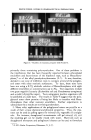
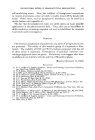
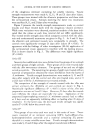
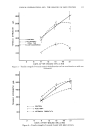
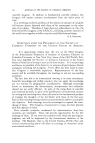
516 JOURNAL OF THE SOCIETY OF COSMETIC CHEMISTS The results are given in Fig. 5. Control values at each time interval again agree well with previous tests. At 9 and 21 days• the wounds treated with the corticosteroid ointment had significantly lower tensile strengths (P 0.01) than the controls. While the values obtained at 15 days were also lower than the controls, the difference was not significant at the statistical 5% level. Application of the cream containing pantothenylol showed some in- teresting results. At 9 days the wounds tested with this preparation demonstrated an average tensile strength that was almost identical with the controls. At 15 days, the treated wounds showed a significantly greater tensile strength (P 0.05). However, at 21 days there was little additional increase in tensile strength over that achieved at 15 days, while the untreated wounds showed the expected increment. The difference at 21 days was significantly in favor of the controls (P 0.01). DISCUSSION The results obtained in Series II, III and IV indicate that wound tensile strength measurements are able to detect the inhibitory or retarding action of a corticosteroid and some transitory degree of stimulation of healing by zlloe vera and pantothenylol preparations. Greater retardation with the corticosteroid in Series II as compared with Series IV may have been due to the greater absorption of the active corn pound from the cream base as compared with the ointment base. Daily application of the oleaginous vitamin ointment and the allantoin- tar extract liquid appear neither to enhance nor inhibit the healing of the experimental wounds. While it is advantageous for a preparation to be able to promote healing, it is also important that products applied to the skin should not show an inhibitory or retarding effect on the healing of wounds. Permitting the natural processes of healing to proceed at their natural rates is a highly desirable attribute. Studies correlating the histological changes found in healing with the tensile strength results obtained are now underway and will be reported in the near future. A composite of the control values representing 274 determinations made on 147 animals permitted the construction of the curve shown in Fig. 6. The points plotted approach a smooth line. It should be especially noted that the composite averages at 9, 15 and 21 days post surgical injury (circled points on graph) fall in a straight line. This linear time rs. tensile strength relationship in the control animals indicates that the method proposed here has validity as a technique for evaluating the effects of topically applied material on the healing of skin wounds.
Purchased for the exclusive use of nofirst nolast (unknown)
From: SCC Media Library & Resource Center (library.scconline.org)