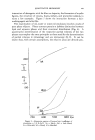
METHOD FOR SEPARATION OF AMINO ACIDS IN HAIR 461 was found exclusively in the neutral fraction was demonstrated by the platinic iodide test (2).* The solution (6 to 12 ml.), corresponding to 200-400 mg. of protein hy- drolysate, was placed near a corner of the filter paper sheet, 6 cm. from either edge. The paper was held with one edge slightly overlapping the opening of the trough and pressed into it with a strip of sheet glass some- what longer than the paper. This assembly was then transferred to the chamber which had been prepared as follows: A removable lead tray, the bottom of which was covered with a two- phase layer of water and the first solvent, was placed on the floor of the box in order to secure a saturated atmosphere. The chromatogram was allowed to develop for 24 to 72 hours. The paper was dried in a drying cupboard, turned through a right-angle and returned to the trough in order to be de- veloped by the second solvent. After drying, the paper was sprayed with 0.1% ninhydrin in n-butanol, again dried, and then heated at 80 ø for 5 minutes. The spots were outlined with pencil because of eventual fading. RESULTS A--Untreated Hair. It was shown that all the amino acids expected to be present in untreated hair could be accounted for. There were twelve spots on the chromatogram for the neutral fraction, two spots on the chromatogram for the acidic fraction, and four spots on the chromatogram for the basic fraction. The spots for methionine, leucine, phenylalanine and proline in the neutral fraction were so close together that they could be regarded as one spot. No special effort was made to separate the in- dividual members making up this spot. The amino acid composition of each fraction is considered to be as follows: •lcidic Rs Aspartic acid 0.14 Glutamic acid 0.24 Basic Lysine 0.50 Histidine 0.72 Hydroxylysine 0.76 Arginine 0.67 Neutral Glycine 0.40 Alanine 0.57 * Another--less conclusive--proof of the presence of cystine in the neutral fraction is the formation of typical cystine crystals when the neutral fraction ofuntreated hair was permitted to remain over a weekend at refrigerator temperature. This crystalline precipitate must be cystine because it is the only amino acid in this fraction which exhibits such high insolubility.

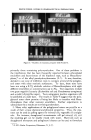
462 JOURNAL OF THE SOCIETY OF COSMETIC CHEMISTS Serine 0.33 Proline 0.87 Valine 0.78 Threonine 0.50 Leucine 0.84 Methionine 0.82 Phenylalamine 0.86 Tyrosine 0.59 Tryptophan--theoretical 0.76 Cystine 0.13 The acidic fraction contained a ninhydrin spot at the solvent "frontal." This was considered to be due to inorganic salt impurities collected during the ion exchange separation. The spot was not characteristic of a typical amino acid and was, therefore, discounted. B--Hair Treated Three Minutes in Reducing Solution. Ninhydrin de- velopment of the chromatograms of the three amino acid fractions of treated hair disclosed that a marked change had taken place: The acidic fraction was completely void of amino acids. However, two new spots appeared in the neutral fraction, and it is possible that they are due to the presence of some degradation product of the native acidic amino acids. The basic fraction, however, was completely accounted for. This finding was so unexpected that replication of this series of experiments was neces- sary to exclude the possibility of experimental error. The results of the second experimental series were identical with the first one and suggest that the acidic amino acids were altered during the reducing treatment. It is believed that this change may be a result of deamination by the re- ducing solution to produce oxaloacetic acid from the aspattic acid: --CO-•CH-- CH•--COO- -------• HOOC- CH2--CO--COOH I - -NH and a-keto glutaric acid from glutamic acid: ---CO•CH--CH•--CH•- CO()- -- .... HOOC--CH,,.---CH2- CO---COOH - NH C & D--Hair Reduced by Method "B" for Four and Light Minutes Re- spectively Then Oxidized in 1.5% H202 at pH ¾.8. Both methods of treat- ment (C & D) yielded identical chromatograms. The chromatograms of the acidic fractions for both of these treatments had a new spot which was not encountered in untreated hair. For reasons not clearly understood, the spots for glutamic and aspattic acids reappeared in the hydrolysates from reduced-and-oxidized hair. The basic fractions of both treatments revealed chromatograms which could account for all amino acids. The neutral fractions of both treatments contained two new spots which were not encountered before. A spot at an Rf value of 0.10 appears to match
Purchased for the exclusive use of nofirst nolast (unknown)
From: SCC Media Library & Resource Center (library.scconline.org)