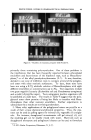
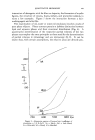
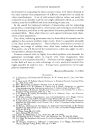
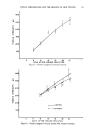
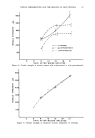
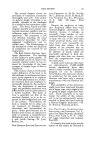
INFLUENCE OF COLOR ON FRAGRANCE QUALITIES TABI,E I--REAcTiON TO FRAGRANCE WHEN ASSOCIArED WITH COl.OR 467 , Mean Ratings fm . Sweet Sharp Sensual Expensive Associated with White Blue Yellow Magenta Associated with White Blue Yellow Magenta Least significance difference (2) Chanel _2%'o. 5 43 66 44 71 4l 68 31 66 58 76 5O 77 6O 53 58 6O Tabu 73 45 70 68 58 58 74 63 79 54 75 78 77 45 76 48 8.3 6.0 8.4 7 2 z 8O a:: 60 z ,,• 40 I •o SWEET IO0- z 80 a:: 60. 40. SHARP -- COLOR-- -- COLOR-- z_ 8o. 60' 4,0' I 20 SENSUAL IO0 80, 60' 40, 20. EXPENSIVE -- COLOR -- - COLOR - Figure l .--.Reaction to Chanel No. 5 fragrance when associated with color. (The response to a color is a discrete variable the points on the curves are connected only to assist the eye in following the change in response.)

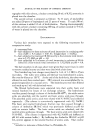
468 JOURNAL OF THE SOCIETY OF COSMETIC CHEMISTS strips of each of the four colors. Each numerical value is the mean of 100 women's ratings. The ratings for sweetness are shown in the first column, the ratings for sharpness in the second column, followed by the sensuality and expensiveness ratings. The "white" data represent the ratings given to Chanel and Tabu without the influence of color. Tabu was judged con- siderably sweeter, less sharp and more sensual than Chanel the two per- fumes were judged about equal in expensiveness, however. The figures for blue, yellow and magenta show the influence on these ratings of the introduction of color. Taking the sweetness column as an example, it is apparent that Chanel's sweetness rating was not significantly affected by association with blue. Both yellow and magenta, however, raised Chanel's sweetness rating by 15 to 17 points--that is, Chanel was perceived as much sweeter when evaluated on the yellow and magenta blotting strips. For Tabu, on the other hand, the most influential color was blue, which lowered Tabu's sweetness rating by 15 points. Yellow and magenta enhanced its perceived sweetness as they did for Chanel but to a lesser extent. By examination of the same data for Chanel in graphic form (Fig. 1), the influence of color on perceived fragrance qualities can, perhaps, be seen more clearly. Of the four qualities investigated, the one most vulnerable to the in- fiuence of color (i.e., showing the greatest range of responses) was per- ceived sensuality, but each of the other three qualities also exhibited con- siderable variation as a function of color. The Tabu data (Fig. 2), by contrast, reveal little or no change in per- ceived sensuality as a function of color. Here, the greatest shift was in the expensiveness ratings, which dropped 30 points from the "most expensive" color--yellow--to the "least expensive"--magenta. In the second phase of the study, the influence of color on perceived fragrance qualities was investigated in the absence of the fragrance itself. The stimulus used to evoke fragrance qualities was an advertisement for the perfume in question. While looking at the ad, respondents rated the perfume on the same four rating scales as were used in phase I. Again, the repondents were divided into four groups. One group made its ratings from the original black-and-white ad the other groups saw blue, yellow or magenta ads. To prepare these materials, a Chanel No. 5 ad and a Tabu ad were photographically tinted and reproduced in white and in each of the three test colors. Separate panels of 100 women made their fragrance quality ratings for each of the eight stimulus-advertisements. The results of the second phase are summarized in Table II. This presents the mean ratings given to Chanel and Tabu in the presence of the four differently tinted ads. Again, the ratings for sweetness are given
Purchased for the exclusive use of nofirst nolast (unknown)
From: SCC Media Library & Resource Center (library.scconline.org)