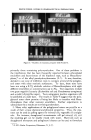
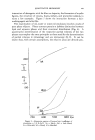
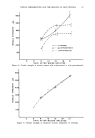
METHOD FOR SEPARATION OI AMINO ACIDS IN HAIR 463 the position of a known chromatogram of lanthionine. In addition, there appeared a very large spot or grouping of spots at an Rf value of 0.50. Since these new spots appeared only as a result of treatments C & D, it is assumed that their presence is the result of some changes which took place during reduction and oxidation of the hair. These changes probably oc- curred at the disulfide linkage since lanthionine was produced other changes probably occurred at the polar linkage as well since the new spots are some modification of the acidic areinc acids. DISCUSSION AND CONCLUSION In all treated hair swatches there seemed to be a distinct reduction of the total quantity of aspattic and glutamic acids. The appearance of a new spot in the neutral fraction as a result of a typical cold wave procedure (total immersion notwithstanding) suggests formation of lanthionine. It is known that acid hydrolysis of proteins destroys only tryptophan by polymerizing its residue with a prosthetic carbohydrate to form humin. On the other hand, it is known that alkaline hydrolysis of proteins destroys cystine and hydroxy amino acids, converts arginine to ornithine, causes loss of ammonia, and rapidly racemizes all the areinc acids. It is likely, therefore, that the changes in areinc acid composition of hair keratin re- ported here take place not during hydrolysis but during (alkaline) cold wave treatment. It is proposed that, during cold waving, the reducing solution not only converts disulfide linkages to sulfhydryl groups, but also causes a variety of reactions due to its high alkalinity. Thus, the conversion of cystine (to lanthionine) and deamination of acidic areinc acids (glutamic and aspattic acids) and of basic areinc acids (arginine and lysine) might well account for the unusual findings reported here. Evidently these reactions are not quantitative, and considerably more work will be required to elucidate completely the chemistry of the interaction between keratin and cold waving preparations. (Received February 7, 1964) REFERENOES (1) R. Consden, A. H. Gordon, and A. J.P. Martin, Biochem. St., 38, 224 (1944). (2) J. W. Sease, et aL, dnaL Chem., 20, 431 (1948).

464 JOURNAL OF THE SOCIETY OF COSMETIC CHEMISTS FIRST WORLD-FAT-CONGRESS Hamburg, from 12. to 18. October, 1964 organized by the INTERNATIONAL SOCIETY FOR FAT RESEARCH (ISF) on the occasion of its tenth Anniversary together with the DEUTSCHE GESELLSCHAFT FOR FETTWlSSENSCHAFT (DGF) in friendly association with the following international organisations: International dssociation of Seed-Crushers (IdSC) International Federation of Margarine dssociations (IFMd) dssociation Internationale de la Savonnerie et de la Ddtergence (diS) International Federation of the Societies of Cosmetic-Chemists (IFSCC) l,ectures, grouped in eight sections, will cover the whole field of fats and oils and their products: I. Oil-seed cultivation Technology of vegetable and animal oils and fats II. Fundamental research and analysis (general methods) Ill. Fats as foodstuffs (butter, margarine, edible oils, etc.) and as constituents of feedingstuffs IV. Biochemistry and Clinical Biology of fats V. Soaps and detergents VI. Fats and fatty acids in organic surface coatings VII. Cosmetic Science VIII. Miscellaneous applications Chemists, engineers, biologists, physicians, cosmetic specialists, and others interested in the above subjects are cordially invited to participate, and to write for further information to: DGF-Geschiiftsstelle, Lortzingsstra/Se 10, 44 Miinster/Westf., Germany International Society for Fat Research Prof. Dr. Dr. h. c. H. P. KAUFMA• President
Purchased for the exclusive use of nofirst nolast (unknown)
From: SCC Media Library & Resource Center (library.scconline.org)