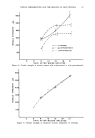
518 JOURNAl. O1: THE SOCIETY O!,' COSMETIC CHEMISTS SUMMARY I. Under controlled conditions, with the mouse as the experimental animal, it has been shown that the tensile strength of a standardized skin wound increased as the wound healed. II. The effects of several preparations applied topically to the standard wound were demonstrated by tensile strength measurements. (Received Aplil 1, 1964) REFERENCES (1) O. W. Neuhaus, H. F. Balegno, and A.M. Chandler, Proc. Soc. Exptl. Biol. Med., 107, 960 (1961). (2) J. A. Schilling, W. Joel, and H. M. Shurley, Surgery, 46, 702 (1959). (3) B. N. White, M. R. Shetlar, and J. A. Schilling,/Inn. N.Y./Icad. Sci., 94, Art 1 297 (1961). (4) M. R. Shetlar, E.G. Lacefield, B. N. White• and J. A. Schilling, Proc. Soc. Expll. Biol. Med., 100, 501 (1959). (5) M. Ahmad./Inn. Biochem. Exptl. Med. (Calcutta), 21, 295 (1961). (6) H. J. Fromm and R. C. Nordlie, Biochim et Biophys./Icta, 31,357 (1959). (7) M. B. Williamson and W. Guschlbauer, Nature, 192, 454 (1961). (8) P. Weiss, Harvey Lectures Ser., 55, 13 (1959-60). (9) E. E. Peacock, Jr.,/Inn. Surg., 155, 251 (1962). (10) C. Ragan, E. L. Howes, C. M. Plotz, E. M. Meyer, and J. W. Blunt, oeroc. Soc. Exptl. Biol. Med., 72, 718 (1949). (11) S.H. Boulas, y. Invest. Dermatol., 32, 75 (1959). (12) C.-M. Fajers and B. Zederfeldt,/icta Pathol., 47, 225 (1959). (13) A. Innocenz, Ormonologia, 17, 129 (1957). (14) A. I. Bukhonova, Doklady/Ikad. Nauk. S.S.S.R., 124, 477 (1959). (15) A. I. Bukhonova, Ibid., 134, 1256 (1960). (16) A. A. Voitkevich, and A. I. Bukhonova, Problemy Endokrinol i Gormonoterap., 7, 59 (1961). (17) E. Moltke, Endocrinology, 63, 931 (1958). (18) B. S. Karsavina and L. I. Muzykant, Doklady/Ikad. Nauk. S.S.S.R., 123, 189 (1958). (19) L. Fiore-Donati and E. Moltke,/Icta Endocrinol., 34, 430 (1960). (20) P. Boiteau and A. R. Ratsimamanga, Bull. Soc. Sci. Bretagne, 32, 28 (1957). (21) P. Bolteau and A. R. Ratsimamanga, Ibid., 34, (Extra No.) 307 (1959). (22) G. Farris, Minerva Med., 56, 2244 (1960). (23) B. Rovatti and R. J. Brennan, Ind. Med. and Surg., 28, 364 (1959). (24) Anon., y./Im. Med./Issoc., 110, 813 (1938). (25) H. J. Heite and S. E. Muller-Niewerth,/Irzneimittel-Forsch., 8, 595 (1958). (26) T. Juszkiewicz and C. Zorawski, Med. IKeterynar (Poland), 14, 346 (1958). (27) R. Mouchette,/irch. Biol. (Liege), 68, 513 (1957). (28) S. H. Rubin, y. Soc. Cosmetic Chemists, 11, 160 (1960). (29) S. B. Curri, Boll. Soc. Ital. Biol. Sper., 35, 1762 (1959). (30) B.S. Karsavina, M. Z. Alferera, L. A. Glembodskaya, V. M. Liftsman, G. D. Zenkevich, and G. A. Gzehlyak, U.S.S.R., Pat. No. 130,159, July 15, 1960. (31) E. E. Peacock, Jr., Proc. Soc. Exptl. Biol., 105, 380 (1960). (32) Ph. Sandblom, P. Petersen, and A. Muren,/icta Chir. Scand., 105, 252 (1953). (33) J. F. Prudden, G. Nishihara, and L. Baker, Surg. Gynecol. Obstet., 105, 283 (1957). (34) J. F. Prudden, Transplant. Bull., 5, 14 (1958). (35) R. E. Paulette and J. F. Prudden, Surg. Gynecol. Obstet., 108, 406 (1958). (36) G. Nishihara and J. F. Prudden, Ibid., 107, 305 (1958). (37) J. F. Prudden, G. Nishihara, and L. Ocampa, Ibid., 107, 481 (1958). (38) M. S. Schwartz, F. Gump, and J. F. Prudden• Surg. Forum, 10, 308 (1960). (39) J. F. Prudden, T. Inoue, and L. Ocampa,/irch. Surg., 85, 245 (1962). (40) E. Wolarsky and J. F. Prudden, Ibid., 85, 404 (1962). (41) J. F. Prudden, O. Gabriel, and B. Allen, Ibid., 86, 157 (1963). (42) J Charhey, M. B. Williamson, and F. W. Bernhard, Science, 105, 396 (1947).

J soc. COS. CHEM. 15,519-522 (1964) BOOK REVIEWS AN INTROI•VCTION TO CLAY COL- LOrn C•EmSTP.¾ •'Oe. CLAY TEC•- NOLOGISTS, GEOLOGISTS, AND SOIL SCI•.NTISTS, by H. van Olphen. John Wiley & Sons, Interscience Division, New York, N.Y. 1963. 301 pages, illustrated and indexed. Price $10. Despite the fact that the title of this book appears to limit its readers to only a few groups, the cosmetic chemist will do well to add it to his library. Anyone who has attempted to cope with the literature dealing with colloidal states or suspension sys- tems soon becomes aware of the state of confusion which exists in the terms, definitions, and explana- tion of concepts and theories in this area. The author recognizes the misleading aspects of this situation and makes a positive effort to describe the proper usage of each term at the time he introduces it in his book. The first five chapters are devoted to lucid explanations of concepts concerning colloidal systems in gen- eral and clay suspensions as related to the properties and stability of hydrophobic sols. Dr. van Olphen leads his readers through excellent discussions of the theories of set- tling? aging, and flocculation of sus- pensions. He deals with the origin of electric charges on particles which contribute to the stability of the system or detract from it. The theories which exist on the stability of hydrophobic sols are presented and discussed, including a summation of the forces of repulsion and attraction which af- fect stability. Although the bal- ance of the book deals almost ex- clusively with clay mineralogy and clay suspensions, the sections dealing with theories of stability and those concerned with technological ap- plication of stability control should prove valuable to the research chemist who must cope with the manifold problems in the develop- ment of a stable suspension of any sort. A valuable feature of the book is the inclusion of several appendixes which p.resent information on the preparation of clay suspensions, electric double-layer computations, van der Waals attraction energy between two unit layers, and refer- ences to books, monographs and periodic publications on clay litera- ture. The illustrations nicely augment the text and help in clarifying most of the basic principles involved. The only major criticism in this respect is that more of such illustra- tions could have been employed throughout the book. The index is good, and the text is free of typo- graphical errors.--Jos•PH L. K^NIG, Columbia University, College of Pharmacy. ELASTOL¾SIS AND AGING, by David A. Hall. Charles C Thomas, Spring- field, Ill. 1964. xiii -3- 160 pages, illustrated and indexed. Price $6.75. The aging of elastic tissues is a subject of prime interest to the cosmetic chemist. This is a highly 519
Purchased for the exclusive use of nofirst nolast (unknown)
From: SCC Media Library & Resource Center (library.scconline.org)