538 JOURNAL OF THE SOCIETY OF COSMETIC CHEMISTS evolved to protect us mammals from the chemical and mechanical hazards of our environment occasioned by our ancestors having left the cosy sea. There was an aspect I touched upon but did not develop, and it is precisely here that cosmetics find their natural place. The epidermis and its append- ages (hair, feathers, nails, etc.) not only function as a protective coat it is in addition the surface we present to the other members of our species it is our billboard where we make personal and even intimate announcements, a component in the interspecies communication system. I need hardly remind you of the incredible mating displays of birds or of the role of odors among the mammals. Of paramount importance among the lower animals who have not our doubtful advantage of speech, the epidermis remains nevertheless among us the basis of a more fundamental nonverbal form of communication. Some men (I am told) have fallen in love with a woman on hearing her voice--they would have been better advised to wait until they got their hands on her epidermis. Some women (in novels at least) fall in love with a man's poetry. Again, before going further, I would counsel a quick look at the poet's epidermis. In this primitive intersexual signalling system, the epidermis and its odors have pride of place, and cosmetics in very general terms is the art of enhancing this type of communi- cation. It aims to make on empirical and theoretical grounds such significant changes in our appearance and odor as to produce a favorable response from others. For accidental historical reasons in our culture we cover most of our sur- faces except the face and hands cosmetic chemists therefore concentrate on these parts. It was not always so--and I can point to the Maoris and aborigines of Australia as excellent examples of more extensive decoration. and even among us, it is a limitation only to be deplored, because there is no question that subconsciously other parts remain still in force as elements in the signalling system. E.g., all men here (and all the knowledgeable women) are aware of the importance of the female derriere--a truly enor- mous area of epidermis, today wholly excluded from the cosmeticJan's skill. I am convinced that the sight of this object disappearing among the bushes was to early man the releasing signal, par excellence. I have often in the Zoo (an invaluable institution for the education of cosmeticians as well as philosophers) meditated on the vivid red and blue bottoms of baboons and felt (were I a baboon) how that sight would send me. Relative to these humble apes, ladies and gentlemen, we are in this area frankly deprived. I can only hope that when further academic re- search has revealed the persistent importance among humans of signals transferred at this subliminal level, and we take the appropriate steps, the cosmetic scientists will march in and adorn the reconquered areas. A walk down the street will really be something then. I should think it must be pretty clear by now what my future line of re-

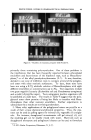
TENTH LITERATURE AWARD 539 search would be were I to continue with the skin. I confess to you (but let it go no further) that I am having trouble wording my application for a grant. They will surely want to know (inter aha) why I can't use rats in- stead of women. Have they ever looked at a rat's tail? I may even have to apply to the S.C.C. for a grant-in-aid. In fact, now that possibility suddenly occurs to me, I think I had better--before sitting down and letting you get down to the serious business of putting your epi- dermis to work--conclude by re-iterating with emphasis how honored I feel to be numbered among those chosen to receive this award and how wise and farsighted the officers of this SOCIETY are to make it to useless people like me. Dr. E. H. Mercer, r., receiving Literature Award from Mr. R. A. Kramer, 1., President of the Society.
Purchased for the exclusive use of nofirst nolast (unknown)
From: SCC Media Library & Resource Center (library.scconline.org)