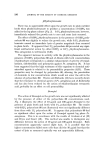
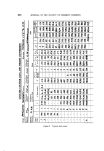
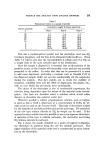
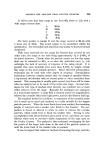
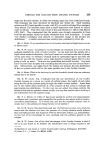
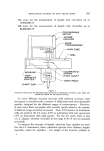
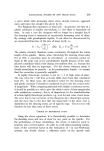
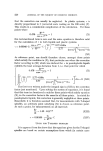
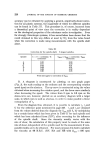
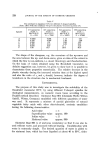
2OO JOURNAL OF THE SOCIETY OF COSMETIC CHEMISTS ii Figure oe Typical data sheet

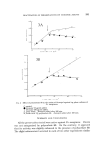
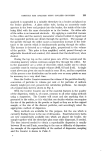
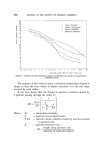
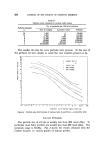
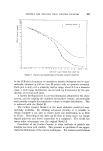
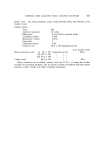
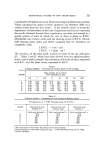
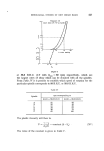
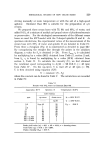
PARTICLE SIZE ANALYSIS USING COULTER COUNTERS 201 Table I Reproduced results on a sample of powder Cumulative weight % above stated size Particle diameter p Run 1 Run 2 Run 3 35 1.1 1.4 1.7 25 9.8 10.4 10.7 20 23.8 26.9 29.5 15 48.0 50.1 52.0 10 78.3 80.1 80.5 7 91.2 93.1 93.4 5 96.8 98.0 98.1 3 99.4 99.6 99.7 2 99.75 99.83 99.93 This was a medium-priced powder and the electrolyte used was 5% trisodium phosphate, and the time in the ultrasonic bath was 20 sec. From Table I it will be seen that the reproducibility is within some 3 or 4% on a weight basis at the most sensitive part of the distribution. Once the sample is dispersed it is essential that no flocculation of the particles occurs, as the Counter will accurately count and size any particle presented to the orifice. In order that this can be prevented it is usual to add some dispersant, preferably a nonionic such as Nonidet P.42 to the dispersed sample, whilst one can also mechanically stir the suspension during the analysis. This fact enables one to study the stability of emulsions, solubility rates and the effect of dispersants, flocculants, etc., with an ease which has previously been unobtainable. The choice of the electrolyte is also of considerable importance, the selection being dependent upon the nature of the material under investi- gation. One does not therefore select a solution which would either dissolve or flocculate the material under test. Wherever possible a sodium polyphosphate solution, such as Calgon, is used as this is itself a dispersant at a concentration of 2-4% by such as can be used on the Counter itself. This type of electrolyte is ideal for the majority of insoluble powders such as talc and rouge. For emulsions of the o/w type sodium chloride at 1% by weight can be used. If the material is water soluble then it is possible to use a non-aqueous electrolyte. A material of this type is calcium carbonate, the electrolyte used being 5% lithium chloride in methanol. Fig. 3 shows the resttits obtained on a series of typical toothpastes, the electrolyte in question being the one for calcium carbonate. The slight solubility of the material under test is counteracted by prior satura- tion in the electrolyte.
Purchased for the exclusive use of nofirst nolast (unknown)
From: SCC Media Library & Resource Center (library.scconline.org)