208 JOURNAL OF THE SOCIETY OF COSMETIC CHEMISTS sedimentation cannot generally be relied upon below some 4-5[• when such effects as Browntan movement of the particles by convection currents (even in thermostatically controlled baths) and the actual method of following the analysis all help to reduce the limit one can reach. We hope that this paper has made clear how this instrument can be used for the size analysis of the majority of cosmetic materials from liquids, creams and emulsions to pastes and powders. (Received: 1st September 1965) REFERENCE (1) Coulter, W. H. Paper presented before the National Electronics Conference, Chicago, Ill., U.S.A. (3rd October 1956). DISCUSSION MR. A. MoSs: When one has hydrophobic particles suspended in an electrolyte the quality of the dispersion is not good because of flocculation of the particles. The addition of a nonionic wetting agent such as polysorbate 80 decreases the surface tension and facilitates the dispersion. Do you think that the use of such a wetting agent modifies the di-electric constant of the electrically conductive liquid ? MR. 1•. W. LINES: The addition of a wetting agent in no way affects the response of the Coulter Counter to particles. Since most materials, whatever their nature, need to be analysed in a fully dispersed state it is necessary to add wetting agent to get the ultimate particle size. The only effect that such addition might have is that a very high concentration might increase the aperture resistance and therefore the calibration constant would change for Model 'A'. This can be overcome by simply finding the calibration constant with your system, including wetting agent. A problem might arise with a wetting agent of the polysorbate type. Some of these surfactants are not completely water-soluble, and are in a very, very fine colloidal state in that event a very, very high background of particles would be obtained so that the sensitivity of the size distribution is lost. MR. A. Mo/is: May one use a solution of ionic dispersant directly as an electrically conductive liquid in which to suspend the particles to be analysed ? MR. R. W. LIN•S: One may use such surfactants directly, but in practice their conductivity in an aqueous medium would be so low in terms of the conductivity needed for the Coulter Counter Model 'A' that the size distribution might suffer at the fine end. It might well be that if a low concentration of such a surfactant were used, one could get to perhaps 5[z, possibly 2-31z, but one certainly could not get to the very small sizes that probably interest you. MR. A. Mogs: Since particle concentration is a critical point when the Counter is used, how is it possible to dilute liquid o/w emulsions without giving rise to the coalescence of dispersed droplets ? MR. R. W. LINES: One has to dilute carefully, and a slightly different technique must be employed, depending on the system. Probably the most satisfactory way is to make a two stage dilution, one stage into the de-ionized water, and the second

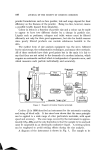
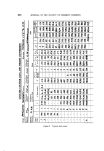
PARTICLE SIZE ANALYSIS USING COULTER COUNTERS 209 stage into the salt solution, to which the wetting agent has been added previously. This technique has been described by Marshall and Taylor (2). Their emulsion system was 50 • liquid paraffin in water, with 2 •o w/v methyl cellulose 20 as emulgent. They diluted 1 ml emulsion taken from a mixed suspension with filtered de-ionized water to 100 mi. They then took 0.4 ml of this and diluted it to 100 ml with filtered 0.9• NaC1. They commented that the results were strongly comparable to those from the microscope, within the limits obtainable from both techniques. To quote "the dilution techniques used induced no detectable change in the particle size distribution." A similar conclusion has recently been published by Rowe (13). MR. A. Mogs: If w/o emulsions have to be tested, what kind of liquid must one use to dilute them ? MR. R. W. LINES: According to our knowledge w/o emulsions have not yet been analysed satisfactorily with a Coulter Counter. As one must mix the sample into a liquid which conducts electricity, this liquid must be a solvent to take the oil phase. At the same time, its dielectric constant must be reasonably high to get some salt into it for use with the Counter, and a high dielectric constant means that it is also going to take up water. There are two possibilities that could be tried. One must try to coat the water droplets with something that will not go into the solvent electro- lyte. Alternatively, one might freeze the system and measure the size distribution of the ice crystals which will be the same particle size to the Coulter Counter. MR. A. Mogs: What is the best way to use the threshold circuit when an unknown sample has to be tested ? MR. R. W. LINES: Fig. I indicates that the size distribution on the Coulter Counter appears on a screen as a series of vertical pulses, the height of each pulse being the size of the particle going through the orifice at that instant. Apart from one or two rather minor functions it is the purpose of this screen to indicate the approximate size distribution. In this way one can adjust the sizing controls, the threshold dial and the aperture current switch, in a way that enables one to build up a size distribution over the required range. MR. T. A. BROCK: In Table II, figures are quoted for particle size measurements on colognes and a perfume, and presumably the products were mixed with an electro- lyte before measurement. If so which one, and was the resultant mixture clear or cloudy due to the perfume oils being thrown out of solution ? MR. W. M. Woo•): The electrolyte used was 1 •o NaC1 and we were very careful to ensure that the solution was clear the presence of a cloudy solution would indicate that something peculiar had happened with the electrolyte system, e.g. precipitation. To the best of our knowledge we were counting only the particles present in the cologne. MR. R. W. LINES: One of the chief advantages of the Coulter Counter is that if one is in any doubt as to whether the distribution that is being counted is the (2) Marshall, K. and Taylor, J. Coulter Counter users' meeting, Nottingham, 30/9/1965. (3) Rowe, E. L., J. Pharrn. Sci. õ4 260 (1965).
Purchased for the exclusive use of nofirst nolast (unknown)
From: SCC Media Library & Resource Center (library.scconline.org)