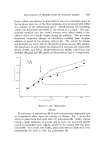
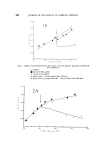
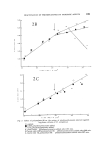
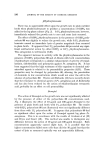
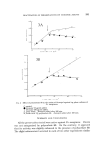
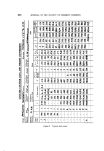
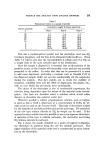
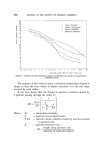
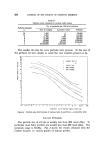
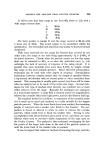
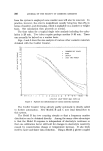
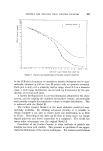
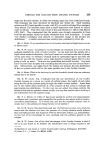
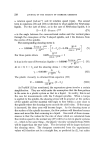
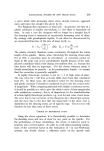
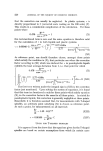
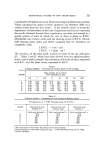
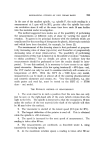
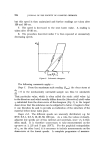
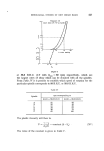
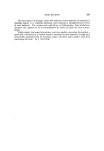
INACTIVATION OF PRESERVATIVES BY NONIONIC AGENTS 189 0.12 O. 10 0.08 0.06 o.ot 2B 150 190 230 270 Z 10 T I M E ( Min. ) at 37.5 • Oolt 0.12 0.1 0,08 x O x• x• ¸ ß i I I I i 16o 20o T I M E (Min.) at _•f. f Effect of po]ysorbate 80 on the action of •hydroxybcnzoate mixture against ]og phase cultures of Ps. •f•os•. O control. $ 0.03 % •hydroxybenzoates added. • 0.1% •hydroxybenzoatcs added. A, plain broth. •Hydroxybcnzoates added after 191 min. B, broth •th 0.02• polysorbate 80. •Hydroxybenzoates added after 23• min. C, broth with 1 • polysorbate 80. •Hydroxybenzoates added after 237 min.

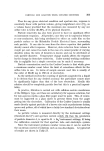
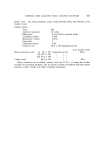
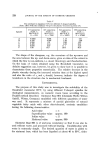
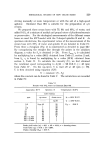
190 JOURNAL OF THE SOCIETY OF COSMETIC CHEMISTS p Hydroxybenzoates There was no appreciable effect upon the growth rate in plain nutrient broth when phydroxybenzoate to produce a concentration of 0.03% was added to the log phase culture (Fig. 2). 0.1% phydroxybenzoate, however, immediately reduced the growth rate to zero and some lysis occurred. The effect of 0.03% phydroxybenzoates in the presence of 0.02% poly- sorbate 80 was slightly to reduce the growth rate, while 0.1% phydroxy- benzoate caused an immediate lysis of greater magnitude than occurred in plain broth. It appeared that 1% polysorbate 80 prevented any signi- ficant antibacterial action by either 0.03% or 0.1% phydroxybenzoates. This antagonism is well known (7,10). The apparent increase in activity with the phydroxybenzoates in the presence of 0.02% polysorbate 80 and of Dioxin with both concentrations of polysorbate corresponds to a similar enhancement of activity of benzal- konium, chlorhexidine and polymyxin against Ps. aeruginosa (4). It has been suggested that the high resistance of this organism to chemical anti- microbial agents is related to its permeability properties (4,11). These properties may be changed by polysorbate 80, allowing the penetration of chemicals in low concentrations which would not enter the cell in the absence of polysorbate 80. Brown and Richards (11) have recently shown that the resistance to chemical agents of Ps. aeruginosa and of Escherichia coli has also been reduced by the action of ethylenediamine tetraacetic acid, probably by an effect on cell permeability. Bronopol The action of Bronopol on the growth rate was not significantly affected by the presence of either of the polysorbate 80 concentrations used. Fig. 3 illustrates the effect of 10 •g/ml and 100 •g/ml Bronopol in the presence of plain broth and broth with 1% polysorbate 80. The results with 0.02% polysorbate 80 (not illustrated) were not significantly different from those with 1% polysorbate 80. It appears that polysorbate 80 had no significant effect upon the action of Bronopol against log phase Ps. aeruginosa. This is in accordance with the results of Croshaw et al (12) and Bryce and Smart (13). This method was unable to distinguish any difference between the action of 10 •g/ml and 100 •g/ml Bronopol. Both concentrations apparently caused slight lysis. It is possible that the higher concentration killed more cells than did the 10 •g/ml but that the extent of lysis as measured optically was not appreciably different.
Purchased for the exclusive use of nofirst nolast (unknown)
From: SCC Media Library & Resource Center (library.scconline.org)