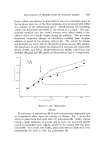
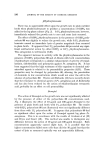
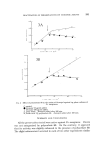
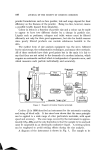
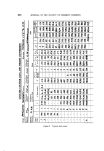
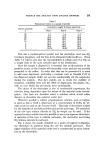
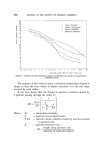
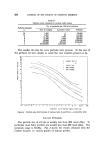
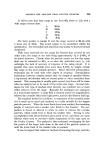
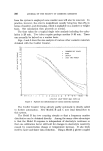
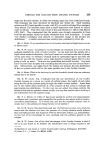
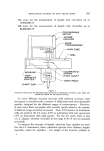
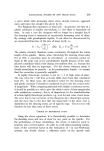
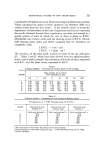
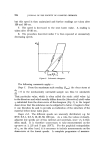
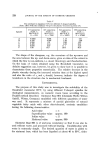
204 JOURNAL OF THE SOCIETY OF COSMETIC CHEMISTS Table II Particle count obtained on various toilet waters No. of particles per 100 ml of solution Particle diameter /• Eau de cologne Lavender water Perfume 15 1,500 0 20,000 10 9,800 80 113,500 8 11,300 1,000 233,300 6 11,500 1,800 450,000 4 88,000 19,400 1,230,000 2 270,000 355,000 9,000,000 1 60,000,000 5,000,000 -- The smaller the size the more particles were present. In the case of the perfume we were unable to count the vast numbers present at 1•. •00 ' ' ' 90' 70' + 'PUFFER' TAL 7 CaHULATIVE •fl•flT PEREEN• ABOVK 5TATKP SIZE TALCUM POWDERS The particle size of all talc is usually less than 300 mesh (53•). In particular most baby powders are usually less than 325 mesh (44•). The optimum range is 10-60•. Fig. 4 shows the results obtained with the Coulter Counter on various grades of talcum powder.

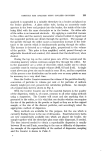
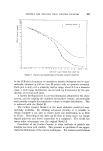
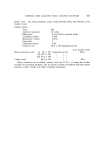
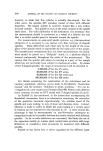
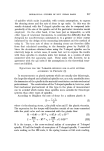
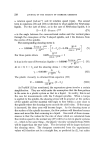
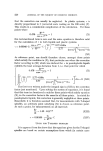
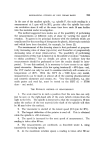
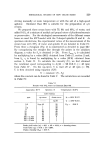
PARTICLE SIZE ANALYSIS USING COULTER COUNTERS 205 It will be seen that they range in size from 65• down to 1.5• with a wide range of mean sizes. A 30.0[• B 24.6[• C 15.8[• D 12.2[• E 8.7[• The baby powder is sample D and the range covered is 36-2• with a mean size of 12.2•. This would appear to be somewhere within the specification. The electrolyte and dispersion was similar to those previously mentioned. With some materials the size range lies beyond that covered by one orifice tube, the range of one tube being approximately 1 • or 2-40% of its stated diameter. Clearly when the particle counts are low this upper limit can be extended to 50% or so since the statistical error (q- •/•_) outweighs the lack of accuracy of response of the sizing circuit. It is possible that some materials have more than 5-10% by weight outside this range on the most suitable aperture. Below this level extrapolation techniques can be used with some degree of accuracy. Extrapolation techniques, however, usually assume that the sample in question follows a log-normal distribution with no second peaks or other variations from normal. This assumption is usually quite correct, but there will be times when an analysis has to be made of the entire size range. Several tech- niques for this type of analysis exist whereby one combines two or more orifice tubes to cover the range. Basically the techniques are analogous to a microscope analysis - a large field is scanned under low magnification followed by a smaller field under high power, and the distribution built up. The standard method is as follows: A suspension of the material under test is made up as usual and analysed on a tube suitable for the largest particles present. When the lower limits have been reached, the remaining sample is removed and a smaller tube fitted to the Counter. The sus- pension is sieved or allowed to settle in order to remove the oversize particles, which would tend to block the smaller tube. Sieving is best accomplished with electro-formed micro-mesh sieves, and these are most efficient when used to wet-sieve dilute suspensions of the type used on the Coulter Counter. The analysis is then continued, overlapping the last few points of the larger tube down to the end of the particle system or until the lower limit of the smaller tube is reached. It can be argued that whatever method of removing the large particles
Purchased for the exclusive use of nofirst nolast (unknown)
From: SCC Media Library & Resource Center (library.scconline.org)