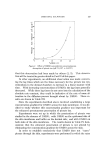
J. Soc. Cosmetic Chemists, 19, 119-127 (Feb. 5, 1968) The Effect of Dimethyl Sulfoxide on Percutaneous Absorption: A Mechanistic Study, Part I STANLEY G. ELFBAUM, Ph.D., and KARL LADEN, Ph.D.* Presented before the Mid-Atlantic Chapter, February 14, 1•67 Synopsis--An in vitro skin penetration system has been described in which intact abdominal guinea pig skin has been utilized as the membrane. The passage of pierate ion through this membrane in the presence of dimethyl sulfoxide (DMSO) is a passive diffusion process which shows adherence to Fick's First Law of Diffusion. In order to produce substantial enhance- ment effects, relatively large concentrations of DMSO were required. Effective concentra- tions of DMSO caused the skin membranes to acquire a more turgid and wrinkled appearance. It has been shown by diffusion and isotope techniques that the absolute rate constant for the penetration of DMSO is approximately 100 times greater than that for the pierate ion. Thus, the two substances transferred independently of each other through the skin. INTRODUCTION In recent years, dimethylsulfoxide (DMSO) has been reported as a solvent which, in addition to having a host of claimed therapeutic properties, has the ability of rapidly penetrating human skin and en- hancing the percutaneous absorption of materials dissolved therein (1-7). While there have been numerous reports concerning the utility of DMSO in promoting percutaneous absorption both in vivo and in vitro, few studies have appeared concerning its mechanism of action upon the barrier to absorption through the skin (7). Recently, disclosure of potential medical hazards associated with the use of DMSO has precluded its widespread use in humans (6). How- * Gillette Research Institute, 6220 Kansas Avenue, N. E., Washington, D.C. 20011. 119

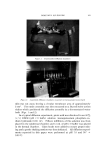
120 JOURNAL OF THE SOCIETY OF COSMETIC CHEMISTS ever, an understanding of its mode of action could lead to the discovery of other methods to enhance percutaneous absorption. To achieve this goal, the in vitro I•ereutaneous Iressage of pierate ion in the presence of dimethyl sulfoxide has been examined in detail. MATERIALS AND METHODS White male guinea pigs ranging in size from 600-1200 g were obtained from Dublin Laboratory Animals, Inc., Dublin, Va. Reagent grade picric acid was t urchased from Allied Chemical and Dye Corp., New York, N. Y., "certified" reagent grade dimethyl sulfoxide from Fisher Scientific Company, Fairlawn, N. J., ethylene glycol monomethyl ether from Mallinckrodt Chem. Works, New York, N.Y. dimethyl-C TM sulfoxide and Liquifluor (25 X concentrate liquid scintillator) were ob- tained from New England Nuclear Corporation, Boston, Mass. All other chemicals were obtained as pure as possible. Intact abdominal guinea pig skin was utilized as a membrane between a set of glass diffusion chambers. Hair was removed from the skin ei- ther by wax epilation several days prior to sacrificing the animal or with an electric clipper. Animals were usually sacrificed by a lethal injection of MgSO4, and the skin was rapidly excised and frozen. Attempts were made to utilize the skin within 48 hours after procurement. Ainsworth has reported that the chemical permeability of excised skin is almost un- changed for at least two days if bacterial decomposition is prevented by cold storage (8). Since large variations in skin permeability were often seen from ani- mal to animal and have even been reported from different skin sites of a single animal (9, 10), any one series of experiments whose results are re- ported here in a single figure or graph was performed using skin from a relatively small area of the abdomen of a single guinea pig. It has also been observed in this laboratory that differences in the preparation of the animals could result in large variations in permeability characteristics from animal to animal. Skin from wax epilated animals often showed greater permeability characteristics than skin from animals which had not been so treated. This was probably due to an incomplete recovery of the barrier layer. On occasion, erratic results within a given series from the same animal were obtained which were attributed to in- herent or mechanically induced variations. Prior to beginning an experiment, portions of the frozen skin were cut and positioned as the membranes between L-shaped glass diffusion chambers. A pinch clamp which locked and sealed the chamber-mem- brane-chamber assembly in place was then applied. Any overlapping
Purchased for the exclusive use of nofirst nolast (unknown)
From: SCC Media Library & Resource Center (library.scconline.org)