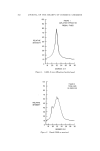
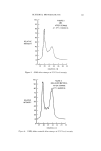
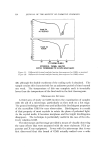
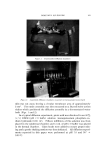
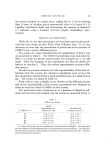
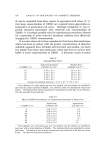
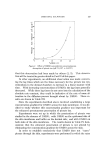
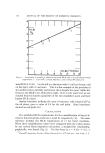
136 JOURNA L OF THE SOCIETY OF COSMETIC CHEMISTS rect, as shown by the stable emulsions later compounded using the con- verted O/W HLB. This titration method, while probably not foolproof, is a convenient and easy means for rapidly developing information to prepare specific emulsion formulations. The choice of emulsifiers is quickly narrowed down, and the application range of a new emulsifier is quickly deter- mined. In the hands of a skilled chemist, many of its shortcomings can be avoided, and the procedure probably can be improved into greater usefulness as experience with it grows. (Received May 19, 1967) REFERENCES (1) Griffin, W. C., Classification of surface-active agents by "HLB," J. Soc. Cosmetic Chem~ ists, 1,311-26 (1949). (2) Griffin, W. C., Calculation of HLB Values of non-ionic surfactants, Ibid., 5, 249-55 (1954). (3) Griffin, W. C., Clues to surfactant selection offered by the HLB System, Q/•/c. Dig., Federation Paint &• Varnish Production Clubs, 28, 466-75 (1956). (4) Griffin, W. C., Emulsification, in Sagarin, E., Cosmetics: Science and Technology, Inter- science Publishers, New York, N.Y., 1957, pp. 998-1033. (5) Becher, P., The effect of the nature of the emulsifying agent on emulsion inversion, J. Soc. Cosmetic Chemists, 9, 141-8 (1958). (6) Ross, S., Chen, E. S., Becher, P., and Ranuto, H. J., Spreading coefficients and hydro- phile-lipophile balance of aqueous solutions of emulsifying agents, J. Phys. Chem., 63, 1681-3 (1959). (7) Becher, P., Spreading, HLB, and emulsion stability, J. Soc. Cosmetic Chemists, 11, 325- 32 (1960). (8) Greenwald, H. L., Brown, G. L., and Fineman, M. N., Determination of the hydrophile- lipophile character of surface-active agents and oils by a water titration, Anal. Chem., 28, 1693-7 (1956). (9) Atlas Chemical Industries, Inc., The Atlas HLB System, pamphlet, 1963.

Book Reviews PERFUMERY & FLAVORING SYNTHET- ICS by Paul Z. Bedoukian. Second Revised Edition, Elsevier Publishing Co., New York, N.Y. 10017. 1967. 395 pages, indexed. Price $23. The original edition is now about 16 years old. Organic chemicals have increased their inroad on the aro- matics used in flavoring and per- fumery products at so rapid a pace that today the study of these arts requires a broad knowledge of the new synthetics being made available, almost on a daily basis. As an example, it was only recently that the musk fragrance came from either natural musk, to a certain ex- tent ambrette seed and angelica, the macrocyclics and the nitro com- pounds. Today the polycyclics (te- tralins, indans, isochromans and ste- roids as shown by Bedoukian) seem to show possibilities far beyond expec- tations. Indeed still more recent is the discovery that tricyclic cyclo- texanone is both woody and musk- like in odor. And so it goes. Bedoukian, who has authored an annual review of the subject for the American Perfumer, brings the earlier volume up-to-date. His references are as recent as 1966. 137 Following the format of the earlier work, the present edition gives the history of the principal perfumery synthetics, their chemistry, proper- ties, methods of manufacture and uses which are quite often supple- mented by a phrase such as "at present, the steroid musks are of academic interest only." Massive surgery and rewriting of the original text removed excessive, unnecessary or duplicated material found in other books. This was supplanted by new data. The size was kept within reasonable limits to hold the price down. As man's ability to separate natural products gets more refined, it is only a question of time before the organic chemist supplies "synthetic essential oils" equal or superior to the natural product. This book is background material in the study of this tre- mendous progress. But if you are looking for formulations, this is not your book. Those working in the fields of per- fumery and flavoring sciences along with a host of others such as cosmetic chemists will find this a valuable book for both reading and reference.-- M. G. DENAVAR}tE--Beauty Coun- selors, Inc.
Purchased for the exclusive use of nofirst nolast (unknown)
From: SCC Media Library & Resource Center (library.scconline.org)