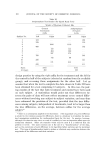
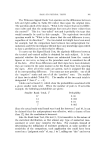
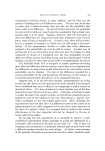
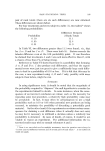
90 JOURNAL OF THE SOCIETY OF COSMETIC CHEMISTS compared to that used in calculations--for example, a transmission of 10% at a thickness of 0.01 mm (SF = 10) will be 32% at 0.005 mm (SF = 3) transmission at 0.01 mm of 20% (SF = 5) becomes 45% at 0.005 mm (SF about 2). The SF of a sunscreen will, therefore, depend on the economy of the user and on its fluidity at skin temperature (27-40 ø). But even with the best possible control of thickness, the SF of a sunscreen may be differ- ent on different skins. It depends presumably on the quantity of the sunscreen penetrating in the upper layers of the skin or on the quantity of superficial cells of the horny layer lost by rubbing in the preparation. Also, the screening power resulting from the scattering of light in a dry horny layer may be diminished by the use of oily sunscreens. It is known that oily preparations generally have lower SF's than analogous water-based screens. Oils may even have SF's lower than 1, which means that they make the skin more sensitive to ultraviolet. The principle of determining SF's on the skin is quite simple though time consuming. First, an MED 300 must be determined by means of a mercury arc lamp. This takes 24 hours when the correct doses are given. Then, this MED must be produced by irradiation of the same skin treated with the sunscreen preparation (preferably also irradiating untreated skin as a control to possible differences in skin sensitivities or incorrect doses). This takes another 24 hours. The accuracy is not great an MED may be correct within :• 25% for experienced examiners. When testing a great number of sunscreens at the same time, sensitivities of the skin of the back may easily differ by 50% at distances of 10 cm. If an MED-E appears through the sunscreen after 2-4 times the dose required for the MED 300 on the untreated skin, the SF is 2--4. But is the SF for mercury arc light also that for sunlight? Some dermatologists prefer to test with light sources having emissions which more resemble the sun. They would Be right if a given sun existed. But the spectrum of sun- and daylight (especially in the short ultraviolet) changes from day to day and from hour to hour and is different for different places on earth. Now, because of recent measurements, for example, at Davos, it is possible to imitate the spectrum of one special "Davos sun" (5) with a high pressure xenon arc lamp, corrected with filters. For testing sunscreens on normal persons such an imitation sun would, however, be very impractical, as the irradiation time necessary to provoke an MED-E is about half an hour. For an SF of 3, an irradiation time of 1.5 hours would therefore be necessary.

BIOLOGIC PROBLEMS CONCERNING SUNSCREENS Because the Kromayer mercury are provokes an MED-E in about 1 second on the skin of the back, this lamp remains the preferred light source for testing sunscreens on normal skins. The situation is, how- ever, quite different for skins with pathological reactions. PATHOLOGICAL SKIN REACTIONS There are people with skin which reacts pathologically to sun- and daylight. Sometimes, such a skin is so sensitve that an exposure to sunlight of several minutes even through window glass (which screens off the short-wave ultraviolet) may provoke itching weals. In other, less sensitive skins an exposure of several hours causes, after several hours of latency, an itching eczema that will persist if the skin is not kept out of sun- or daylight, even when it passes through window glass. It is becoming more widely understood that many such light diseases are not caused by short-wave ultraviolet alone but also by long-wave ultra- violet and even by visible light. Normal persons very seldom get a sun- burn through window glass, but diseased skins may so react. Moreover, irradiation seems to act in a cumulative way in diseased skin exposures which by themselves are apparently innocuous may provoke a patho- logical reaction when they are repeated daily even if the skin is well tanned. The action spectrum of such skin may be quite normal, i.e., its MED-sensitivity for most wavelengths may be normal. But an over- exposure of several times the MED in the longer wavelength region, given in one single exposure or in several exposures on consecutive days, provokes the pathological reaction (6). In this connection the fact must be stressed that the intensity of long-wave ultraviolet is not much less on cloudy days or in the shade of buildings or umbrellas than in direct sunlight thus, even in such conditions, the disease may exacerbate. When such skin has to be protected by sunscreen preparations, the SF of these should be tested with long-wave ultraviolet and visible light. For this purpose an imitation sun lamp (xenon arc with filters) may be used alternately, a powerful mercury arc source can be used if enough glass-filters are interposed to prevent sunburning by short- wave ultraviolet. In our clinic a water cooled mercury arc SP500 (Philips, Eindhoven) with 5 glass filters (11 mm glass thickness) gives satisfactory results. Such high intensity sources heat the skin strongly, and the skin temperature should be controlled regularly during irradia- tion to prevent heat-burning or heat-erythemas which may interfere with the judgment of the light effects.
Purchased for the exclusive use of nofirst nolast (unknown)
From: SCC Media Library & Resource Center (library.scconline.org)