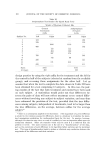
92 JOURNAL OF THE SOCIETY OF COSMETIC CHEMISTS Transparent sunscreen preparations for this type of skin do not exist (to protect against violet light, they would have to be dark yellow). Therefore, opaque sunscreens with, for example, 5 or 10% TiO• must be used. The preparation is made flesh color with cinnabar (red HgS) and colcothar (Fe-oxide). Though an SF of about 5 can be obtained in this way, it is only sufficient for protection against a single sun exposure and not for continuous protection, because of the cumulative effect of light. Such sunscreens are, moreover, not pleasant to use. The most difficult problem in sunscreening skin that really needs pro- tection is a base for the absorbing or scattering substances that makes these substances adhere to hot skin without interfering with sweating. Petrolatum with silicones, for example, comes off too easily, stains clothes, becomes patchy through sweating, and hampers transpiration. ULTRAVIOLET-ABSORBING SUBSTANCES IN SUNSCREENS Recently Lasser (7) listed a number of substances for screening out ultraviolet in sunscreens. In the dermatological literature some of these are described as irritating to the eyes or as known contact sensi- tizers. A curious example has been p-aminobenzoic acid which protects well against 300 nm but does not stay homogeneously in salve bases. It has, therefore, been replaced in sunscreens by its esters these, con- trary to the acid, are notorious for their photosensitizing capacities, presumably because they penetrate into the skin better. Moreover, the esters of p-aminobenzoic acid induce cross-sensitivity. New substances have recently been recommended for sunscreens. Examples are several benzophenones (8) and acrylonitriles (9) (especially water-insoluble ones), but it will not be known for many years if they are innocuous for routine application on the skin, especially in people with skin diseases. PIGMENT DARKENING BY LONG-WAVE ULTRAVIOLET AND VISIBLE LIGHT Sometimes sunscreens are recommended because, while they pro- tect against short-wave ultraviolet (ie, against sunburn), they allow long- wave ultraviolet to penetrate and, therefore, do not interfere with "immediate pigmentation." This is another name for pigment darken- ing, a distinct blackening through a photo-oxidative process on already existing melanin by high doses of long-wave ultraviolet and visible light. Such a recommendation is misleading for people in the second group with poor ability for pigmentation who, by using these sunscreens, expect to become brown without sunburning. They will be disappointed

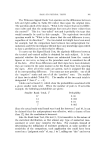
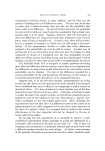
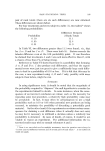
BIOLOGIC PROBLEMS CONCERNING SUNSCREENS 93 as they cannot produce enough melanin in their skin to show pigment darkening. Moreover, this pigment darkening even in well tanned people does not last longer than several hours and is not brown but has a greyish color. SKIN DEGENERATION BY EXCESSIVE SUN-BATHING It should be more widely publicized that excessive sunburning ulti- mately leads to skin degeneration, such as is found in farmers and sailors skin. Women especially should know that excessive sunbathing causes youthful skin to grow old earlier. It is better to restrict sun- bathing, even while using sunscreens, because these offer only limited protection, mostly against short-wave ultraviolet only. Their pro- longed use may, moreover, risk skin hypersensitivities. Only a minority of persons, the sensitives, require good protection by sunscreens. For this group, restriction in exposure to sun- and daylight is even more important, since the preparation they need (a base that sticks firmly to the skin without disturbing its functions) have not yet been found. (Received Feb. 17, 1.(167) REFERENCES (1) van der Leun, J. C., Ultraviolet erythema• Diss. Utrecht (1966). (2) Rottier, P. B., The ratio of the 260/300 nm MED's in the judgement of skin sensitivity to short-wave ultraviolet, ?roc. Intern. Biometeriological Congr., 4th, Philadelphia, Pa., and New Brunswick, N.J., 1966 (in press). (3) Rottier, P. B., and van der Leun, J. C., Hyperaemia of the deeper vessels after irradiation of human skin with large doses of ultraviolet and visible light, Brit. J. Dermatol., 72, 256 (1960). (4) Wiskemann, A., and Zimmermann, P., Wertbestimmung handelsfiblicher Lichtsehutz- mittel mit der Osram-Ultravitaluxlampe, Strahlentherapie, 99, 479 (1956). (5) Bener, P., Tages- und Jahresgang der Specktralen Intensitiit der Ultravioletten Global- und Himmelstrahlung bei Wolkenfreien Himmel in Dayos, Ibid., 133,306 (1964). (6) Rottier, P. B., Light Dermatoses without abnormal reactions to single test irradiations, Dermatologica, 129, 286 (1964). (7) Lasser, B. T., Chemie und Wirkungsweise yon UV-absorbern, J. Soc. Cosmetic Chemists, 14, 577 (1963). (8) Knox, J. M., Guin, J., and Cockerell, G., Benzophenones, ultraviolet light absorbing agents, J. Invest. Dermatol., 29,435 (1957). (9) Vossman, R. E., Knox, J. M., and Freeman, R. G., Aerylonitriles, a new group of ultra- violet absorbing compounds, Ibid., 39,449 (1962).
Purchased for the exclusive use of nofirst nolast (unknown)
From: SCC Media Library & Resource Center (library.scconline.org)