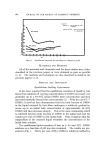
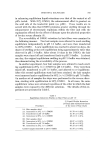
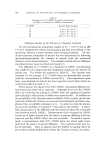
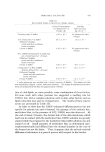
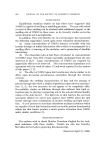
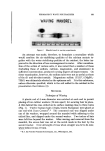
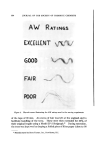
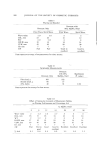
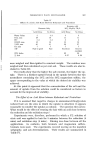
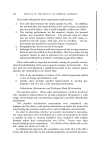
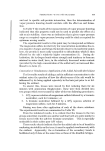
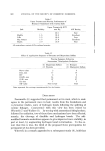
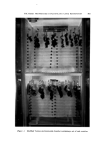
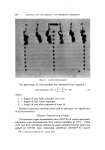
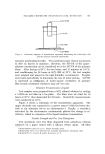
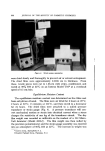
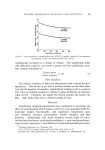
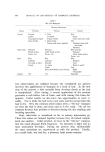
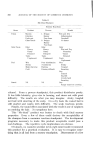
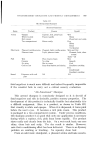
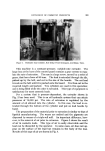
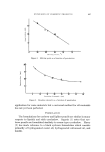
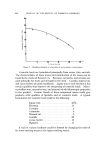
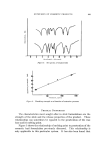
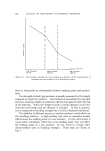
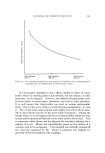
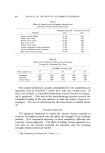
PERMANENT WAVE NEUTRALIZER 85b mm long) over the hair which was liberally moistened with water by use of a medicine dropper. To determine the influence of the various waving procedures on the tensile strength of the hair, the tress was extended on the serigraph on one day, treated the next day, and extended again on the following day. The data were recorded in terms of the load required to extend the tress both before and after treatment. The second reading divided by the first times 100 was considered as the 20% index. RESULTS Table I compares the results of performance tests on tresses neu- tralized with bromate alone and bromate plus MgS0•. 7H20. The addi- tion of MgS0•. 7H20 to the bromate neutralizer resulted in: a. Higher initial wave values indicating the tress conformed more closely to the wave pattern on the mandrel. b. High WT values indicating better wave stability in water. c. Lower VLW values indicating stronger wave formation. d. Superior AW values indicating better wave stability in air. The same results are seen after six repeated wavings of the same tress. The results in Table II show a 27% increase in the 20% index for tresses waved with the neutralizer containing 30% w/v magnesium sul- fate (U.S.P.) as compared to tresses waved with the standard bromate neutralizer. Influence of Salt Concentration and Salt Uptake It was noted early in this study that the improvement to air stability given by the added salt increased as the concentration of the salt in- creased, and that for the desired air stability a minimum concentration was required. This is illustrated in an experiment in which waving performance was judged when increasing amounts of magnesium sulfate were added to a sodium bromate-containing neutralizer. The results are summarized in Table III. Note that the desired excellent stability was not achieved until over 24% of the salt was present. It had also been observed that ignition of hair waved with a neu- tralizer containing the added salt yielded an ash termed "uptake," in which the cation of the salt could be chemically demonstrated. In order to relate salt content, performance, and uptake, the same neu- tralizers listed in Table III were used to wave a series of tresses which

856 JOURNAL OF THE SOCIETY OF COSMETIC CHEMISTS Table I Waving on Mandrel Bromate with Bromate Only 36% MgSO4.7H20 First Wave Sixth Wave First Wave Sixth Wave Wave value 1.9 1.6 3 3 D2L, mm 23 23 12 12 WT 2.9 2.8 3 3 D2LW, mm 15 15 14 14 VLW, mm 43 43 39 39 ID, mm 7 7 7 7 AW Fair Fair Good to Good to excellent excellent Data represent average of measurements for three tresses. Table II Serigraphic Measurements Bromate Only Bromate with 30% MgSO4.7H20 Significance (P. value) First load, g 163 152 Second Load, g 66 77 20% Index 40 51 0.02 Data represent the average for four tresses. Table III Effect of Increasing Amounts of Magnesium Sulfate on Waving Performance and Percentage Ash % MgSO4- 7H20 0 6 12 24 36 47 58 Wave value D2L, mm WT D2LW, mm VLW, mm ID, mm AW % Ash 2 2.3 2.3 2.7 3 3 3 18 17 16 14 13 13 13 2 2.7 3 3 3 3 3 17 15 13 13 14 14 14 40 40 38 38 37 37 37 7 7 7 7 7 7 7 Fair Fair to Good Good to Excellent Excellent Excellent good excellent 0.1 0.4 0.4 0.5 1.1 1.0 1.1
Purchased for the exclusive use of nofirst nolast (unknown)
From: SCC Media Library & Resource Center (library.scconline.org)