J. Soc. Cosmetic Chemists, 19, 863-880 (Dec. 9, 1968) Polymer Properties Retention at High Influencing Curl Humidity ALBERT L. MICCHELLI, B.A., and F. THEODORE KOEHLER, B.S.* Presented December 6, 1967, New York City Synopsis--Various test procedures to determine the high-humidity properties of hair spray resins are described. The polymers included in this investigation are: carboxylated polyvinyl acetate, polyvinylpyrrolidone, polyvinylpyrrolidone/vinyl acetate copolymer, dimethyl hydantoin-formaldehyde resin, and several experimental resins. The data pre- sented illustrate the relationship of curl retention at 90% RH with: equilibrium•rnoisture content, hydrophilic/hydrophobic functionality, molecular weight, moisture vapor trans- mission, film hardness, tensile strength, and elongation. The effect of neutralization with 2-amino-2-methyl-l,3-propanediol (AMPD) on these properties is discussed for some car- boxylated polymers. The various procedures brought together from several technologies are adaptable to testing of hair spray formulations. INTRODUCTION It is the purpose of this paper to show how the choice of polymer and the variation in polymer properties are related to curl retention. The test procedures to be discussed are: high-humidity curl retention, moisture transmission (liquid), moisture transmission (vapor), equilib- rium moisture content, film hardness, tensile strength, and elongation. It must still be determined to what extent these test results correlate with the properties of hair spray preparations desired by the consuming public. Further work in this laboratory will seek to provide the answer to the existence of such relationships. * National Starch and Chemical Corp., 1700 West Front St., Plainfield, N.J. 07063. 863

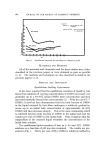
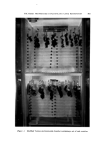
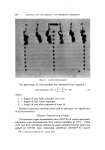
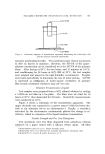
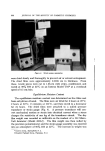
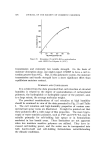
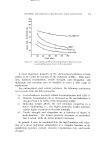
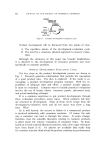
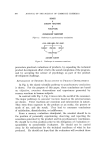
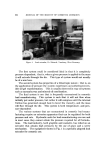
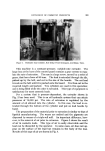
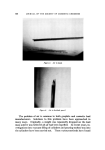
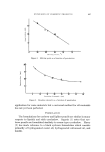
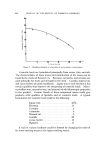
864 JOURNAL OF THE SOCIETY OF COSMETIC CHEMISTS In addition to providing an evaluation of polymer properties, these test techniques appear to lend themselves to evaluation of formulation variables of a single resin system. That is, the procedures described might be used to determine the change in high-humidity properties upon addition of plasticizers, perfumes, or other functional additives. EXPERIMENTAL Curl Retention A constant relative humidity atmosphere was obtained in a Tenney Environmental Chamber (Model TH-10)* which was modified by re- placing the door with a Lucite©i window (Fig. 1). The temperature was maintained for all retention tests at 22øC and a relative humidity of 90 + 2%. Hair swatches were prepared by binding at the root end approxi- mately 2 g of Remi-Blue String European hair. After washing with a commercial shampoo and thoroughly rinsing with distilled water, the hair swatch was cut to measure 25.4 cm in length. Test specimens were prepared by suspending the curl swatch from a motor chuck which was adjusted to rotate at a constant speed of 20 ,rpm. The end of the curl was weighed with a 10-g clip to prevent mo- tion of the hair during spraying. With the hair rotating, the hair spray formulation under test was sprayed onto the swatch for 10 seconds from a distance of 15 cm. Excess resin was removed by gently bringing the thumb and forefinger down the length of the curl. The moist swatch was then combed twice, wound on a 1.26-cm Tefion©• rod, removed, and secured with a hair clip. All test samples were dried at 60øC for $0 minutes, then conditioned for at least 16 hours at 22øC and 50% relative humidity. A minimum of ten swatches was prepared for each parameter level of formulation investigated. After condition- j.ng, the curls were unwound into a spiral and placed at random on verti- cal Lucite©._retention panels (Fig. 2). The panels were marked to permit measurement of curl length to the nearest 0.6 cm. After initial curllengths were recorded, the panels were placed in the humidity chamber. The changes in curl lengths were then recorded at SO-minute intervals over a period of three hours. In most instances, there is an initial rapid decrease in curl retention and then a much slower loss of curl after approximately 120 minutes. * Tenney Engineering, Inc., Union, N.J. • Lucite and Teflon are registered trademarks of E. I. du Pont de Nemours & Co., Inc., Wilmington, Del.
Purchased for the exclusive use of nofirst nolast (unknown)
From: SCC Media Library & Resource Center (library.scconline.org)