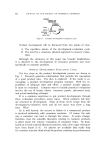
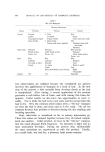
PSYCHOSENSORV REACTIONS AND PRODUCT DEVELOPMENT 885 few "minor" undisclosed problems dealing with appearance, odor, feel, and the like. Rather, he should face the challenge of using his scientific skills to eliminate all properties that may give rise to negative sensory impressions and most important, consciously research into products' novel properties that have a high degree of sensory appeal. Underlying what is being proposed is the basic, prejudiced convic- tion that the scientists should be more perceptive and better observers than the average consumer. The scientist's psychosensory product con- clusions, if based on well-designed laboratory and clinical experiments for which he is responsible, should anticipate most consumer reactions and should reduce the time problem associated with the development- evaluation cycle. Now, what is an orderly approach to sensory evaluation? Let us use the sensory pathways of the consumer that lead to perception and consumer reactions. Let us design experiments that will put the scientist in the position of subjectively and objectively experiencing, observing, and reporting the sensations--good and bad--generated by his product. Let the scientist reach his psychosensory conclusions by applying in an orderly way each of his senses to the product, the process, and the result. To illustrate further, consider three imaginary shampoo products. Shampoos are a good selection because this is an old and well-estab- lished product category. Of course, psychosensory evaluation ap- proaches will vary somewhat depending on the type of product involved. Semantics, too, will vary with the observer. Note also that the obser- vations that follow are illustrative but are not intended to be complete. "Me-Too" Shampoo A "Me-too" product represents a product type that is common in the marketplace. The basic product development challenge, if such it be, is duplication. There is no novelty involved, there is no opportunity for an exciting consumer reaction. Nevertheless, some will argue that if this product is put in a good package, if it is heavily advertised and promoted, it might be a great commercial success. Only rarely does such a miracle happen. The common experience with a "Me-too" item is commercial failure. The attributes with which the "Me-too" product has been endowed will sound very familiar. They are set forth in Table I. Considering first the sense of vision, it well be noted that this product is a viscous, amber, transparent liquid in a glass bottle. Under process,

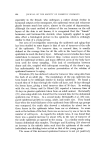
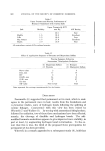
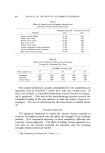
886 JOURNAL OF THE SOCIETY OF COSMETIC CHEMISTS Table I Me-Too Shampoo Sensory Reactions Sense Product Process Result Vision Viscous 1. Thin Wet Amber Unstable Shiny Transparent liquid Foams slowly Clean hair and scalp Glass bottle 2. Rich lather Dry Foams and rinses rapidly Lustrous dean hair Odor-taste Feel Pleasant Pleasant Floral aroma Light floral aroma Taste--nil Taste--nil Wet Lubrous No sting or burn Tepid Wet Lubrous Smooth No sting Tepid Easy distribution and rinsing Sound Nil Nil and scalp Flyaway Wet and dry Pleasant Faint clean aroma Taste--nil Wet Slippery Cool Hard to comb Dry Slick Untangled Squeaky two observations are outlined because the established use pattern involves two applications of shampoo to a head of hair. In the first step of the process a thin unstable foam develops slowly as the hair is manipulated. After rinsing, a second application of the product generates a rich lather, lots of foam, and with rinsing this foam dis- appears. Under results, we also have two opportunities to react vi- sually. One is while the hair is in a wet state and the second when the hair is dry. Wet, the common observations with a "Me-too" shampoo are that the hair is shiny and clean and so is the scalp. The all too common flyaway hair problem is detected during the dry combing and brushing operation. Next, odor-taste is considered as far as sensory impressions go. These two senses are lumped together because they do indeed comple- ment one another. Under product, we have in the "Me-too" composi- tion the usual pleasant floral fragrance. Its intensity is light and no taste association develops. During the process step, substantially the same sensations are experienced as with the product. Finally, on a result basis, wet and dry, a pleasant, faint aroma remains.
Purchased for the exclusive use of nofirst nolast (unknown)
From: SCC Media Library & Resource Center (library.scconline.org)