J. Soc. Cosmetic Chemists, 19, 893-903 (Dec. 9, 1968• Extrusion of Cosmetic Products JOSEPH T. SUCHAN, B.S.* Presented September 6, 1967, New York City Synopsis--The manufacturing methods of cosmetic eyebrow and lipliner pencils are dis- cussed. It has been found that both wax and/or pigment changes can affect the mechanical properties of extruded leads. The thixotropic character of wax systems was also evaluated. INTRODUCTION Cosmetic products on today's market that could be considered extruded are limited to eyebrow and lipliner pencils. The most recent statistics indicated that 42% of the female population use eyebrow pencils with regularity. This number accounted for about $16,000,000 in sales in 1966 in the United States and Canada. Extrusion in its simplest definition is the forcing of a mass through a die of given dimensions. Extrusion has found application in industries as diverse as steel and food, in plastic manufacturing, and in brick plants. The advantage of extrusion lies in its use as a continuous or semicontinu- ous operation. It can reduce handling of material, and, in some steps, completely eliminate certain operations. EXTRUSION The type of material that is to be extruded is the limiting factor in the choice of extrusion equipment. Three types of systems have been en- countered in cosmetic formulation that limit the type of equipment necessary for extrusion. * Red Cedar Pencil Co., [gyfi•t)llrg, Tenn. 37091• 893

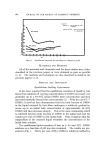
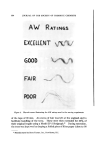
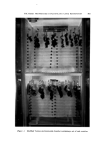
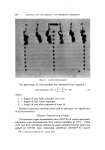
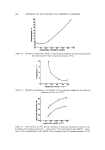
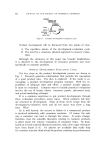
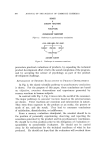
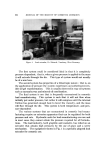
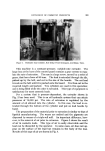
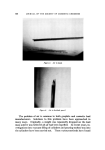
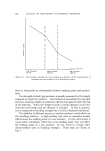
894 JOURNAL OF THE SOCIETY OF COSMETIC CHEMISTS :•: ' 11 • : •' :' ......... - .... :•.. '....--•f':-:•,:•: •!•' .' •' •:• ... ::,. :• .&"- : '• . .-i ß . -•:: . •- - . -•. •., .. ..... ,:,•:- .. •..•', ..• •. : ...... ..:. • ß • • - .•..•.:,• ..... .? ' '• •. :' •' . ....: '. •. -'• , • •-' . .":. '2:- - ::..-.::...•:• ...• ... •.• •:.--....:•: •... ..•.........:.--.r-:-: :.•.-.•:•,•....?- •..• .. .--•,.....•...• ..•.• :• .•:•.•'•-•- •. .....• ':}.... .... ..:•":'.' . '..•..•.' .... '• :• ,:•: ß . ........ •.. - ..,:½: ..• •:4•. ?- •:.:.• :•}..,:-.-•:...:• :...... • .... :• . ....•. ,....•:..:..: ..... .• .• o • ...... :• -,.• •T' ..•.j•½: •' -• .•. ß •" -•4' ':' • ' '• • i• ' ".:..•:•. : •.•: . -•,, . . ,•...:•. ....... • .... ::• ....... Figure 1. Lead extruder, Fr. Erhardt, Nurnberg, West Germany The first system could be considered ideal in that it is completely pressure-dependent that is, when a given pressure is applied to the mass it will extrude through the die. This type of system would not usually be of a wax base. The second system has properties of a thixotropic nature that is, on the application of pressure the system experiences an isothermal-revers- ible sol-gel transformation. This is usually observed in wax-oil systems such as carnauba wax and mineral oil combination. The final system is one that is frequently encountered in cosmetic lead manufacturing. This system is such that it will not flow when initially put under pressure, but rather it will compress until the internal friction has generated enough heat to lower the viscosity, and the mass will flow through the die. This system is both temperature- and pres- sure-dependent. The various systems that are encountered in cosmetic lead manu- facturing require an extrusion apparatus that can be regulated for both pressure and rate. Hydraulic units for lead manufacturing are rare and in most cases they cannot attain the pressure required for all formula- tions. The lead industry, both graphite and cosmetic, has relied on an extruder that attains high pressures by the use of gears and a screw mechanism. The equipment shown in Fig. 1 is a specially adapted lead extruder for cosmetic use.
Purchased for the exclusive use of nofirst nolast (unknown)
From: SCC Media Library & Resource Center (library.scconline.org)